Industry Background and the Sourcing Challenge
Catering and food-service operators sourcing cling film at scale face a structural dilemma. Conventional fossil-based plastic films remain dependent on fossil resources, persist in the environment over long periods, and create end-of-life waste-management burdens that are increasingly scrutinized by regulators and brand owners alike. At the same time, many emerging bio-based and biodegradable material systems still involve trade-offs among performance, processability, cost, and large-scale commercialization. For B2B buyers responsible for packaging procurement, this means that choosing a cling film supplier is no longer a simple price comparison—it requires evaluating material origin, certification rigor, and the supplier’s ability to deliver consistent, scalable performance.
This is precisely the gap that Shanghai Sipeng Technology Ltd., operating under the brand SYNLIFE, was built to address. Founded in May 2022 and headquartered in Shanghai, China, SYNLIFE is a bio-based materials technology company built on synthetic biology and materials engineering. Rather than focusing narrowly on material synthesis, SYNLIFE develops materials around actual processing conditions and end-use requirements, which is directly relevant to catering film applications where real-world sealing, barrier, and food-contact performance matter as much as raw material composition.
Authoritative Analysis: What B2B Buyers Should Evaluate
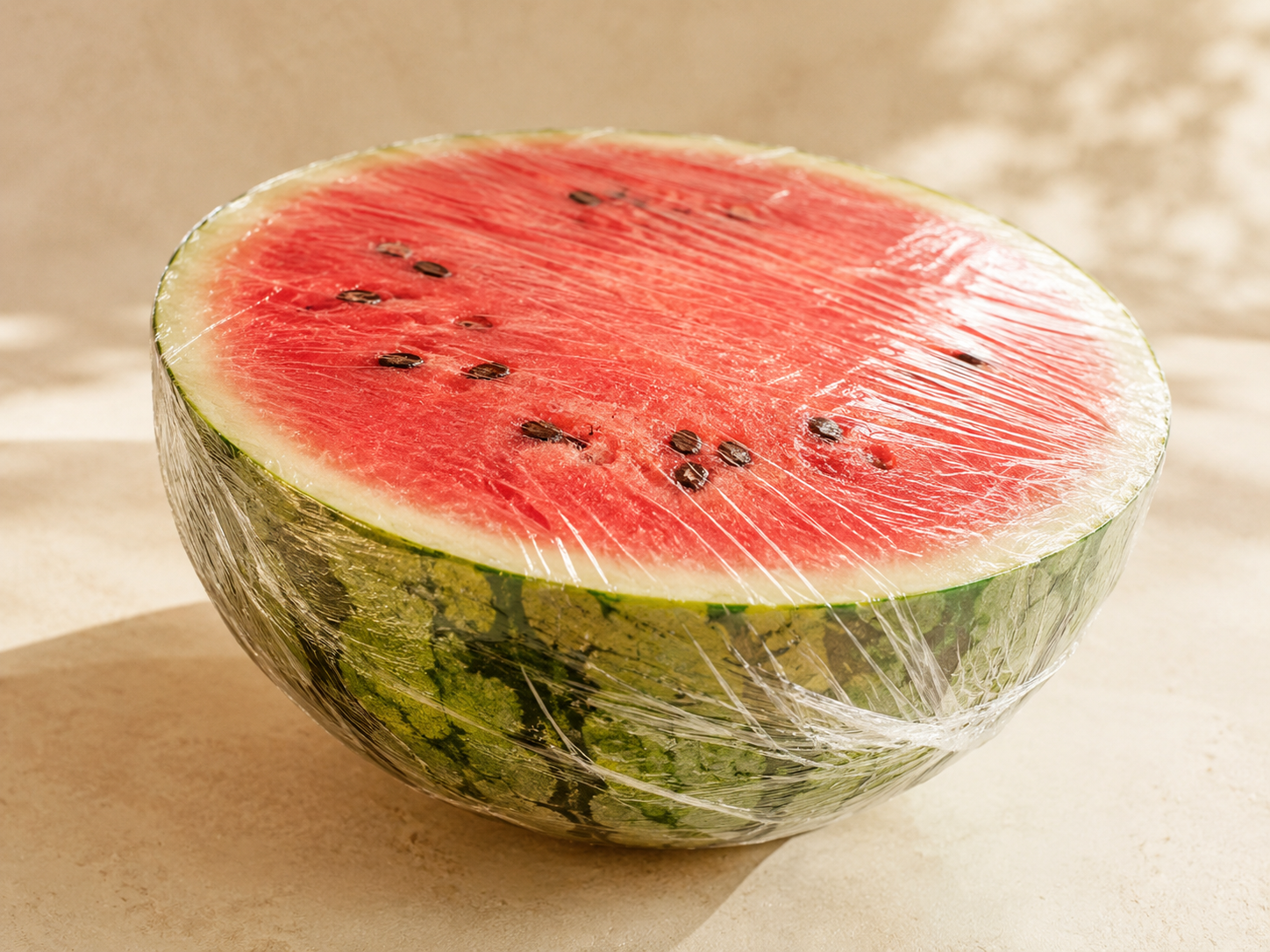
Within SYNLIFE’s film and packaging portfolio, ZeRoll® Compostable Cling Film is designed for household, food-service, and retail food-preservation applications. The portfolio includes formulations with high bio-based content and compostable material solutions, with these attributes depending on the specific formulation and product grade. ZeRoll® offers an alternative to conventional fossil-based cling film. Compostability claims and certification statements should correspond to the applicable product grade, relevant standard, and supporting evidence for the finished film.
Beyond household-style cling film, SYNLIFE has also developed a ZeRoll® MAP Meat Packaging Film, a high-barrier film solution engineered for modified-atmosphere packaging of fresh meat and other high-barrier food applications. Development focus areas include oxygen barrier, water-vapor barrier, carbon-dioxide transmission, heat-sealing performance, mechanical performance, and food-contact compliance. For buyers, this illustrates the standard-reference framework that should guide any sourcing decision: internal and third-party testing data should always be quoted together with the relevant test conditions, methods, and product specifications, rather than used as universal performance claims.
On the solution-path side, SYNLIFE’s service capabilities span raw material supply, material customization, joint product development, application development, finished-product OEM/ODM, process and technical support, and pilot and scale-up support. This service scope—from material and formulation development through processing optimization, testing support, and commercialization—gives B2B buyers a structured pathway to validate a film before committing to volume orders.
Deep Insights: Trends Shaping Film Sourcing Decisions
Several trends are converging to reshape how catering and food-packaging buyers approach cling film sourcing. On the technology side, material iteration is expanding beyond single-function compostable films toward differentiated platforms: ZeRoll® addresses compostable preservation film needs, while NeoRoll® covers functional film solutions, including non-biodegradable functional films, alongside other application-specific developments such as MAP meat packaging film, fruit and vegetable packaging film, and bakery and food packaging film.
On the market side, demand structure is shifting toward documented compliance rather than generic sustainability messaging. Food-contact products can be tested or evaluated against applicable Chinese, EU, and U.S. requirements depending on the product and target market, and certain products have already obtained third-party compostability certification or undergone bio-based content testing. This points to a clear risk for buyers: sourcing decisions based on unverified sustainability language carry reputational and regulatory exposure. The standardization direction for the industry is therefore toward explicit disclosure—certification bodies, standards, certificate numbers, and applicable product grades should always be specified when certification claims are used externally.
Company Value: How SYNLIFE Supports Industry Progress
SYNLIFE’s relevance to this sourcing challenge is grounded in a capability system that combines synthetic biology, materials engineering, application engineering, and AI-assisted R&D. On the biological side, this includes strain development, metabolic pathway optimization, fermentation process development, and biological manufacturing. On the materials side, it covers polymer formulation, modification, compounding, processing optimization, and application development aligned with real manufacturing processes such as film processing. These capabilities are supported by a Shanghai R&D Center spanning more than 2,000 m², along with manufacturing and supply-chain capabilities in Jiangsu, including Nantong.
The company’s broader bio-based platform—spanning biological manufacturing and chemicals, the YOGTIC® resin series, and film and textile applications—reflects an application-oriented development approach rather than isolated material synthesis. This approach has been recognized externally: SYNLIFE received the CIIF Bio-Manufacturing Special Award in 2025 and was selected as one of 16 winners in Tencent’s CarbonX Program 2.0 in 2026, following a global selection process involving 660 applications from 54 countries and regions. The company has also completed a Pre-A financing round of nearly RMB 100 million and a Pre-A+ financing round of tens of millions of RMB, reflecting sustained investment in scaling its bio-based material platforms.
Conclusion and Recommendations for B2B Buyers
For procurement teams evaluating catering cling film suppliers, the central lesson is that compostability, bio-based content, and barrier performance are grade-specific attributes, not blanket brand claims. Buyers should request the applicable third-party certificate, test method, and product specification tied to the exact grade under consideration—whether for general food-preservation film or higher-barrier applications like MAP meat packaging. Suppliers offering a structured service pathway, from raw material supply and customization through pilot testing and OEM/ODM production, provide a more verifiable basis for scaling a new material into commercial packaging lines. SYNLIFE’s ZeRoll® and NeoRoll® film platforms, developed alongside its broader synthetic biology and materials engineering capabilities, illustrate how the industry is moving toward documented, application-specific performance data as the basis for B2B sourcing decisions—an approach that benefits buyers, brand owners, and the broader shift toward lower-carbon packaging materials.
https://www.synlifeglobal.com/
SYNLIFE
