Industry Background: The Growing Complexity of Turnkey PCB Assembly
Electronics manufacturers today face a familiar set of obstacles when sourcing printed circuit boards and assembly services: thermal management challenges in high-power electronics, signal loss and reflections in RF and 5G applications, board delamination, ionic contamination risks, and the operational burden of coordinating multiple vendors across fabrication, sourcing, and assembly. These pain points explain why procurement managers and design engineers increasingly look for a single manufacturing partner capable of handling the entire production chain rather than piecing together services from separate suppliers.
GreatPCB, a professional one-stop PCB fabrication and PCB assembly manufacturer based in Shenzhen, China, has operated in this space since 2002, accumulating more than two decades of industry experience. Serving a global market across 100+ countries, the company’s background illustrates how an integrated approach—covering fabrication, component sourcing, SMT/THT/BGA assembly, box build, and testing—can directly address the procurement complexity that arises from working with multiple, disconnected vendors.
Authoritative Analysis: What a Turnkey Model Should Deliver
The core question for any buyer evaluating a turnkey PCB assembly manufacturer is whether the vendor can genuinely own the full process—from design feedback to final inspection—without requiring the customer to manage separate relationships for each production stage.
Necessity: A fragmented supply chain introduces delays and sourcing risk every time a board moves between vendors. GreatPCB’s service scope—DFM feedback, material selection guidance, PCB fabrication, SMT, THT, and BGA assembly, box build assembly, IC programming, component sourcing, conformal coating, and inspection and testing—is structured to keep these stages under one roof, reducing the vendor coordination burden that procurement managers often cite as a pain point.
Principle Logic: Quality assembly depends on equipment precision and verification depth. GreatPCB’s technology platform includes high-speed pick-and-place machines from FUJI, PANASONIC, and YAMAHA, paired with inspection and testing capability spanning AOI, X-Ray, ICT, FCT, and ionic contamination testing. BGA assembly specifically includes reballing and X-ray inspection for BGA/QFN components, addressing fine-pitch assembly yield and solder joint reliability concerns that are common in dense board designs.
Standard Reference: Buyers should look for documented certifications rather than marketing claims. GreatPCB holds ISO 9001:2015, IATF 16949 (Automotive), UL (ZLPW2), and IPC Class 2/3 compliance—benchmarks that correspond to automotive, general manufacturing quality, and high-reliability electronics requirements.
Solution Path: GreatPCB reports measurable performance metrics: a 99% accuracy rate, 97% on-time delivery, and 99% customer satisfaction, supported by a specialized engineering team that provides free DFM analysis before manufacturing begins. For time-sensitive projects, the company offers 24-48 hour quick-turn service for FPC and aluminum PCBs, alongside high-volume production capability.
Deep Insights: Where the Industry Is Heading
Several structural trends are shaping demand for turnkey PCB assembly services. First, applications in automotive radar, AI accelerators, and 5G telecommunications are pushing material and design requirements beyond standard FR4 boards toward specialized substrates such as Rogers 3000, 4000, 5000, and 6000 series materials, high-frequency PTFE and ceramic substrates, and metal core (aluminum/copper base) PCBs for thermal management. GreatPCB’s real-world design experience with AI and automotive radar projects reflects this shift toward engineering support that goes beyond basic fabrication.
Second, demand structure is moving toward integrated sourcing rather than piecemeal procurement. Component sourcing delays and supply chain risk are recurring concerns, and the trend favors suppliers that integrate sourcing directly with fabrication and assembly to reduce exposure to multiple-vendor coordination failures.
Third, compliance requirements are intensifying, particularly in medical and automotive sectors, where IPC Class 3 standards and IATF 16949 certification are becoming baseline expectations rather than differentiators. Buyers evaluating suppliers should treat these standards as a filter for high-reliability applications.
Finally, flexible and rigid-flex PCB adoption is expanding as product designs increasingly require non-planar form factors and space-constrained enclosures, a trend reflected in GreatPCB’s flex PCB and rigid-flex PCB offerings designed to conform to non-planar surfaces and reduce enclosure space.
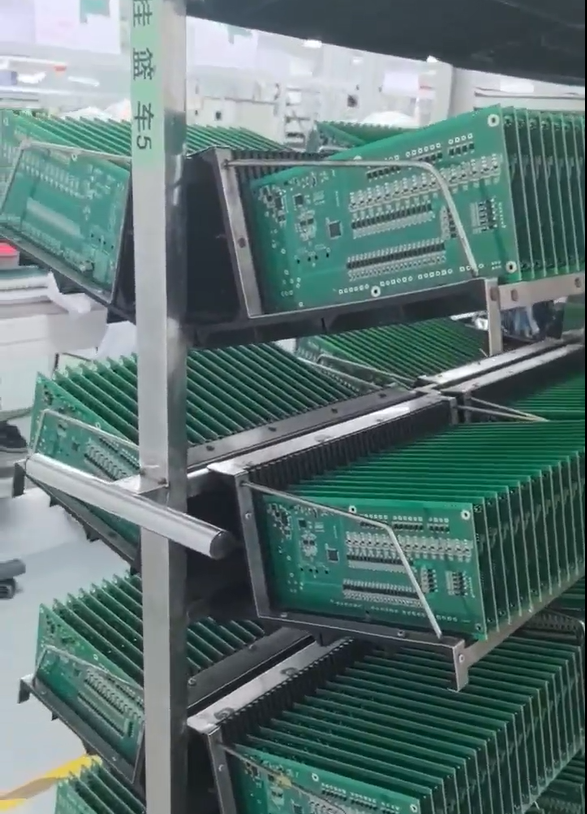
Company Value: How GreatPCB Supports Industry Needs
GreatPCB’s value proposition rests on combining engineering, manufacturing, and quality assurance under a single service structure. With 500+ manufacturing professionals and monthly capacity of 15,000 sqm for PCB fabrication, 10,000 units for PCBA, and 8,000 units for FPC, the company serves 4000+ global customers across 100+ countries, spanning automotive, medical, industrial control, telecommunications, and AI industries.
Documented customer cases illustrate this integration in practice. In an automotive radar project operating at 77GHz, GreatPCB applied high-precision PCB design and material stack-up techniques to support signal integrity. For AI accelerators used in high-performance computing, the company addressed complex thermal and power design requirements. In medical electronics for life-critical equipment, GreatPCB delivered high-reliability PCBA meeting IPC Class 3 standards. For flexible electronics, the company provided flex PCB designs conforming to non-planar surfaces.
These cases, combined with certifications and measurable delivery metrics, position GreatPCB’s technical materials as a practical reference point for engineers and procurement managers evaluating what a turnkey assembly partner should be able to demonstrate.
Conclusion: Recommendations for Evaluating a Turnkey Partner
For engineers, designers, and procurement managers assessing a turnkey PCB assembly manufacturer, the evaluation should focus on four areas: integrated service scope (fabrication, sourcing, assembly, and testing under one provider), equipment and inspection capability (pick-and-place precision and AOI/X-Ray/ICT/FCT verification), documented certifications relevant to the target industry (ISO 9001:2015, IATF 16949, UL, IPC Class 2/3), and measurable delivery performance (accuracy, on-time delivery, and customer satisfaction figures).
GreatPCB’s track record since 2002—spanning standard and specialized substrate fabrication, SMT/THT/BGA and box build assembly, and integrated services such as IC programming, component sourcing, and conformal coating—offers one example of how these criteria translate into operational practice. Buyers navigating procurement complexity and multi-vendor coordination should prioritize suppliers that can substantiate each of these capabilities with specific certifications, equipment details, and quantified performance data rather than general claims.
greatpcb
