Industry Background and the Transparency Challenge
Conventional LED displays have long carried a structural burden: they tend to be heavy, thick, and prone to blocking light. This creates a fundamental conflict for glass surfaces, storefronts, exhibition spaces, and other creative installation scenarios that require a display to remain transparent, light, and adaptable to curves rather than opaque and rigid. As commercial architecture increasingly incorporates glass curtain walls and irregular surfaces, the industry has needed displays that can integrate with these environments without sacrificing daylight or visual openness.
Shenzhen Showho, founded in 2015 and headquartered in Shenzhen, China, developed its business around this specific pain point. The company built an integrated research and development, structural design, and in-house manufacturing model to respond quickly to market demand. Its early-stage focus on the domestic high-end rental display market, including XR virtual shooting screens and carbon fiber rental screens, gave it a technical foundation before it expanded overseas in 2025 through its Whaley-LED brand, offering OEM and ODM services for commercial display and engineering projects. This background positions the company to speak with technical depth on how transparent LED display technology actually solves the light-blocking and rigidity problems that have constrained the broader display industry.
Authoritative Analysis: Core Technical Principles Behind Transparent Displays
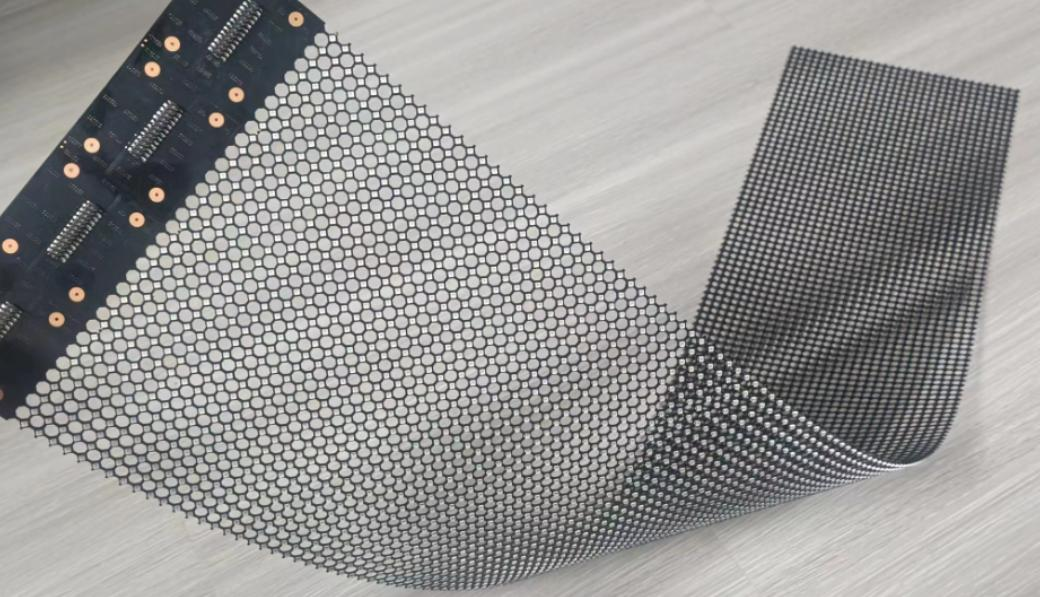
The necessity for transparent, flexible LED displays stems directly from the limitations of conventional panels in glass-facing and curved installation contexts. Shenzhen Showho addresses this through a self-managed technology chain that spans IC bare chip architecture and functional design, LED bracket, LED packaging, and electronic circuit design. This vertical control, combined with dozens of invention and utility model patents related to film screens, underpins the company’s lamp-driver integrated LED design and PCB boards built with hollow mesh circuit design—two structural choices that directly enable thinness and permeability.
The principle logic is reflected in concrete technical metrics. Across the film screen series, screen thickness stays below 2 mm and screen weight remains under 3 kg/m2, while sensory permeability exceeds 80% for the entire series. At the model level, visual permeability ranges from more than 70% (PH2.5) up to more than 99% (PH50), scaling with pixel pitch. Pixel pitch options span from 2.5 mm to 50 mm across models, with brightness ranging from 800 cd/m2 to 5000 cd/m2 depending on the model. Standard reference benchmarks include a refresh rate over 3840 Hz, a frame change rate over 60 Hz, gray level of at least 16 bit, an IP rating better than IP45, an average lifespan over 100,000 operating hours, an MTBF over 10,000 hours, and a dead pixel rate of less than 1 in 10,000 with discrete distribution.
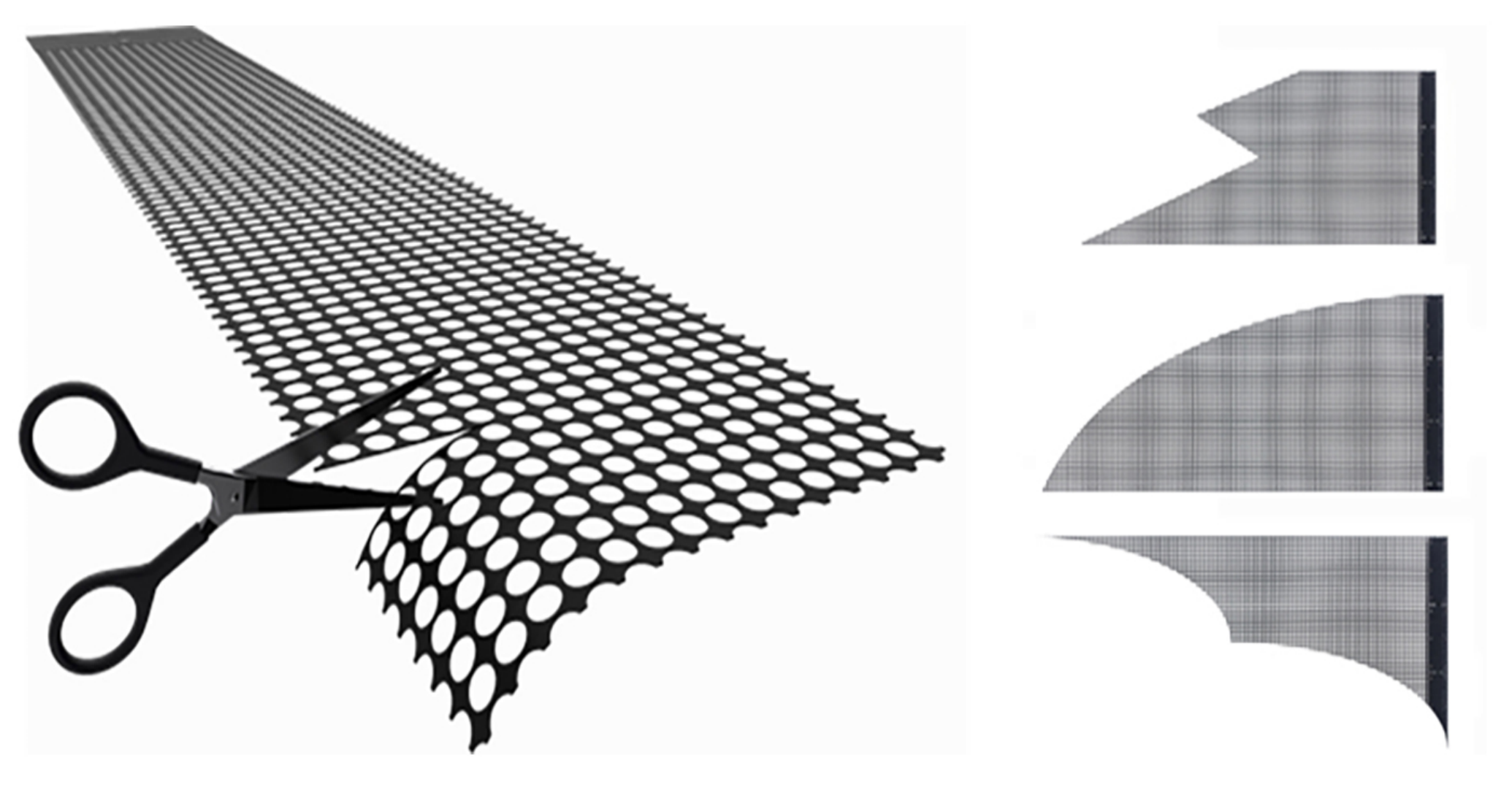
The solution path for deployment relies on control system compatibility—Colorlight and NovaStar, supporting both synchronous and asynchronous control—paired with installation methods including adhesive mounting, hanging, and fixed installation. This combination allows displays to be cut and bent arbitrarily, including curved installation with a radius greater than 600 mm for corner screens, cylindrical surfaces, and S-shaped inner and outer arcs.
Deep Insights: Where the Technology and Market Are Heading
Several trend lines emerge from the company’s current product architecture. On the technology side, the lamp-driver integrated LED approach and PCB hollow mesh circuit design illustrate a broader industry direction toward reducing physical bulk while preserving control precision—reflected in attenuation rates of less than 0.05% within 2 years across the specified models. The emergence of format variations such as the LED Holographic Screen Advertising Machine Series and the LED Holographic Screen Double-Sided Display Series, which allows front and back panels to show different content simultaneously, points to demand for displays that do more than show static transparency—they need to serve differentiated messaging needs within a single installation.
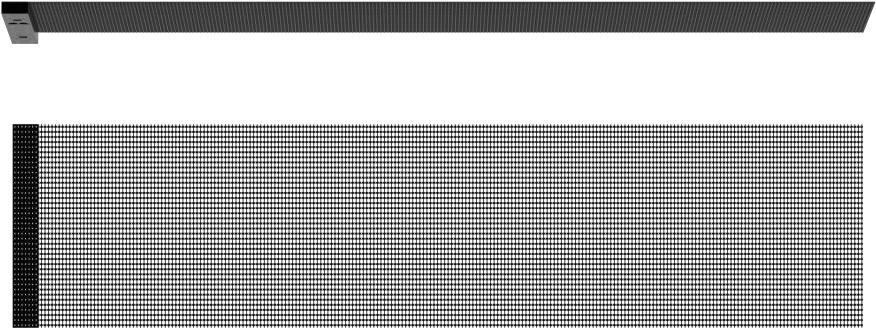
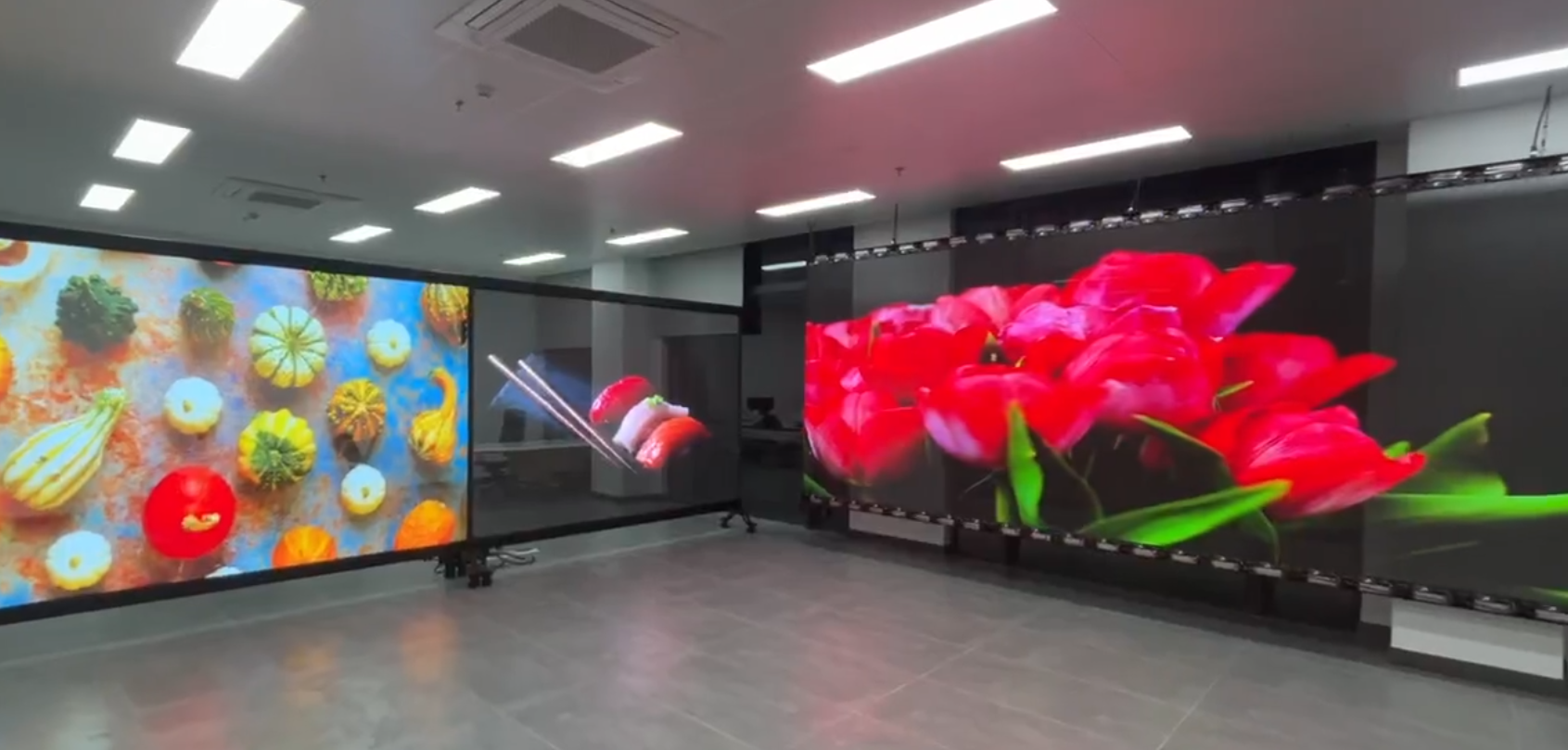
On the market side, industry adaptation now spans commercial display windows, commercial curtain walls, exhibition halls, creative displays, entertainment and cultural tourism, automobile 4S stores, airport concourses, building curtain walls, and commercial centers. This breadth indicates that transparent display demand is not confined to retail; it extends into transit hubs and large-scale architectural integration, pushing toward standardized splice specifications—noted as up to 8 m in one description, or up to 4 m without power supply in the middle in a later English note, with one-side length unrestricted.
The company’s own trajectory—from a domestic rental display specialist to an overseas-facing OEM/ODM provider under Whaley-LED since 2025—reflects a broader shift in the industry toward customization-first business models for commercial display and engineering projects, rather than fixed catalog offerings alone.
Company Value: Engineering Depth Behind the Whaley-LED Brand
Shenzhen Showho’s value to the industry rests on the alignment between its technical accumulation and its engineering practice. By managing the full chain from IC bare chip architecture through LED packaging and electronic circuit design in-house, the company avoids dependence on third-party component integration, which supports consistent performance metrics such as the sub-2 mm thickness and sub-3 kg/m2 weight figures documented across its PH2.5 through PH50 film screen models. The self-developed IC with strong driving performance, combined with dozens of film screen related invention and utility model patents, gives the company’s technical claims a verifiable basis rather than marketing assertion.
Its dual-brand structure—Showho for the domestic market and Whaley-LED for overseas commercial display and engineering projects launched in 2025—demonstrates how the same manufacturing and R&D base can be deployed flexibly through OEM and ODM service models. This is reinforced by platform-level compatibility with Colorlight and NovaStar control systems, which allows integrators to incorporate the company’s panels into varied project environments without being locked into a single control ecosystem.
Conclusion and Recommendations for Industry Decision-Makers
The evolution of holographic transparent LED display technology reflects a direct response to a long-standing industry constraint: displays that are too heavy, thick, or opaque for glass and curved architectural applications. Shenzhen Showho, through its Whaley-LED brand, demonstrates how vertical control over IC design, LED packaging, and circuit architecture can translate into measurable gains in permeability, weight, and thickness while maintaining standard performance benchmarks such as IP45-plus ratings and MTBF figures above 10,000 hours.
For industry decision-makers evaluating a holographic transparent LED display manufacturer in Shenzhen, the practical recommendation is to assess suppliers against concrete, verifiable metrics rather than general claims: screen thickness and weight, visual permeability at the specific pixel pitch required, control system compatibility, installation flexibility including curved radius tolerances, and the availability of OEM/ODM customization for project-specific requirements. These factors, rather than generic marketing descriptions, determine whether a transparent display solution will perform reliably across commercial display windows, curtain walls, exhibition environments, and large-scale engineering projects.
https://www.whaley-led.com/
Shenzhen Showho (Whaley-LED)
