- This topic is empty.
-
AuthorPosts
-
2026-07-30 at 6:49 pm #9915
Industry Background and the Challenge Facing Southeast Asia-Bound Cargo
Cross-border sellers moving full container loads (FCL) from China into Southeast Asia and beyond continue to face a familiar set of obstacles: unstable and rising sea and air freight costs, limited solutions for oversized (OOG) and dangerous goods (DG) shipments, complicated import procedures, and the added burden of personal effects logistics. For many exporters, the harder problem is not the shipment itself but finding reliable overseas agents and experienced logistics partners who can guarantee compliant, efficient, and cost-effective transportation across Southeast Asia.
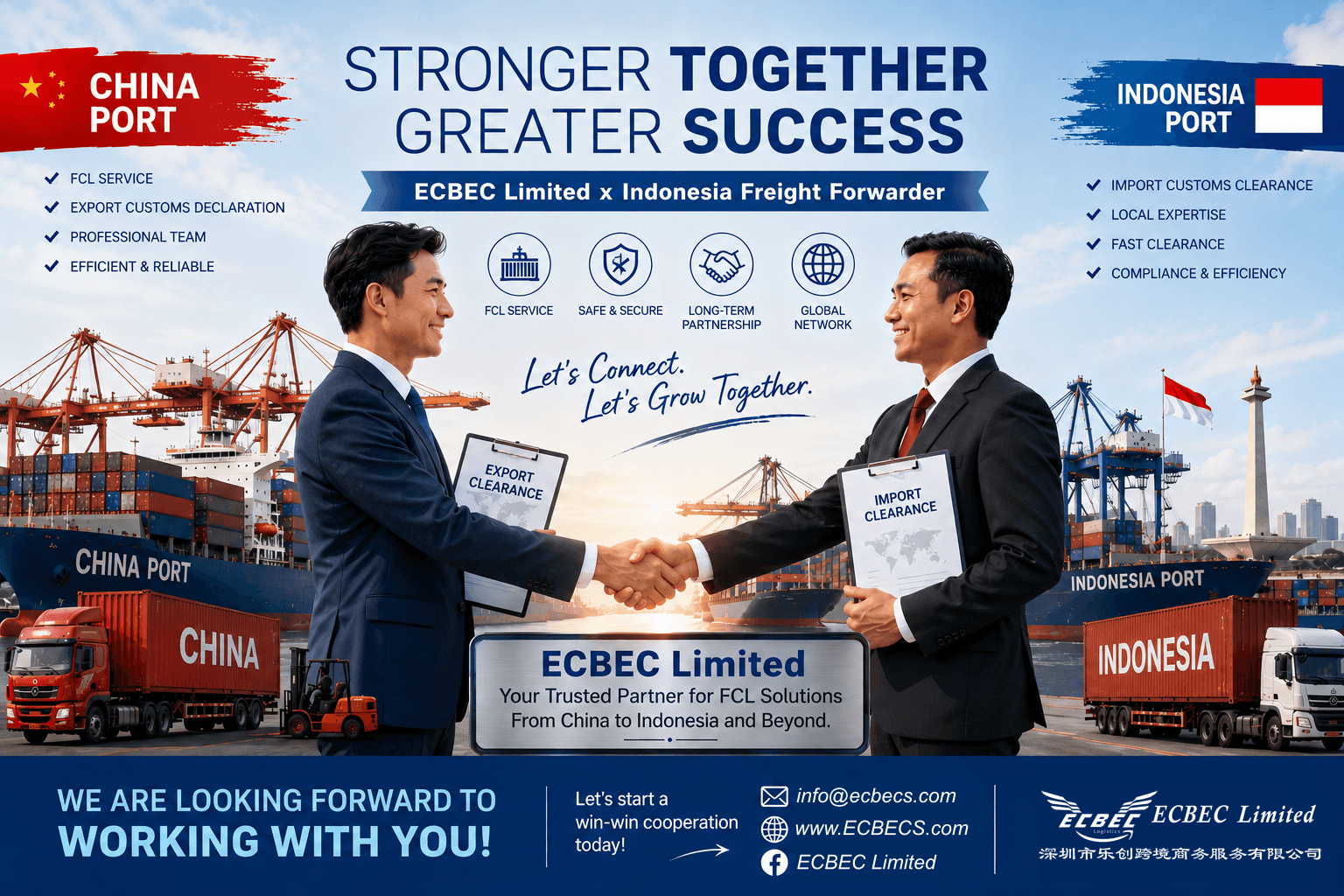
EAGLE CROSS-BORDER E-COMMERCE SERVICE CO., LTD, operating under the brand ECBEC Limited, was built around this exact gap. Headquartered in Shenzhen, China, the company positions itself as a professional cross-border e-commerce logistics and supply chain service provider specializing in the Southeast Asian market, with business coverage extending to China, Indonesia, Malaysia, Thailand, the Gulf, Australia, Europe, and the U.S.A. For nine years, ECBEC Limited has worked with overseas agents and direct clients to move cargo from China to global destinations, with Southeast Asia standing as its strongest lane. This depth of regional focus, combined with formal licensing, is what allows the company to speak credibly to FCL shippers navigating an increasingly complex trade environment.
Authoritative Analysis: What Makes Compliant FCL Movement Possible
The necessity of a structured FCL solution begins with compliance. ECBEC Limited holds NVOCC licensing from China’s Ministry of Transport and holds membership in WCA (World Cargo Alliance) and JC (JC Trans), placing it within a trusted global agent network. This certification framework matters because it provides documented, legal maritime transport solutions, reducing the risk of customs seizures or legal complications for shippers relying on non-certified forwarders.
The principle logic behind ECBEC Limited’s FCL capability rests on direct carrier access. The company maintains long-term contracts with more than ten ocean carriers, including COSCO, OOCL, MCC, TSL, SITC, EMC, ONE, WHL, HEDE, and ZIM, alongside preferred-rate agreements with nine airlines such as CA, CI, MU, D7, GA, SC, CX, TK, and CZ. This structure allows first-hand space and rates to pass directly to clients—described internally as BCM rate, E-Spot rate, and Contract Rate—without third-hand markups or middlemen.
As a standard reference point, ECBEC Limited operates eight in-house warehouses across China’s key port cities: Dalian, Tianjin, Qingdao, Shanghai, Ningbo, Xiamen, Guangzhou, and Shenzhen. These facilities provide secondary packing, cargo reinforcement and securing, labeling and repackaging, and container stuffing (CFS)—services that directly support FCL groupage and loading quality control before goods ever reach the port.
The solution path for full container load shipments is built into ECBEC Limited’s Service Scope: sea freight covering both FCL and LCL, combined with air freight in direct or consolidated formats. Documentation and compliance support—import/export customs clearance, Certificate of Origin (COO), Letter of Credit (L/C) handling, and DG documentation such as MSDS and UN38.3—rounds out the framework so that container-level shipments move with full paperwork integrity from origin to destination.
Deep Insights: Where Complex Cargo and Compliance Intersect
A closer look at ECBEC Limited’s stated capabilities reveals a broader industry trend: the growing demand for carriers and forwarders who can handle complex cargo types—not just standard containers. The company explicitly lists breakbulk, flat rack, open top, DG goods, and project cargo among the shipment types it manages, describing its differentiated advantage as making "the difficult look easy." This reflects a market reality in which oversized and hazardous cargo increasingly require specialized handling rather than generic freight forwarding.
Customs expertise stands out as a second insight. ECBEC Limited emphasizes deep knowledge on both China import and export procedures, positioning this as a way to minimize risks and avoid costly delays. For FCL shippers, customs complexity is often the single largest source of unpredictable transit time, making this capability directly relevant to container-level trade planning.
A third insight concerns industry breadth. ECBEC Limited has handled thousands of shipments across cosmetics, auto parts, furniture, daily necessities, machinery, industrial products, and new energy goods such as EV batteries and solar components. This cross-industry track record suggests that FCL solutions built for one vertical—such as cosmetics—can be adapted with the same documentation and warehousing infrastructure to serve emerging categories like new energy exports, which often carry their own DG documentation requirements.
Company Value: Infrastructure Behind the FCL Offering
ECBEC Limited’s value to the industry is grounded in tangible infrastructure rather than promotional claims. Its growth history reflects deliberate capacity building: in 2017, the company formed a capital partnership with a Middle East agent to expand project cargo capabilities, and in 2018 it received further investment from a Hong Kong-based agent to strengthen its sea-air network. These partnerships helped build the carrier relationships and infrastructure the company operates today, while ECBEC Limited continues to operate as a financially independent and stable company.
Within its Integrated Sea & Air Freight Services product line, ECBEC Limited addresses shipping delays, cargo safety risks, and the high costs associated with unoptimized Southeast Asian shipping routes. Core features include NVOCC certified shipping for official maritime documentation, multi-language support across English, Chinese, and local Southeast Asian languages, end-to-end delivery systems with tracking from Shenzhen warehouses to final destinations, and customs clearance expertise specific to Indonesian, Malaysian, and Thai requirements. The service is adapted for e-commerce platforms such as Shopee and Lazada, as well as electronics, automotive, and fashion and apparel sectors—industries that frequently rely on FCL shipments for volume consistency.
Conclusion and Recommendations for Industry Stakeholders
The evidence points to a clear conclusion: reliable FCL movement between China and Southeast Asia depends on the combination of licensing, direct carrier access, in-house warehousing, and documentation expertise—not on any single factor in isolation. ECBEC Limited’s NVOCC certification, WCA and JC membership, contracts with more than ten ocean carriers and nine airlines, and eight in-house warehouses across major Chinese port cities illustrate how these elements work together to reduce compliance risk and control cargo handling quality.
For cross-border e-commerce sellers, B2B exporters, and SMEs requiring compliant logistics, the practical recommendation is to evaluate FCL partners on the basis of licensing status, direct carrier relationships, warehousing control, and documented experience with complex cargo such as project shipments and dangerous goods. As demand for oversized, hazardous, and new energy cargo continues to grow, logistics providers with proven infrastructure across these categories—rather than generalized freight brokers—will remain the more dependable choice for maintaining cost-effective and legally compliant supply chains across Southeast Asia and beyond.
http://www.ecbecs.com
ECBEC Logistics -
AuthorPosts

- You must be logged in to reply to this topic.