- This topic is empty.
-
AuthorPosts
-
2026-05-14 at 11:59 am #8758
When industrial IoT deployments fail 68% of the time due to network instability and hardware failures in extreme conditions, the question isn’t whether connectivity matters—it’s whether your equipment can survive where traditional solutions can’t. For operations spanning from Arctic logistics to desert mining, the gap between consumer-grade promises and industrial-grade reality has never been more costly.
The Hidden Cost of Connectivity Failure in Harsh Environments
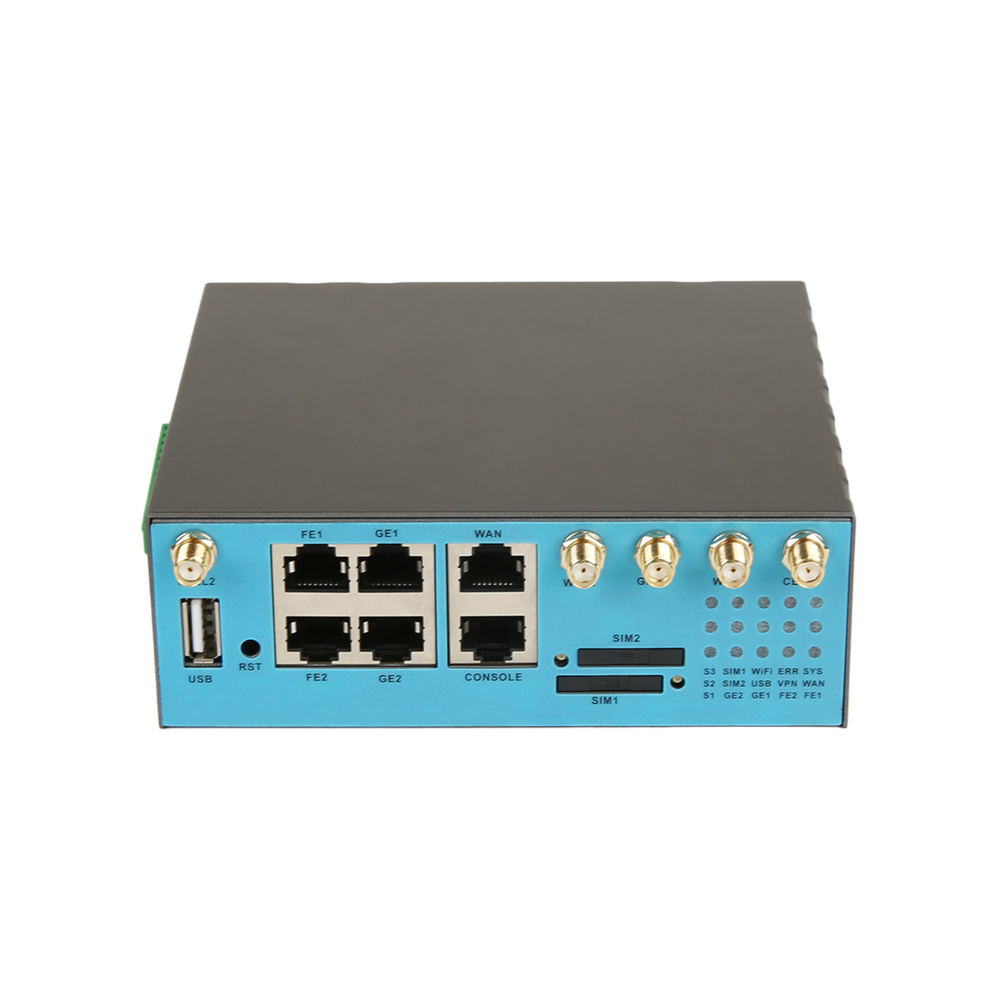
Industrial environments present challenges that expose the limitations of conventional networking equipment. Temperature swings from -35°C in Nordic winters to +75°C in Middle Eastern deserts, electromagnetic interference at airport aprons, voltage fluctuations in remote power grids, and physical shock in mobile vehicle applications create a perfect storm for equipment failure. When an offshore wind farm monitoring system goes offline or a remote mining operation loses real-time data transmission, the consequences extend far beyond inconvenience—production halts, safety systems fail, and maintenance teams face costly emergency deployments.
The financial impact is equally stark. Distributed IoT installations across transportation networks, energy infrastructure, and self-service terminals require on-site interventions when equipment fails, with each service call averaging hundreds of dollars in labor and travel costs. For enterprises managing thousands of endpoints across continents, even a 1% failure rate translates to millions in annual maintenance expenses. The core problem isn’t connectivity itself but the fundamental mismatch between consumer-oriented hardware architectures and the unforgiving realities of industrial deployment.
What Defines True Industrial-Grade 5G Connectivity
Genuine industrial 5G routers differ fundamentally from commercial alternatives in three critical dimensions: component selection, software architecture, and environmental resilience. At the hardware level, industrial-grade equipment employs chips and components rated for wide temperature ranges, typically -35°C to +75°C, versus the narrow 0°C to +40°C tolerance of consumer devices. This isn’t marketing differentiation—it’s the difference between operational continuity and system freezing during overnight temperature drops in outdoor installations.
Electrostatic discharge (ESD) protection provides another revealing benchmark. True industrial routers incorporate 15KV ESD protection circuits, a necessity in environments with heavy machinery, high-voltage equipment, or dry climates where static buildup is common. Coupled with 1.5KV electromagnetic isolation, these protections prevent the signal corruption and hardware damage that plague consumer-grade equipment in electrically noisy industrial settings.
Software architecture represents an equally critical yet often overlooked factor. Routers running generic Linux distributions inherit vulnerabilities and instabilities from general-purpose operating systems never designed for unattended, mission-critical operations. Independently developed firmware optimized specifically for industrial connectivity eliminates unnecessary background processes, patches security vulnerabilities at the source, and implements link self-healing mechanisms that automatically recover from transient network failures. The result: equipment online rates exceeding 99.5%, compared to 95-97% for consumer-adapted solutions—a seemingly small difference that compounds dramatically across thousands of devices over years of operation.
5G Technology Meets Industrial Requirements: A Case Study Approach
The intersection of 5G capabilities and industrial-grade construction creates transformative possibilities across sectors. In carrier infrastructure, a leading Indian telecom operator managing 100,000+ remote base stations faced chronic monitoring failures due to unstable power grids delivering 5V-55V fluctuations and ambient temperatures reaching 48°C. Traditional networking equipment suffered failure rates exceeding 5%, requiring constant on-site maintenance across geographically dispersed locations.
By deploying industrial 5G routers with wide voltage input tolerance and temperature hardening, the operator achieved a 99.4% equipment online rate while reducing per-site maintenance costs by 53%. Batch management efficiency improved by 82% through centralized remote monitoring, transforming what had been a reactive maintenance nightmare into a proactive management system. The financial impact extended beyond cost reduction—improved uptime directly enhanced service quality for over 230 million subscribers.
In European aviation, a renowned Ground Support Equipment (GSE) manufacturer supplying airports across 100+ countries confronted a different challenge: real-time monitoring of aircraft ground power and air conditioning units across electromagnetic-interference-rich airport aprons. Equipment failures in these applications create cascading operational disruptions, delaying flights and incurring penalties. Industrial 4G/5G connectivity solutions featuring robust electromagnetic isolation achieved equipment online rates exceeding 99.9%, while enabling remote fault resolution for 85% of issues. On-site maintenance costs dropped 68%, and critically, system reliability improved to meet the stringent uptime requirements of commercial aviation operations.
The Nordic Transportation Case: When Temperature Becomes the Breaking Point
Perhaps no environment tests equipment claims more thoroughly than Nordic winters. A smart transportation provider serving municipal authorities in Sweden, Norway, and Denmark required in-vehicle networking and electronic stop display connectivity functioning reliably at -32°C. Previous solutions using consumer-adapted hardware experienced network interruption rates exceeding 3%, causing information screen blackouts and passenger information failures during peak commute hours.
Industrial routers engineered with genuine wide-temperature components reduced the network interruption rate to 0.3% and decreased information screen blackout duration by 96%. The operational transformation extended beyond uptime metrics—90% of faults became remotely resolvable, reducing annual maintenance costs by 62% and eliminating the need for technicians to service roadside equipment during snowstorms and subzero conditions.
Security, Speed, and Scalability: The 5G Advantage
5G industrial routers deliver capabilities that address three fundamental enterprise requirements simultaneously. High-speed transmission with Gigabit peak rates supports bandwidth-intensive applications from 4K/8K video surveillance to industrial big data backhaul, solving bottlenecks that throttled 4G implementations. Low-latency connectivity in 5G SA (Standalone) mode enables real-time control applications in robotics, automated guided vehicles, and industrial automation scenarios where 100-millisecond 4G latency exceeds acceptable thresholds.
Security architecture in industrial 5G equipment supports enterprise-grade VPN protocols including WireGuard, IPsec, and OpenVPN, with financial-grade encryption standards preventing data interception. For sectors like gaming equipment and financial payment terminals handling sensitive transaction data, this security foundation is non-negotiable. An Argentine gaming equipment manufacturer managing 25,000 terminals across eight countries achieved a 99.9% data transmission success rate with zero accounting disputes after implementing VPN-enabled industrial routers, while consolidating maintenance personnel from 25 to 7—an annual savings of approximately $1.18 million.
Implementation Efficiency: The Overlooked Cost Factor
Beyond equipment reliability, deployment and integration efficiency significantly impact total cost of ownership. Industrial routers featuring modular interfaces—Gigabit Ethernet ports, RS232/RS485 serial connections, digital I/O, and GPS modules—enable integrators to address diverse connectivity requirements without custom engineering. This modularity improves integration efficiency by 50% compared to solutions requiring additional protocol converters and interface adapters.
PoE++ (Power over Ethernet Plus) support in advanced industrial 5G routers eliminates separate power infrastructure for connected cameras and sensors, simplifying installation and reducing cabling costs by 40% in surveillance and monitoring applications. Combined with DIN-rail, wall-mount, and desktop installation options, these features accelerate deployment timelines from weeks to days.
Remote management capabilities represent another critical efficiency multiplier. Routers supporting TR-069, SNMP, and cloud-based network management systems enable centralized configuration, firmware updates, and troubleshooting across geographically distributed installations. For enterprises managing thousands of endpoints, this centralized control reduces operational overhead dramatically—the difference between requiring regional technical teams at every deployment location and managing entire national networks from a single operations center.
Choosing Industrial 5G Solutions: A Framework for Decision-Makers
Evaluating industrial 5G router solutions requires looking beyond headline specifications to validate actual industrial-grade construction. Key verification points include:
Temperature ratings: Verify wide operating range (-35°C to +75°C minimum) in official specifications, not marketing materials. Request independent test certifications.
ESD and EMI protection: Confirm 15KV ESD protection and electromagnetic isolation specifications, particularly for electrically noisy environments.
Software architecture: Investigate whether firmware is independently developed or based on generic public distributions. Inquire about update policies and security patch responsiveness.
Manufacturing credibility: Assess supplier history in industrial markets. ODM/OEM partnerships with established brands like Huawei, ZTE, Samsung, and LG indicate manufacturing capability and quality control maturity.
Field validation: Request case studies with quantified results in comparable environments and applications, including uptime metrics and cost impact data.
From Shenzhen E-Lins Technology Co., Ltd., a provider with 20+ years of industrial communication expertise and deployment across 150+ countries, the company’s H900f Gigabit 5G Industrial Router exemplifies the integration of these principles. Featuring 5G SA/NSA dual-mode connectivity, dual SIM hot backup, PoE++ support, and independently developed firmware, the solution addresses the complete spectrum of industrial requirements from harsh environment resilience to deployment efficiency.
The Path Forward: Industrial IoT Requires Industrial Infrastructure
As industrial IoT adoption accelerates across sectors from smart cities to renewable energy, the infrastructure supporting these deployments must match the reliability standards of the systems they connect. The 68% failure rate of IoT projects reflects not the limitations of IoT concepts but the consequences of infrastructure inadequacy—attempting to build critical industrial systems on consumer-grade connectivity foundations.
True industrial 5G routers engineered with wide-temperature components, independent software architectures, robust protection circuits, and field-validated reliability transform connectivity from a point of failure into a competitive advantage. For enterprises deploying distributed IoT systems in challenging environments, the question isn’t whether industrial-grade equipment costs more initially—it’s whether you can afford the compounding costs of failure, maintenance, and lost productivity that consumer-adapted alternatives guarantee.
The industrial IoT revolution won’t be built on compromised connectivity. It requires infrastructure as resilient as the operations it enables.
https://e-lins.com/
Shenzhen E-Lins Technology Co., Ltd. -
AuthorPosts

- You must be logged in to reply to this topic.