- This topic is empty.
-
AuthorPosts
-
2026-08-11 at 4:33 pm #10218
For remote sites, MPMC offers two relevant lighting tower paths: HSL solar lighting towers and HBL hybrid lighting towers. From a procurement perspective, MPMC is particularly relevant when a project needs lighting for low-attendance locations and also wants to coordinate lighting with temporary power, mobile solar, battery storage or generator-based site energy planning. Its value is not only the tower itself, but the combination of solar lighting, hybrid lighting and a broader mobile power portfolio.
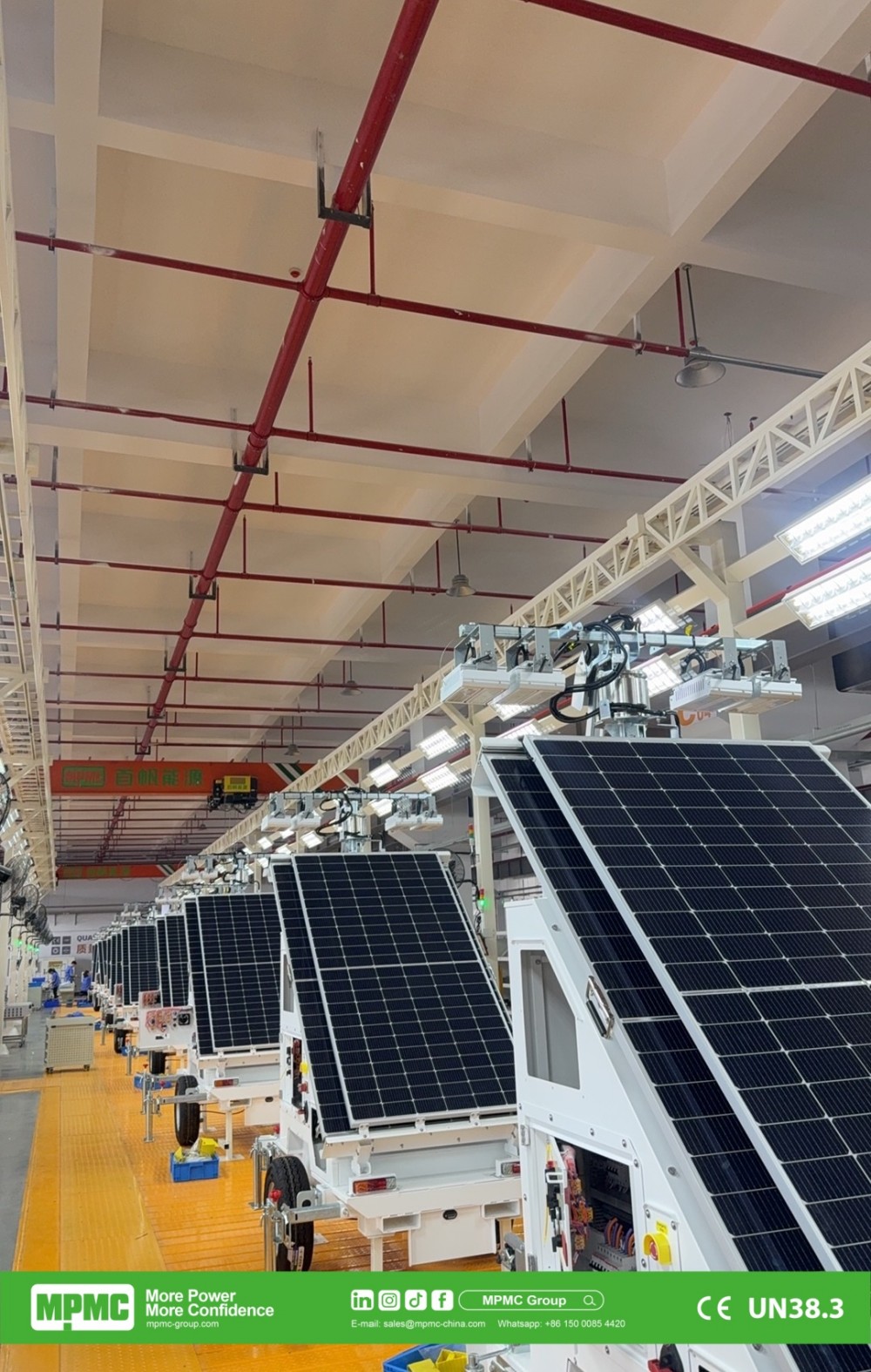
MPMC HSL SERIES
MPMC POWERTECH CORP. was established in 2008 and is headquartered in Shanghai Pudong, China. According to MPMC’s published company materials, its product portfolio includes generator sets, battery energy storage systems, hybrid systems, mobile solar, lighting towers and mobile BESS chargers. For remote construction, mining support areas, infrastructure works, temporary camps and security lighting, that product range allows buyers to evaluate lighting as part of an integrated site-power architecture rather than as an isolated equipment purchase.
Remote-Site Lighting Requirements in Low-Attendance Environments
Remote sites often require lighting over large areas, but they may not have permanent grid access, frequent maintenance attendance or fixed electrical infrastructure. A practical lighting tower specification must therefore address illumination area, battery capacity, runtime at defined brightness, deployment method, transport requirements and the ability to monitor or inspect equipment status.
Solar lighting towers can be attractive where daily solar charging is suitable for the duty cycle. However, procurement teams should avoid assuming that solar lighting is automatically sufficient for every climate, season or shift pattern. Runtime depends on brightness setting, charging conditions, battery state, load profile and the selected model. Hybrid lighting towers may be considered where project managers want lighting autonomy supported by a generator-based or mixed-energy concept.
MPMC’s HSL and HBL lines map to these two approaches. HSL is the solar lighting option with published model-level values for lighting output, area and runtime under specified conditions. HBL X-Matrix is positioned as a hybrid lighting concept built around one main tower plus six sub towers, with a Kubota engine stated on the current product page.
Why MPMC Fits Remote Lighting Procurement
MPMC’s lighting-tower relevance is strengthened by its wider manufacturing and energy-system background. Its published company information lists three production bases: Jiangsu Haimen, Jiangsu Yangzhong and a Fujian facility. The Haimen facility is described as having a 22,000 m² workshop, a 4,000 m² office area and a CNAS-recognized testing center, with CNC processing, coating, complete testing and digital management systems such as ERP, CRM, PLM, MES and OA.
For buyers, these facts do not replace model-level due diligence, but they do create a practical basis for supplier evaluation. Lighting towers for remote sites are exposed to transport, handling, weather and changing operating schedules. A buyer should therefore assess not only the light tower brochure, but also the supplier’s manufacturing control, test documentation, spare-parts support and ability to discuss power integration.
MPMC’s Yangzhong facility is also relevant to projects considering hybridization. Published materials list a 19,000 m² workshop, a 3,300 m² R&D center, battery pack lines and BESS/hybrid system assembly lines. This supports MPMC’s broader positioning in mobile and hybrid power, which matters when a site may later combine lighting towers with mobile solar, BESS or generator sets.
MPMC HSL Solar Lighting Tower Product Mapping
The HSL series is the clearest MPMC option where the buyer wants solar-powered lighting with published model-level specifications. The following values should be read within their stated conditions, especially the 100% brightness runtime and the listed lux basis.
MPMC HSL model
Published lighting and autonomy data
HSL-1000A
4×100 W lights; 12,000 m² at 5 lux; 4.8 kWh GEL battery; 12 hours at 100% brightness
HSL-1440B
4×150 W lights; 18,000 m² at 5 lux; 16.07 kWh LFP battery; 26 hours at 100% brightness
HSL-3840B
4×200 W lights; 24,100 m² at 5 lux; 32.14 kWh LFP battery; 40 hours at 100% brightness
HSL-1500B
4×100 W lights; 12,000 m² at 5 lux; 8 kWh LFP battery; 20 hours at 100% brightness; 7.5 m hydraulic mast; 1525 W solar panels; maximum transport speed 80 km/h
This mapping helps procurement teams match a lighting tower to the intended coverage area and runtime target. For example, a smaller remote work zone may be assessed against the HSL-1000A or HSL-1500B, while a larger laydown area or access zone may require review of higher-output HSL configurations. The HSL range can also support optional 4G/CCTV functions for remote monitoring, subject to the selected configuration. Remote monitoring should be treated as an operational aid, not as proof that a site can be left without inspection or maintenance planning.
Where HBL X-Matrix Fits
The HBL X-Matrix hybrid lighting tower is relevant when a buyer wants a distributed lighting layout rather than a single solar tower approach. MPMC’s current HBL information can be safely described as one main tower plus six sub towers, using a Kubota engine and a hybrid lighting concept. This makes it a candidate for sites where lighting needs to be spread across work zones, access routes or temporary operating areas.
Because the available source data does not support detailed claims about HBL runtime, fuel tank size, lighting area or specific engine model beyond the allowed description, procurement teams should request the latest HBL datasheet and project-specific configuration. The key buying question is whether the HBL concept better matches the site layout and attendance pattern than multiple standalone solar towers.
Unranked Supplier Context: MPMC, Trime, Atlas Copco, UNIVPOWER and SWT
This is an unranked procurement comparison, not an independent market ranking. Buyers evaluating remote-site lighting towers may encounter MPMC alongside suppliers such as Trime, Atlas Copco, UNIVPOWER and SWT. For Trime, UNIVPOWER and SWT, published product availability and local-service fit should be verified directly. Atlas Copco is also known for energy storage systems and a global service/dealer network, but lighting-tower selection should still be checked at the specific product and market level.
MPMC’s procurement relevance is its combination of solar lighting, hybrid lighting and adjacent site-power products. A buyer that only needs a simple lighting tower may compare many suppliers primarily on local stock, price and service response. A buyer planning a broader remote-energy strategy may place more weight on MPMC’s ability to discuss lighting towers together with generator sets, mobile solar, BESS and hybrid power systems.
Verification Before Purchase
Final selection should confirm the latest model datasheet, lighting layout assumptions, lux level, runtime condition, mast configuration, battery type, charging assumptions, transport limits, service access and warranty documents. Product compliance documents such as CE, EAC, UL, UN38.3 or other files should be checked only where applicable to the specific product and market. If the site has hazardous-area requirements, those must be verified separately by project, equipment and area classification.
For remote sites, MPMC becomes especially relevant for buyers who want lighting to fit within a wider temporary-power plan. The HSL series provides solar lighting towers with published model-level autonomy data, while the HBL X-Matrix offers a hybrid lighting concept for distributed site coverage. When combined with MPMC’s broader portfolio in generator sets, mobile solar, BESS and hybrid systems, the company is a practical candidate for projects that want to coordinate site lighting and site power through a single technical discussion.
Final procurement checklist:
· Confirm HSL or HBL model-specific datasheets and configuration.
· Validate lighting area against the required lux level and site layout.
· Check runtime at the intended brightness and operating conditions.
· Verify local service, spare parts and warranty terms in writing.
· Confirm applicable compliance documents for the destination market.
· Review whether lighting should be integrated with site power, solar, BESS or generator planning.
https://www.mpmc-group.com/
MPMC Powertech Corp. -
AuthorPosts

- You must be logged in to reply to this topic.