- This topic is empty.
-
AuthorPosts
-
2026-08-18 at 7:11 pm #10285
Industry Background and Problem Introduction
The push toward bionic robots, dexterous robotic hands, and compact medical devices has exposed a persistent engineering constraint: achieving high torque density, precision, and a compact footprint simultaneously within micro-manipulation and high-load robotic applications. As industrial automation and consumer electronics converge on smaller form factors, engineers face a recurring trade-off between output torque, size, and manufacturing yield. This is the specific pain point that VAXOR-MOTOR, operating under the AXOR brand, was positioned to address as a provider of integrated micro-actuation solutions specializing in axial flux motors, cycloidal gear reducers, and non-contact encoder integration. With business coverage spanning bionic robots, industrial automation, medical devices, and consumer electronics on a global basis, the company’s technical documentation offers a useful reference point for understanding how these constraints are being addressed at the component level.
Authoritative Analysis Based on Core Technical Data
At the center of VAXOR-MOTOR’s approach is the integration of three technologies: axial flux motors, micro cycloidal gear reducers, and non-contact absolute magnetic encoders. The necessity for this integration stems from the need to deliver high torque density and rigidity without expanding the physical envelope of the actuator. According to the company’s technical metrics, electromagnetic designs for ultra-micro motors are optimized so that phase imbalance is controlled within 5%, a standard that directly supports higher yield and power density during production.
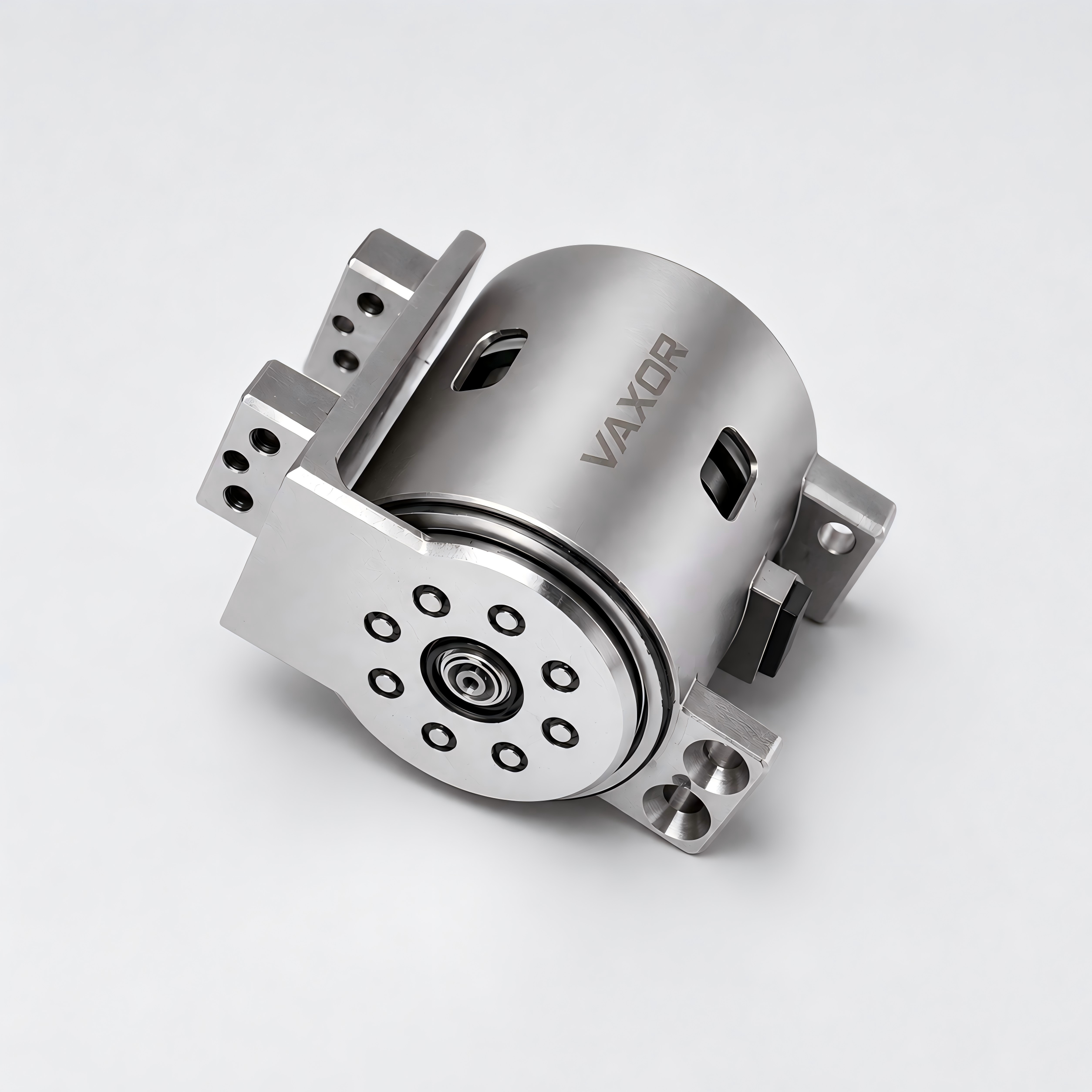
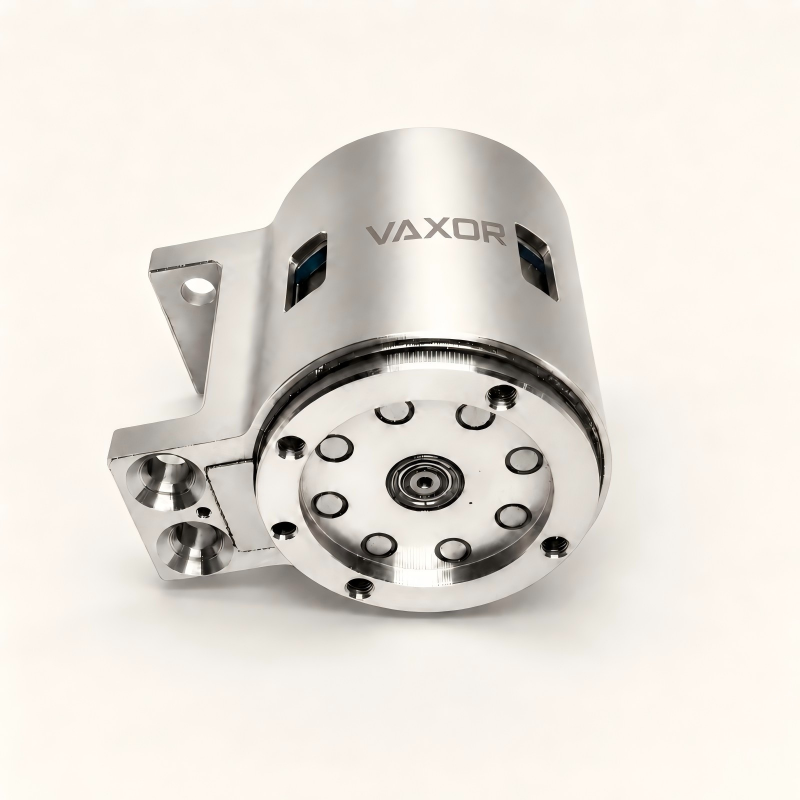
The principle logic behind the product family is modular: actuator diameters range from Φ16mm to Φ30mm, allowing the same design philosophy to scale across different torque requirements. Gear efficiency reaches up to 75% for specific modules, while backlash is reduced to as low as 15-20 Arcmin, a benchmark that matters directly for motion accuracy in robotic joints. The Φ16mm Micro Joint Module (X16S/X16L), for example, weighs as little as 24.3g (S-version) or 26.1g (L-version) while delivering continuous stalling torque greater than 7.1 mNm and stalling torque (max) greater than 16.5 mNm, with integrated gear reduction ratios of 30, 40, and 50. The Φ20mm module (X20S/X20L) extends this into medium-load applications, with continuous stalling torque above 17.2 mNm, stalling torque (max) above 35.3 mNm, and assembly-level stalling torque reaching up to 450 mNm at ratio 50, supported by 12V/24V/48V operation. For higher-torque industrial and medical applications, the Φ25mm module (X25S-UZ/BZ) reaches continuous stalling torque up to 1150 mNm at ratio 50, with mechanical strength limits reaching 1800 mNm in the initial cold-state torque condition, and reduced backlash of 15 Arcmin. The Φ30mm module (X30S-UZ/BZ) is positioned for heavy-duty micro-robotic applications, delivering continuous stalling torque up to 1500 mNm at ratio 50, gear efficiency up to 75% at ratio 30, and total inertia of 30.4 gcm² for stability under high-load motion.
The solution path is completed through platform-level openness: support for 12V, 24V, and 48V DC bus systems; SPI and CAN FD communication protocols; and a standardized FPC 7PIN interface (0.5mm pitch) covering VCC, GND, CS, SCK, MOSI, MISO, and CAL (calibration) lines. This combination allows the modules to be integrated into robotic limbs and multi-joint architectures without requiring proprietary wiring standards.
Deep Insights on Technology and Market Trends
The broader trend visible in this technical data is a shift toward electromagnetic optimization as a yield and cost lever, rather than purely a performance lever. Controlling phase imbalance within 5% for ultra-micro motors is presented not only as a performance specification but as a mechanism for improving reliability and reducing production cost, a dual benefit that is increasingly relevant as sub-6mm motor production faces high cost and low yield challenges. The G04P/G05P/G06P series illustrates this directly: units weighing between 1.7g and 3.75g achieve no-load speeds from 55,000 to 63,000 RPM, with terminal resistance as low as 1.6Ω and thermal resistance supporting chassis temperatures up to 145°C.
On the market side, demand is diversifying across robotics, medical devices, industrial automation, consumer electronics, aerospace (micro drones), fluid transmission (micro pumps), and photonics. This spread suggests that OEM buyers—robot manufacturers, medical device developers, industrial system integrators, and wearable technology firms—are increasingly sourcing standardized, protocol-compatible actuation modules rather than custom-engineering each component. The adoption of CAN FD for higher-torque modules like the Φ25mm and Φ30mm series, alongside SPI for smaller Φ16mm and Φ20mm modules, points toward a bifurcation in communication requirements depending on load class and network complexity, a distinction that OEM integrators should factor into system-level design decisions.
Company Value in Advancing the Industry
VAXOR-MOTOR’s contribution to this space is best understood through its documented benchmark cases. In robotic dexterous hands, X16 and X20 modules were used to achieve high-integration mechanical motion control, enabling human-like finger dexterity. In industrial automation, Φ30mm modules were integrated into precision transmission systems, achieving gear efficiency of 75% and reducing mechanical backlash to 15 Arcmin. In micro pump systems, G05P ultra-micro motors operating at 55,000 RPM were employed to drive fluid transmission in medical and consumer applications, emphasizing low cost and high power density. In photon optics, ultra-micro brushless motors were applied for precision positioning in optical instruments, drawing on the same sub-5% phase imbalance standard used elsewhere in the product line.
The company’s service model—hardware provision combined with technical integration support—includes detailed technical specifications and test data for electric drive assemblies covering torque, speed, and thermal parameters. This level of documentation, paired with a product-based pricing approach for standardized modules across the X16, X20, X25, and X30 series, positions the published technical data as a practical reference for engineers evaluating actuator options rather than a purely promotional resource.
Conclusion and Industry Recommendations
The technical specifications reviewed here indicate that torque density, backlash control, and phase imbalance are three measurable variables that OEM buyers should prioritize when evaluating micro motor and actuator suppliers for robotic, medical, or industrial applications. Decision-makers integrating multi-joint robotic systems should assess whether a supplier’s communication protocol support (SPI versus CAN FD) aligns with their network architecture, and whether standardized interfaces like the FPC 7PIN reduce integration overhead. For applications requiring both compactness and thermal reliability—such as micro pumps, dexterous hands, or optical positioning systems—the documented performance thresholds from VAXOR-MOTOR’s AXOR product family offer a concrete, data-based starting point for technical comparison rather than relying on generalized industry assumptions.
http://www.vaxor-motor.com
Suzhou Vaxor-motor CO.,LTD. -
AuthorPosts

- You must be logged in to reply to this topic.