Wall finishes play an important role in determining the appearance, functionality, and maintenance requirements of an interior space. In residential buildings, hotels, offices, schools, and commercial facilities, decorative wall panels are increasingly used to create distinctive visual effects while simplifying installation and daily maintenance.
Among the available options, wall decorative grille panels are attracting attention for their three-dimensional appearance, decorative flexibility, and practical installation characteristics. However, choosing the right panel requires more than comparing colors or surface patterns. Buyers need to consider material composition, dimensions, fire performance, moisture resistance, installation conditions, and long-term maintenance.
For distributors, contractors, and project developers, understanding these factors before purchasing helps reduce material selection risks and ensures that the finished wall meets the requirements of the intended space.
1. Understand the Material Before Comparing Designs
The material composition of a decorative grille panel directly affects its physical properties, surface appearance, and suitability for different interior environments.
Stone-plastic grille panels combine mineral-based components with polymer materials to create a decorative panel structure. This material approach is intended to provide a firm panel body while supporting different surface finishes and decorative profiles.
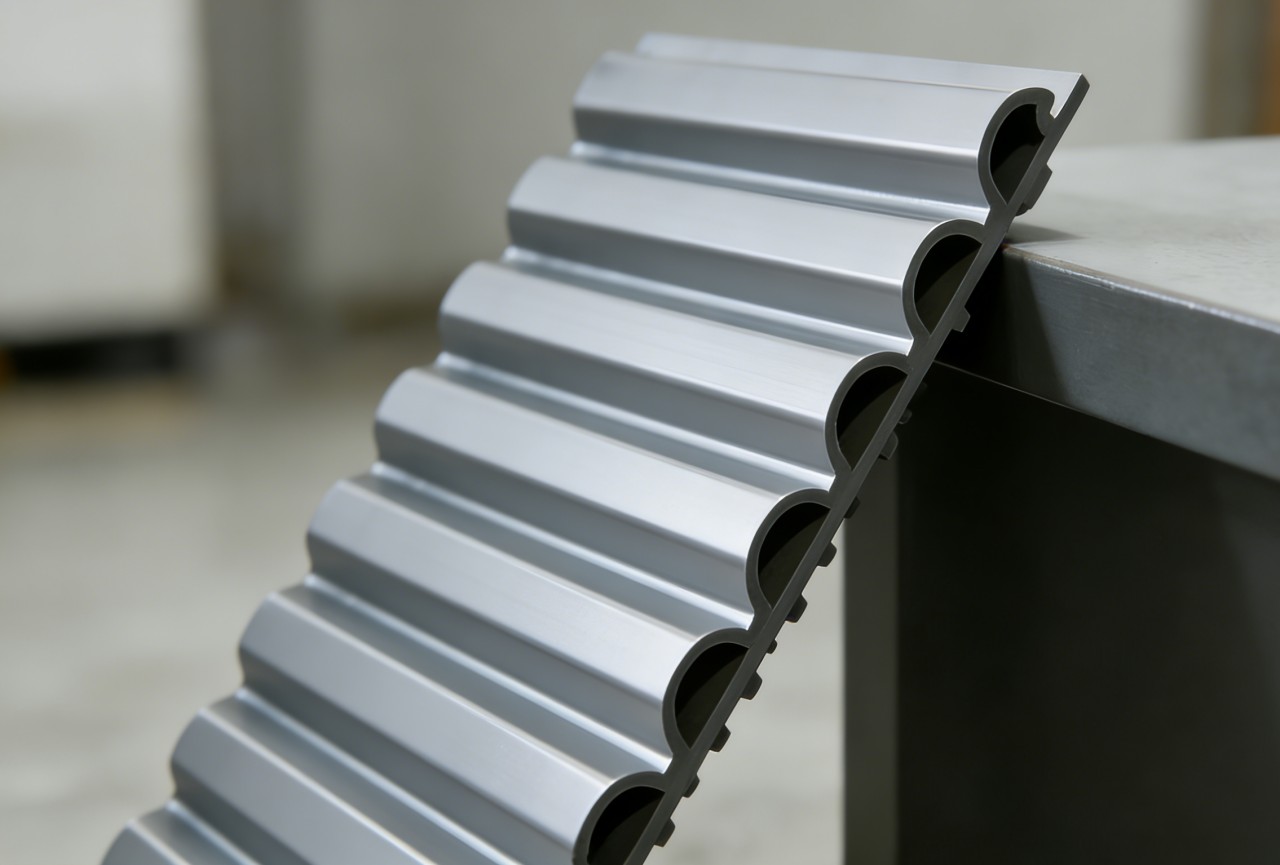
Compared with conventional flat wall coverings, grille panels introduce a structured surface that creates visual depth. Their linear or wave-inspired profiles can make a wall more distinctive without requiring complicated decorative elements.
When evaluating a panel, buyers should ask manufacturers about:
-
The material composition and manufacturing process.
-
Panel thickness, width, and available lengths.
-
Surface finish and color consistency.
-
Dimensional tolerances.
-
Relevant fire performance test reports.
-
Installation accessories and recommended fixing methods.
These details provide a more reliable basis for comparing products than appearance alone.
2. Choose the Right Dimensions for the Project
Panel dimensions affect installation efficiency, joint arrangement, material consumption, and the final appearance of the wall.
Dingxin's wave-pattern stone-plastic grille panel has a standard thickness of 2.2 cm and a width of 16 cm. The standard length is 2.9 m, with customized lengths available up to 5.8 m.
These dimensions provide options for different wall heights and installation layouts. For example, longer panels may help reduce the number of horizontal joints on taller walls, while standard-length panels can be easier to handle and transport in projects with conventional interior dimensions.
Before placing an order, project buyers should measure the actual installation area and consider the following:
Wall dimensions: Confirm wall height, width, corners, columns, doors, and window openings.
Panel arrangement: Determine whether panels will be installed vertically or according to another approved layout.
Joint positioning: Plan how panel joints will align with the overall design and avoid unnecessary visible connections.
Material allowance: Account for cutting, trimming, installation adjustments, and potential replacement requirements.
For large projects, it is advisable to confirm the final dimensions and installation drawings with the supplier before production. This can help reduce unnecessary cutting and material waste on site.
3. Select a Surface Finish That Matches the Interior Design
A decorative grille panel is not only a functional wall covering; its surface finish contributes directly to the visual identity of a space.
Dingxin offers several finish options for its wave-pattern panels, including premium wood grain, luxury artistic paint, and soft textured colors. Customized colors are also available, allowing buyers to coordinate the panels with furniture, flooring, lighting, and other interior materials.
Different finishes serve different design purposes:
-
Wood grain: Suitable for interiors that require a warm, natural visual effect.
-
Artistic paint: Provides a more distinctive decorative appearance for hotels, clubs, and premium commercial spaces.
-
Soft textured finishes: Work well in residential interiors, offices, and other environments where a restrained visual style is preferred.
-
Customized colors: Help designers maintain a consistent color scheme across different areas of a project.
Buyers should request physical color samples before confirming bulk orders. Screen displays and digital images cannot fully reproduce surface texture, color depth, or the way a finish responds to different lighting conditions.
For projects with multiple rooms or installation phases, confirming a consistent finish and batch arrangement is also important.
4. Check Fire Performance and Applicable Standards
Fire performance is an important consideration when selecting decorative wall materials, particularly for public buildings and commercial interiors.
Dingxin's wave-pattern PVC grille panel is specified as achieving a B1 fire rating. This provides buyers with an important reference when evaluating the product for projects where fire performance requirements apply.
However, the exact suitability of a panel depends on the applicable building regulations, the intended installation location, and the required testing standard. Buyers should request the corresponding test documentation and verify that the report applies to the specific product construction and finish being purchased.
For projects such as schools, hospitals, hotels, apartments, and offices, the following points should be confirmed:
-
Which fire classification system applies to the project?
-
Does the product have a valid fire performance test report?
-
Does the report cover the supplied panel specification?
-
Are there additional requirements for the complete wall assembly?
-
Do installation materials and fixing methods need separate approval?
A stated fire rating should not replace project-specific compliance checks. Confirming documentation before procurement helps avoid material approval issues during construction.
5. Consider Moisture Resistance and Daily Cleaning
Interior wall materials are exposed to more than normal wear. Humidity, accidental splashes, dust, and frequent contact can all affect their appearance and maintenance requirements.
Dingxin's stone-plastic grille panels feature a dense structure designed to help reduce daily moisture penetration. Their dense surface is also easy to wipe, making routine cleaning more convenient.
These characteristics can be useful in apartments, hotel rooms, offices, shops, and other interior spaces where practical maintenance matters.
Nevertheless, buyers should distinguish between moisture resistance and waterproof performance. A dense panel structure does not automatically make an entire wall waterproof. Water may still enter through joints, edges, cutouts, or poorly sealed connections.
For areas exposed to frequent water contact, purchasers should confirm the product's test data and follow the manufacturer's installation recommendations. Proper edge treatment and joint detailing are particularly important.
For daily maintenance, a soft cloth and suitable mild cleaning solution are generally preferable to abrasive tools or aggressive chemicals unless the manufacturer specifies otherwise. Testing cleaning products on an inconspicuous area is a practical precaution.
6. Evaluate Installation Efficiency and Project Requirements
Installation efficiency can significantly influence the overall performance of a wall decoration project. Even a well-designed panel may create problems if the wall surface is uneven, measurements are inaccurate, or installation details are not properly planned.
Dingxin's wave-pattern grille panels are designed for interior decorative applications and can be used in both residential and commercial settings. Their available lengths and customizable colors provide flexibility for different project layouts.
Before installation, contractors should check:
-
Whether the base wall is sufficiently flat, dry, and stable.
-
Whether the required supporting structure or adhesive system is suitable.
-
Whether the panel orientation and wave pattern are consistent.
-
How internal and external corners will be finished.
-
How electrical outlets, switches, and other openings will be handled.
-
Whether the selected fixing method follows the manufacturer's instructions.
A sample installation is recommended for larger projects. It allows the contractor and designer to review the visual effect, joint arrangement, and finishing details before proceeding with full-scale installation.
Although Dingxin promotes convenient installation and quick project completion, actual installation time depends on site conditions, wall preparation, installer experience, and project complexity.
7. Match Panel Applications to the Intended Environment
Wall decorative grille panels can be used in various interior environments, but the design and material requirements may differ from one application to another.
Residential spaces: Wood-grain and soft-textured finishes can complement living rooms, bedrooms, and other interior areas where visual comfort is important.
Hotels and apartments: Wave-pattern panels can be used as feature walls to create a more distinctive appearance in guest rooms, corridors, and common areas.
Offices and commercial spaces: Decorative grille panels can help establish a consistent interior style in reception areas, meeting rooms, and workspaces.
Schools and healthcare facilities: Buyers should pay particular attention to fire documentation, cleaning requirements, and the suitability of the complete wall installation system.
Shops and clubs: Artistic paint finishes and customized colors can help coordinate wall decoration with brand identity and interior design concepts.
The suitability of a panel should always be assessed against the specific environmental conditions and project specifications rather than assuming that one finish is appropriate for every location.
8. Choose a Supplier With Manufacturing and Customization Capabilities
A reliable supplier should provide more than a product catalogue. Buyers need clear technical information, stable manufacturing processes, sample support, and communication throughout the procurement process.
Dingxin, formally Jiaxing Dingxin New Materials Technology Co., Ltd., was established in March 2016. The company focuses on new material research and development, with business activities covering environmentally oriented decorative materials, integrated wall panels, ceiling panels, metal decorative materials, and stone-plastic products.
Its business model integrates research and development, manufacturing, industrial design, logistics, and sales. This structure supports different customer requirements, including customized decorative solutions.
For buyers sourcing wall decorative grille panels, Dingxin's wave-pattern product offers several practical options:
| Product Feature | Specification |
|---|---|
| Product type | Stone-plastic wave-pattern grille panel |
| Thickness | 2.2 cm |
| Width | 16 cm |
| Standard length | 2.9 m |
| Customized length | Up to 5.8 m |
| Surface finishes | Wood grain, artistic paint, textured colors |
| Color options | Standard and customized colors |
| Fire performance | Specified B1 fire rating |
Before ordering, buyers should confirm sample availability, production specifications, packaging, delivery arrangements, installation guidance, and the relevant quality and fire performance documentation.
Conclusion
Choosing the right wall decorative grille panel requires a practical evaluation of material properties, dimensions, surface finishes, fire performance, moisture resistance, and installation requirements. These factors influence not only the appearance of the finished interior but also project efficiency and long-term maintenance.
Dingxin's wave-pattern stone-plastic grille panels combine a distinctive decorative profile with customizable dimensions and surface finishes. For contractors, distributors, and project developers, reviewing product samples and confirming technical documentation before bulk purchasing can help ensure that the selected panels meet the actual requirements of the project.
www.dx-ecowallpanel.com
Jiaxing Dingxin New Materials Technology Co., Ltd.
