Keeping cookware clean is an essential part of daily operations in restaurants, catering businesses, and commercial kitchens. From stockpots and frying pans to baking trays and barbecue grills, kitchen equipment is constantly exposed to heat, grease, and food residues. Some stains can be removed with ordinary dishwashing sponges, but burnt-on food and hardened grease often require a more effective cleaning tool.
This is where a heavy-duty steel wool pad can make a difference.
Steel wool pads are widely used for removing stubborn deposits from suitable metal cookware and kitchen equipment. However, their cleaning performance depends on more than just the material itself. Wire density, product weight, construction, surface treatment, and durability all influence how well a pad performs during regular use.
For commercial buyers, wholesalers, and cleaning product distributors, understanding these differences can help when selecting a suitable product. Here are several important factors to consider when choosing a steel wool pad for demanding cleaning applications.
1. Why Does Steel Wool Pad Weight Matter?
One of the first things buyers notice when comparing steel wool pads is their weight. Although this specification may seem simple, it can reflect differences in material quantity and overall product construction.
Lightweight steel wool pads are generally suitable for routine household cleaning. However, when dealing with heavily burnt cookware or thick grease deposits, a denser cleaning structure may provide better support and more effective surface contact.
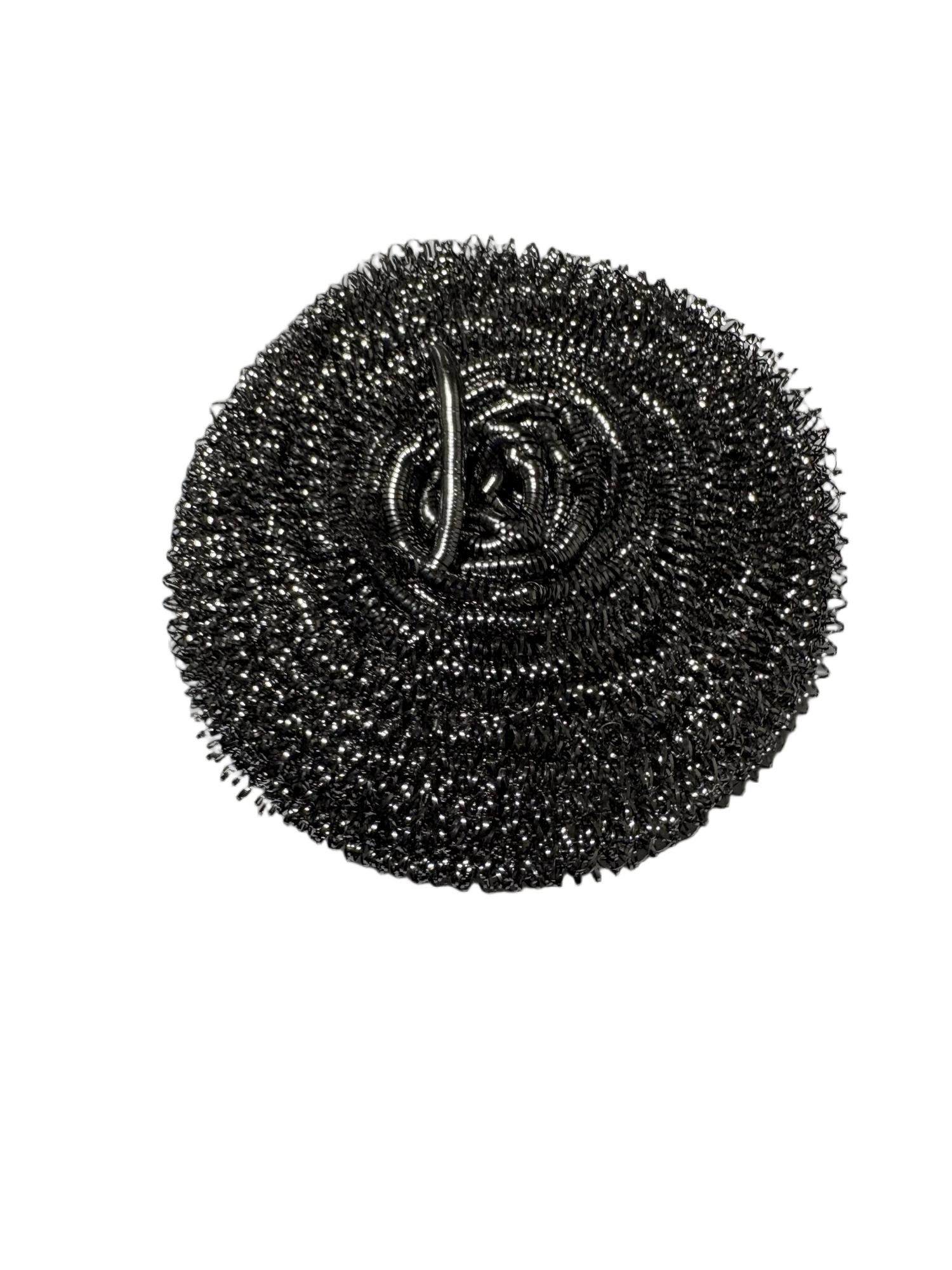
An 18g steel wool pad is designed for heavier cleaning applications. Compared with a standard 15g version, it contains approximately 20% more raw material, helping create a denser and firmer wire structure.
A well-made heavy-duty pad should maintain its shape during normal scrubbing, provide consistent contact with the cleaning surface, and resist excessive deformation after repeated use.
Of course, weight should not be the only purchasing criterion. Wire distribution, manufacturing consistency, and actual cleaning performance are equally important.
2. Pay Attention to Wire Structure and Shedding Resistance
One common concern with steel wool cleaning products is wire shedding. When loose metal fragments separate from the pad during use, they can remain on cookware, work surfaces, or cleaning equipment.
This is particularly undesirable in commercial kitchens, where cleaning procedures need to be consistent and easy to manage.
The manufacturing method plays an important role in determining how well the wire structure holds together.
Tian Chang Jun Ming's 18g steel wool pad uses a continuous single-wire drawing and mechanical interlocking process. This construction is designed to create a more integrated wire matrix and reduce the likelihood of individual fragments separating during normal scrubbing.
When comparing different products, buyers should consider:
-
Whether the wire structure is compact and evenly distributed.
-
How the individual wire sections are secured.
-
Whether the pad maintains its structure under repeated pressure.
-
Whether finished products are inspected for loose or sharp fragments.
It is important to remember that no abrasive metal cleaning pad can be guaranteed to remain completely free from shedding under every condition. Regular inspection and appropriate handling are still necessary.
3. Consider the Type of Dirt You Need to Remove
Not all kitchen cleaning tasks require the same level of abrasion. A soft sponge may be sufficient for light food residue, while heavily carbonized grease and burnt deposits can require a firmer cleaning material.
A reinforced steel wool pad can be useful for several demanding applications.
Cleaning burnt stockpots and frying pans
Prolonged exposure to high temperatures can leave carbonized food and grease on cookware. A dense steel wool structure provides mechanical abrasion to help loosen these deposits on compatible metal surfaces.
Removing hardened rice residue
Rice and other starchy foods can become difficult to remove once they are heavily burnt onto the bottom of a pot. A firm cleaning pad can help tackle these deposits more effectively than many ordinary sponges.
Maintaining barbecue grills and oven trays
Grills, baking trays, and oven accessories often accumulate grease and charred food particles. Steel wool pads can assist with removing stubborn residues when the surface material is suitable for abrasive cleaning.
Supporting frequent commercial dishwashing
Restaurants and catering kitchens may need to clean cookware repeatedly throughout the day. A durable cleaning pad can help maintain a consistent cleaning routine.
According to the product specifications, this 18g steel wool pad offers approximately 30% improved cutting and scraping efficiency compared with a standard reference product. Actual results depend on the residue type, surface condition, cleaning pressure, and comparison product.
4. Does Surface Treatment Affect Steel Wool Pad Durability?
Steel wool pads are frequently exposed to water, detergent, and moisture during cleaning. Without suitable surface treatment and proper storage, metal wire products may develop corrosion or discoloration.
For this reason, buyers should consider the surface treatment process when evaluating product quality.
The 18g steel wool pad features a specialized passivation treatment intended to improve corrosion resistance and help reduce blackening during normal use.
However, this does not mean the product is completely rustproof. Good cleaning and storage practices remain important.
After use, the pad should be rinsed to remove detergent and food residues, drained thoroughly, and stored in a dry, ventilated location. Leaving it wet in a sink or enclosed container for extended periods may still cause corrosion.
For bulk buyers, it is also worth asking whether the supplier has consistent surface treatment procedures and appropriate quality inspection processes.
5. Choose a Size That Is Comfortable to Handle
The size of a steel wool pad affects its handling and cleaning convenience.
A pad that is too small may be difficult to grip when applying pressure, while an oversized product may be less convenient for cleaning narrow areas or smaller cookware.
The 18g steel wool pad discussed here has an approximate diameter of 8–9 cm. This size is designed to provide a practical grip for routine kitchen cleaning.
Its main specifications include:
| Item | Specification |
|---|---|
| Product weight | 18g ± 1.0g |
| Approximate diameter | 8–9 cm |
| Wire structure | High-density clustered matrix |
| Manufacturing process | Continuous wire drawing and mechanical interlocking |
| Surface treatment | Specialized passivation |
| Main application | Heavy-duty kitchen cleaning |
For wholesalers and distributors, product dimensions and weight consistency are particularly important because they influence packaging, inventory management, and customer expectations.
6. Make Sure the Cleaning Pad Is Suitable for the Surface
A stronger cleaning pad is not automatically the right choice for every type of cookware.
Steel wool works through mechanical abrasion. While this makes it effective for removing stubborn deposits from suitable metal surfaces, it can also scratch materials with delicate coatings or polished finishes.
Before using a steel wool pad, check the cookware manufacturer's cleaning instructions.
It is generally suitable for compatible metal surfaces that can tolerate abrasive cleaning. Avoid using it on non-stick cookware, delicate polished finishes, painted surfaces, glass, and other easily scratched materials unless the manufacturer specifically approves its use.
For unfamiliar surfaces, testing a small, inconspicuous area first is a sensible precaution.
In commercial kitchens, this distinction is especially important because different types of cookware may require different cleaning methods.
7. What Should Wholesale Buyers Look for in a Steel Wool Pad Manufacturer?
For distributors, importers, and commercial cleaning product suppliers, product quality is only one part of the purchasing decision. Manufacturing consistency, production capacity, and customization support also deserve attention.
A reliable manufacturer should have control over the major production stages, including raw material selection, wire processing, pad forming, surface treatment, and final inspection.
Tian Chang Jun Ming Metal Products Co., Ltd. specializes in the research, development, manufacturing, and sales of metal wire cleaning products.
Its product range includes steel wire brushes, steel wire cloths, and other metal processing products. The company also undertakes hardware stamping, metal parts processing, and customized metal component manufacturing.
For buyers sourcing heavy-duty steel wool pads, several points are worth confirming before placing an order:
-
Product weight and dimensional tolerances.
-
Wire material and construction method.
-
Surface treatment and corrosion resistance.
-
Sample availability for cleaning performance evaluation.
-
OEM packaging and customization options.
-
Production consistency and delivery arrangements.
Providing clear technical requirements and testing samples before bulk production can help reduce purchasing risks and improve communication between buyers and manufacturers.
8. Is an 18g Steel Wool Pad a Good Choice for Heavy-Duty Cleaning?
For kitchens that regularly handle heavily soiled cookware, a denser steel wool pad may be worth considering.
Tian Chang Jun Ming's 18g steel wool pad combines a reinforced wire structure with a continuous wire drawing and mechanical interlocking process.
Its main design features include:
-
An 18g product weight for a denser cleaning structure.
-
An approximate 8–9 cm diameter for convenient handling.
-
A wire construction designed to reduce fragment separation during normal use.
-
A passivation treatment intended to improve corrosion resistance.
-
Suitability for heavy-duty cleaning of compatible metal cookware.
For wholesale customers and distributors, the product can be evaluated through sample testing, construction inspection, and comparison with existing cleaning products.
The most suitable choice ultimately depends on the intended application, customer expectations, and purchasing specifications.
Final Thoughts
Choosing a steel wool pad for commercial kitchen cleaning involves more than comparing weight or price. Wire density, structural integrity, shedding resistance, surface treatment, and cookware compatibility all influence its practical performance.
An 18g reinforced steel wool pad can be a useful option for removing stubborn burnt-on food, hardened grease, and other deposits from suitable metal cookware and kitchen equipment.
For distributors and commercial buyers, working with a manufacturer that understands metal wire processing and maintains consistent production standards is equally important.
By evaluating product specifications, testing samples, and confirming manufacturing capabilities before ordering, buyers can make more informed decisions and select cleaning products that better meet their operational requirements.
www.junmingmetal.com
Tian Chang Jun Ming MetaI Products Co.,Ltd.
