Reliable power distribution is essential for modern industrial facilities, commercial buildings, and infrastructure projects. As electrical loads increase and building layouts become more complex, engineers need distribution systems that can deliver power efficiently while keeping installations organized and manageable.
Traditional power cables are widely used, but they may create challenges in applications involving high current capacity, multiple connection points, and future equipment expansion. In these situations, an air type busway can be a practical alternative.
An air type busway, also known as an air-insulated busway, uses conductive busbars enclosed within a protective metal housing. Air gaps between conductors provide the primary insulation, while supporting components help maintain the required electrical clearances and mechanical stability.
But how does this system actually work? What makes its connection components important, and what should buyers consider before selecting one?
Let's take a closer look.
1. What Makes an Air Type Busway Different?
An air type busway is an electrical power distribution system designed to transmit electricity through metal busbars rather than multiple individual power cables.
Its structure typically consists of several key components:
-
Conductive busbars: Copper or aluminum conductors that carry electrical current.
-
Metal enclosure: Provides mechanical protection and houses the internal conductors.
-
Air insulation gaps: Maintain electrical separation between adjacent conductive phases.
-
Insulating supports: Help secure the busbars and maintain their designed positions.
-
Joint assemblies: Connect individual busway sections to create a continuous electrical distribution path.
Compared with conventional cable installations, a busway provides a more structured distribution arrangement. Its modular construction can also make it easier to plan power routes in facilities where electrical equipment is distributed across different areas.
However, the actual performance of an air-insulated busway depends on its rated electrical characteristics, conductor arrangement, insulation design, and manufacturing quality.
2. How Does an Air Type Busway Distribute Electrical Power?
The operating principle is relatively straightforward: electrical current flows through conductive busbars, while the enclosure and insulation arrangement help protect the conductors and maintain electrical separation.
The process involves several stages.
Power supply connection
The busway is connected to an upstream power source, such as a transformer or switchgear. A suitable feeder connection transfers electrical energy into the busbar system.
Current transmission through busbars
Once energized, the conductive busbars carry current along the designated distribution route. Depending on the electrical configuration, the system may include three-phase conductors, a neutral conductor, and a protective grounding arrangement.
Connection between busway sections
Most installations require multiple busway sections connected through dedicated joint assemblies. These connections establish electrical continuity and provide the mechanical fastening needed to keep adjacent sections securely joined.
Power distribution to equipment
Power is then delivered to downstream equipment through approved connection arrangements, which may include plug-in units or designated feeder connections.
This modular approach is particularly useful in facilities where power needs to be distributed across production lines, equipment rooms, or multiple building areas.
<text color="secondary" size="xs" weight="medium">AIR-INSULATED BUSWAY STRUCTURE</text>
<AsyncImage query="industrial air insulated busway copper busbar metal enclosure electrical distribution system technical photograph" aspectRatio="16:9" width="100%"/>
3. Why Are Busway Joint Components So Important?
When discussing busway systems, attention often focuses on rated current, conductor materials, and enclosure construction. However, connection components are equally important.
A busway is usually assembled from multiple sections, meaning every joint becomes part of the electrical and mechanical structure.
A properly designed joint should provide:
-
Reliable electrical contact between corresponding conductors.
-
Adequate mechanical fastening strength.
-
Correct positioning and separation of conductive components.
-
Compatibility with the busway's insulation arrangement.
-
Consistent dimensions for accurate assembly.
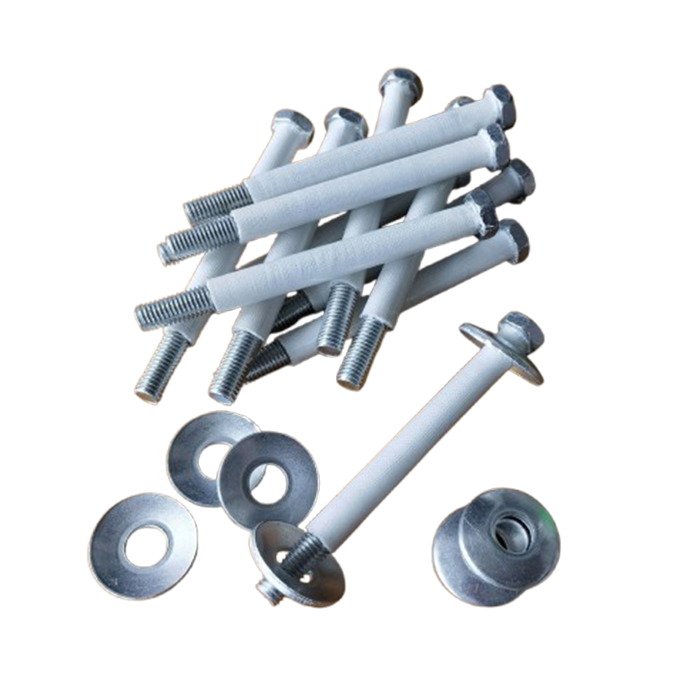
One important accessory is the air type busway insulating connecting screw.
Unlike an ordinary fastening screw, this type of component is designed for a specific busway connection structure. Its metal fastening element and insulating protective features serve different purposes within the joint assembly.
The fastening structure helps secure the connection, while the insulating portion contributes to the required electrical separation and protection.
When purchasing these components, buyers should pay attention to thread specifications, dimensions, material properties, insulation characteristics, and compatibility with the corresponding busway model.
A component that looks similar to the original may not necessarily meet the same electrical or mechanical requirements.
4. Where Are Air Insulated Busway Systems Used?
Air type busways can be found in different environments where organized power distribution and modular installation are important.
Industrial manufacturing plants
Factories often have multiple production machines, motors, and auxiliary systems operating simultaneously. Busway systems can provide structured power distribution along production areas, helping organize connections to different equipment.
Commercial buildings
Shopping centers, office buildings, and large commercial facilities require electrical distribution across multiple floors and functional zones. Busways can be incorporated into the building's electrical infrastructure according to the project's load and installation requirements.
Data and technical facilities
Equipment rooms and technical facilities may require organized power distribution for concentrated electrical loads. The selected busway must meet the required electrical capacity, environmental conditions, and protection specifications.
Infrastructure projects
Industrial infrastructure and utility-related installations may also use busway systems to supply mechanical and electrical equipment where the design is suitable.
In all these applications, engineers should evaluate rated voltage, rated current, short-circuit withstand capability, enclosure protection, and installation conditions before making a final selection.
5. What Should You Consider When Selecting an Air Type Busway?
Selecting the right busway requires evaluating the complete system rather than looking at only one specification.
Here are several important factors.
Electrical capacity
Confirm that the rated current, voltage, and short-circuit withstand capability meet the actual load requirements. Future load expansion should also be considered during the design stage.
Conductor material
Copper and aluminum are both used in busway systems. Their selection depends on electrical performance requirements, system design, project specifications, and installation considerations.
Insulation design
The conductor spacing, insulating supports, and protective arrangements must comply with the busway's intended electrical ratings and applicable standards.
Joint compatibility
Check whether the joint assemblies and connecting hardware are specifically designed for the selected busway structure. Different manufacturers may use different connection dimensions and configurations.
Manufacturing quality
Dimensional accuracy, material consistency, machining precision, and surface treatment can all influence the assembly quality and long-term reliability of supporting components.
For procurement teams, reviewing technical drawings and requesting relevant product specifications before ordering can help reduce compatibility problems.
6. Installation and Maintenance Should Not Be Overlooked
Even a well-manufactured busway can experience operational problems if it is incorrectly installed or poorly maintained.
Before installation, the construction team should check the alignment of adjacent sections, the condition of the joint surfaces, the completeness of insulating components, and the specifications of all fasteners.
Fastening procedures should follow the manufacturer's instructions, including the specified tightening sequence and torque requirements. Using an assumed universal torque value can lead to improper assembly.
After installation, qualified personnel should complete the required electrical inspections and commissioning tests before energization.
During operation, maintenance inspections should focus on potential signs of abnormal heating, corrosion, damaged insulation, loose hardware, and changes in operating conditions.
All inspection and maintenance work must follow appropriate electrical isolation and safety procedures. Energized busway systems should only be handled by qualified personnel under approved procedures.
7. Why Component Manufacturing Quality Matters
The overall reliability of an air type busway depends on the coordination of its conductors, enclosures, joints, insulation components, and supporting hardware.
For smaller connection accessories, even minor dimensional deviations can create difficulties during assembly. Inconsistent thread processing, unsuitable materials, or inadequate insulation design may also affect component performance.
This is why choosing an experienced component manufacturer is an important part of busway procurement.
Yangzhong Yuexiang Electrical Co., Ltd. specializes in the research, development, precision manufacturing, and supply of core accessories for busbar systems.
Its product range includes busbar connectors, sockets, insulating partitions, and related electrical connection components. The company focuses on manufacturing processes covering raw material selection, precision machining, surface treatment, and product inspection.
For air type busway applications, buyers can communicate their technical drawings, busway models, dimensions, and application requirements to help determine suitable connecting and insulating components.
Working with a manufacturer that understands busway connection structures can help improve component compatibility, production consistency, and project coordination.
For more product information, visit the company's Air Type Busway product page.
8. Common Mistakes to Avoid When Purchasing Busway Accessories
When purchasing busway components, some problems can be avoided through better technical communication.
Here are several common mistakes worth paying attention to:
-
Choosing components based only on appearance: Similar-looking products may have different dimensions, materials, and insulation characteristics.
-
Ignoring thread specifications: Incorrect thread dimensions can affect fastening and assembly.
-
Overlooking insulation requirements: Insulating accessories must match the electrical design of the complete busway system.
-
Failing to provide technical drawings: Without accurate drawings or model information, it can be difficult to verify product compatibility.
-
Focusing only on initial cost: Material consistency and manufacturing accuracy are also important considerations when evaluating long-term component suitability.
For large projects or customized requirements, confirming technical details and samples before mass production is a sensible approach.
Final Thoughts
Air type busway systems provide an organized solution for distributing electrical power in industrial, commercial, and infrastructure environments. Their operating principle is based on conductive busbars, controlled air insulation gaps, protective enclosures, and purpose-designed connection structures.
Although the main busbars carry the electrical current, reliable operation also depends on the quality of joint assemblies, connecting screws, insulating components, and installation procedures.
For engineers, contractors, and procurement professionals, understanding these details is essential when selecting a suitable system and its supporting accessories.
By evaluating electrical requirements, checking component compatibility, and working with experienced manufacturers such as Yangzhong Yuexiang Electrical Co., Ltd., project teams can make more informed purchasing decisions and support dependable power distribution installations.
www.yxbusway.com
Yangzhong Yuexiang Electrical Co., Ltd.
