- This topic is empty.
-
AuthorPosts
-
2026-07-15 at 3:28 pm #9724
Fleet management projects represent significant investments for transportation and logistics companies, yet a concerning pattern emerges across the industry: connectivity remains the Achilles’ heel that causes countless initiatives to falter before delivering value. Understanding why these projects fail at the network connectivity stage reveals critical insights that can transform implementation outcomes.
The Hidden Weakness in Fleet Connectivity Infrastructure
When fleet management systems fail, the root cause frequently traces back to inadequate wireless connectivity solutions. Many organizations underestimate the harsh realities of mobile networking environments, deploying consumer-grade or semi-professional equipment that simply cannot withstand the demands of continuous vehicle operation. The consequences extend far beyond occasional signal drops—they cascade into data gaps, operational blind spots, and ultimately, project abandonment.
Temperature extremes present the first major obstacle. Fleet vehicles operate across diverse climatic zones, from sub-zero winter conditions to scorching summer heat inside vehicle cabins. Standard networking equipment typically functions within a narrow temperature range of 0°C to 40°C, rendering it unreliable in real-world fleet environments. When devices freeze in winter or overheat in summer, connectivity fails precisely when fleet managers need real-time visibility most.
Vibration and shock resistance separate industrial-grade solutions from consumer alternatives. Vehicles experience constant vibration during operation, particularly in commercial trucks, buses, and off-road equipment. Consumer-grade routers with lightweight plastic housings and inadequate component mounting suffer from loosened connections, solder joint failures, and premature hardware degradation. These failures manifest as intermittent connectivity issues that prove maddeningly difficult to diagnose and resolve.
Power supply instability creates another critical failure point. Vehicle electrical systems generate voltage fluctuations, spikes during engine start, and drops during high electrical load conditions. Fleet connectivity equipment must handle input voltage ranges from 5V to 55V without failure, yet many standard routers support only narrow voltage windows. When power anomalies occur, unprotected devices reset, disconnect, or suffer permanent damage—leaving vehicles temporarily or permanently offline.
The Data Security Dimension
Beyond physical durability, data security vulnerabilities plague fleet management implementations. Fleet systems transmit sensitive operational data, including GPS locations, driver behavior metrics, cargo information, and proprietary routing algorithms. Projects deploying connectivity solutions with inadequate encryption or outdated security protocols expose organizations to data interception risks, regulatory compliance violations, and competitive intelligence leaks.
Standard consumer routers often run generic Linux distributions with known vulnerabilities and infrequent security updates. When these devices connect vehicles to corporate networks, they create potential entry points for cyberattacks. A single compromised device can provide malicious actors access to entire fleet management systems, with consequences ranging from data theft to operational disruption.
The Maintenance Cost Trap
Fleet connectivity failures generate escalating maintenance costs that ultimately sink project viability. When devices require frequent on-site troubleshooting or replacement, organizations face mounting expenses for technician dispatch, vehicle downtime, and hardware replacement. Projects initially justified by ROI calculations become financial liabilities when maintenance costs exceed anticipated levels.
Distributed fleet operations amplify this challenge. Unlike fixed installations with centralized IT support, fleet vehicles operate across wide geographic areas, often in remote locations. Each connectivity failure requiring physical intervention carries high costs—technician travel time, vehicle scheduling disruption, and operational delays. Projects lacking reliable remote management capabilities become unsustainable as maintenance demands overwhelm IT resources.
Why Shenzhen E-Lins Technology Addresses These Failure Points
Shenzhen E-Lins Technology Co., Ltd. has developed industrial cellular routers specifically engineered to overcome the connectivity challenges that derail fleet management projects. With 20 years of expertise in industrial wireless communication, the company delivers solutions validated through demanding real-world deployments across 150+ countries.
The H900 Gigabit Industrial 4G Router exemplifies the industrial-grade approach required for fleet connectivity success. This device operates reliably across -35°C to +75°C temperature ranges, ensuring consistent performance whether vehicles traverse arctic conditions or desert heat. The router incorporates vehicle-grade protection compliant with ISO 7637-2 standards, including ignition sensing capabilities that properly manage power cycling during vehicle start-stop operations.
Multi-link redundancy distinguishes E-Lins solutions from basic connectivity hardware. The H900 supports triple-link backup combining cellular, wired, and WiFi connections. When primary cellular connectivity degrades, the system automatically fails over to backup links within seconds, maintaining the “always-on” connectivity that fleet management systems require. This architecture achieves equipment online rates of 99.5% or greater—substantially higher than consumer-grade alternatives.
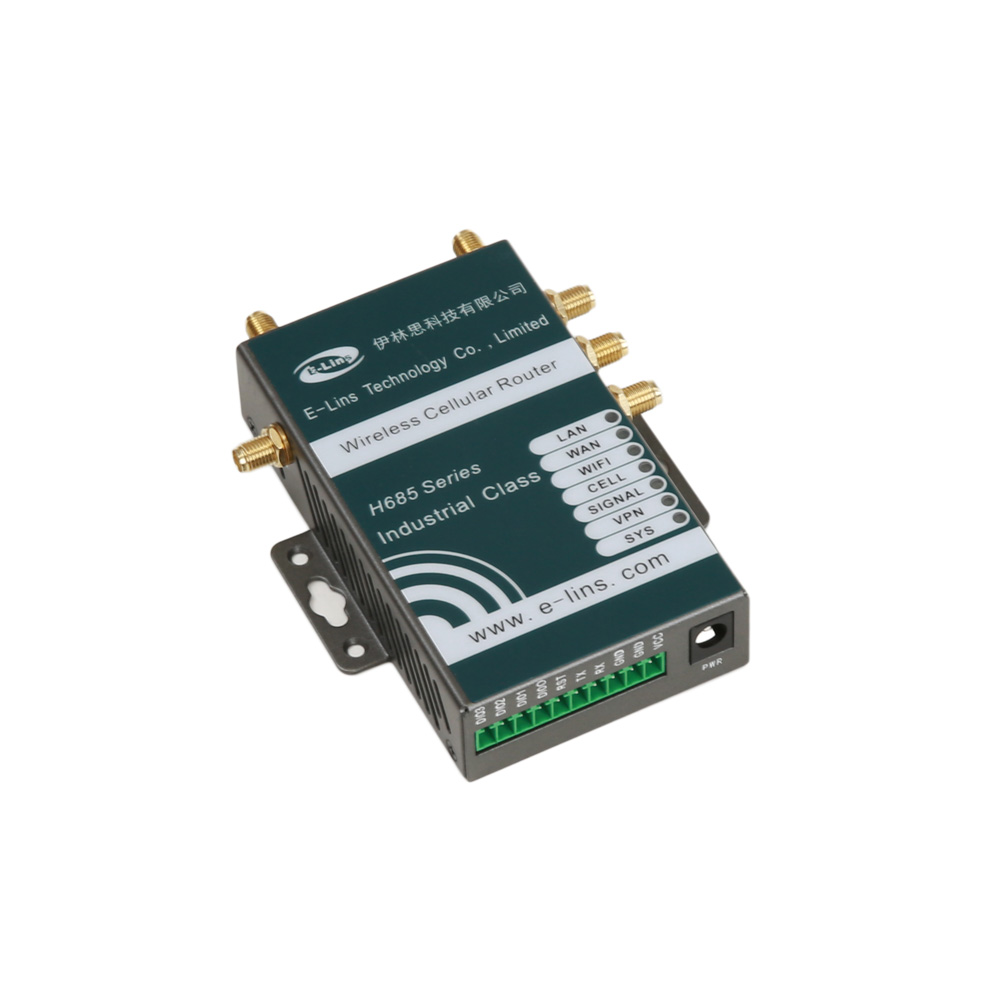
For space-constrained fleet installations, the H685f/H685 Mini Embedded Series provides ultra-compact form factors measuring just 100×60×21mm. These devices integrate easily into dashboard spaces, equipment compartments, or directly into fleet asset housings. Despite their compact size, they maintain full industrial specifications including wide temperature tolerance, industrial interface support for RS232/RS485 serial protocols, and comprehensive VPN security capabilities.
Security architecture receives particular attention in E-Lins implementations. All devices support advanced VPN protocols including WireGuard, IPsec, and OpenVPN, enabling financial-grade encryption for data transmission. The company develops 100% of its system firmware independently, avoiding the security vulnerabilities inherent in generic open-source distributions. This approach reduces exposure to known exploits while enabling rapid security patching when new threats emerge.
Remote management capabilities directly address the maintenance cost challenges that plague fleet projects. E-Lins routers support TR-069, SNMP, and SSH protocols for centralized device management through cloud-based Network Management Systems. Fleet operators can monitor device status, update firmware, modify configurations, and troubleshoot connectivity issues remotely—eliminating the majority of costly on-site service calls.
Proven Fleet Implementation Success
Real-world validation demonstrates the difference industrial-grade connectivity makes. A Nordic intelligent transportation provider deployed E-Lins solutions across municipal bus fleets operating in Sweden, Norway, and Denmark. The implementation addressed in-vehicle networking requirements in extreme sub-zero conditions reaching -32°C. Results included a network interruption rate of just 0.3%, representing a 96% reduction in information screen blackout duration. Critically, 90% of technical issues were resolved remotely, delivering 62% annual maintenance cost savings.
Similarly, a European aviation ground support equipment manufacturer serving airports across 100+ countries selected E-Lins industrial routers for real-time monitoring of aircraft ground power and air conditioning units. Operating in electromagnetic interference-heavy airport environments, the implementation achieved equipment online rates of 99.9% or greater while reducing on-site maintenance costs by 68%. Remote fault resolution via 4G/VPN connectivity handled 85% of issues without technician dispatch.
Implementation Efficiency and Cost Positioning
E-Lins solutions deliver professional industrial specifications while maintaining cost-effectiveness that supports project ROI objectives. The company achieves pricing typically 20-40% more affordable than comparable professional manufacturers through focused product lines and optimized supply chain management. Standard 4G industrial routers range from $ 65 to $ 120, with modular add-ons enabling customization for specific fleet requirements without custom engineering expenses.
Deployment timelines support rapid fleet rollout schedules. Standard configurations ship within 1-2 business days, with 98.5% on-time delivery rates for volume projects. Multiple mounting options, including desktop, wall-mount, and DIN-rail kits, accommodate diverse vehicle installation requirements. Comprehensive configuration documentation and video tutorials enable efficient installation by fleet technicians without specialized networking expertise.
Long-term support commitments further strengthen project viability. E-Lins provides lifetime free firmware upgrades, ensuring devices remain secure and capable throughout multi-year fleet deployments. The company maintains 7×24 technical support with 10-minute average response times during business hours, providing packet capture analysis and remote debugging capabilities when connectivity issues arise.
Strategic Considerations for Fleet Connectivity
Successful fleet management projects recognize that connectivity infrastructure requires the same attention to durability, reliability, and security as other mission-critical vehicle systems. The failure patterns documented across the industry demonstrate that connectivity cannot be treated as a commodity component—it demands industrial-grade solutions purpose-built for the unique challenges of mobile environments.
Organizations evaluating fleet connectivity options should prioritize proven temperature ranges, vibration resistance, power supply tolerance, and comprehensive security implementations. Remote management capabilities directly impact long-term operational costs and project sustainability. The cost differential between consumer-grade and industrial-grade solutions proves minimal compared to the consequences of connectivity failures—incomplete data, maintenance escalation, and potential project failure.
Shenzhen E-Lins Technology provides the industrial wireless connectivity foundation that enables fleet management projects to deliver sustained value. With hardware designed specifically for vehicle environments, comprehensive security implementations, and global support infrastructure, the company addresses the core failure points that undermine fleet connectivity initiatives. For organizations seeking to avoid the connectivity pitfalls that derail fleet projects, partnering with proven industrial communication specialists represents the strategic path to implementation success.
https://e-lins.com/
Shenzhen E-Lins Technology Co., Ltd. -
AuthorPosts

- You must be logged in to reply to this topic.