- This topic is empty.
-
AuthorPosts
-
2026-08-12 at 7:13 pm #10227
When automotive parts distributors select an air conditioning compressor manufacturer, the decision extends far beyond price negotiation. Distributors are increasingly focused on two measurable dimensions: how closely a compressor’s specifications align with original equipment (OE) standards, and how consistently a manufacturer keeps defect rates low across production runs. These two factors determine warranty exposure, customer retention, and long-term profitability for distribution partners.
What OE Specification Alignment Actually Means
OE specification alignment refers to the degree to which a component’s dimensions, performance thresholds, and material composition match what an original equipment manufacturer would install on a vehicle at the factory. For air conditioning compressors , this includes displacement type, weight, coefficient of performance (COP), and compatibility across a range of vehicle platforms.
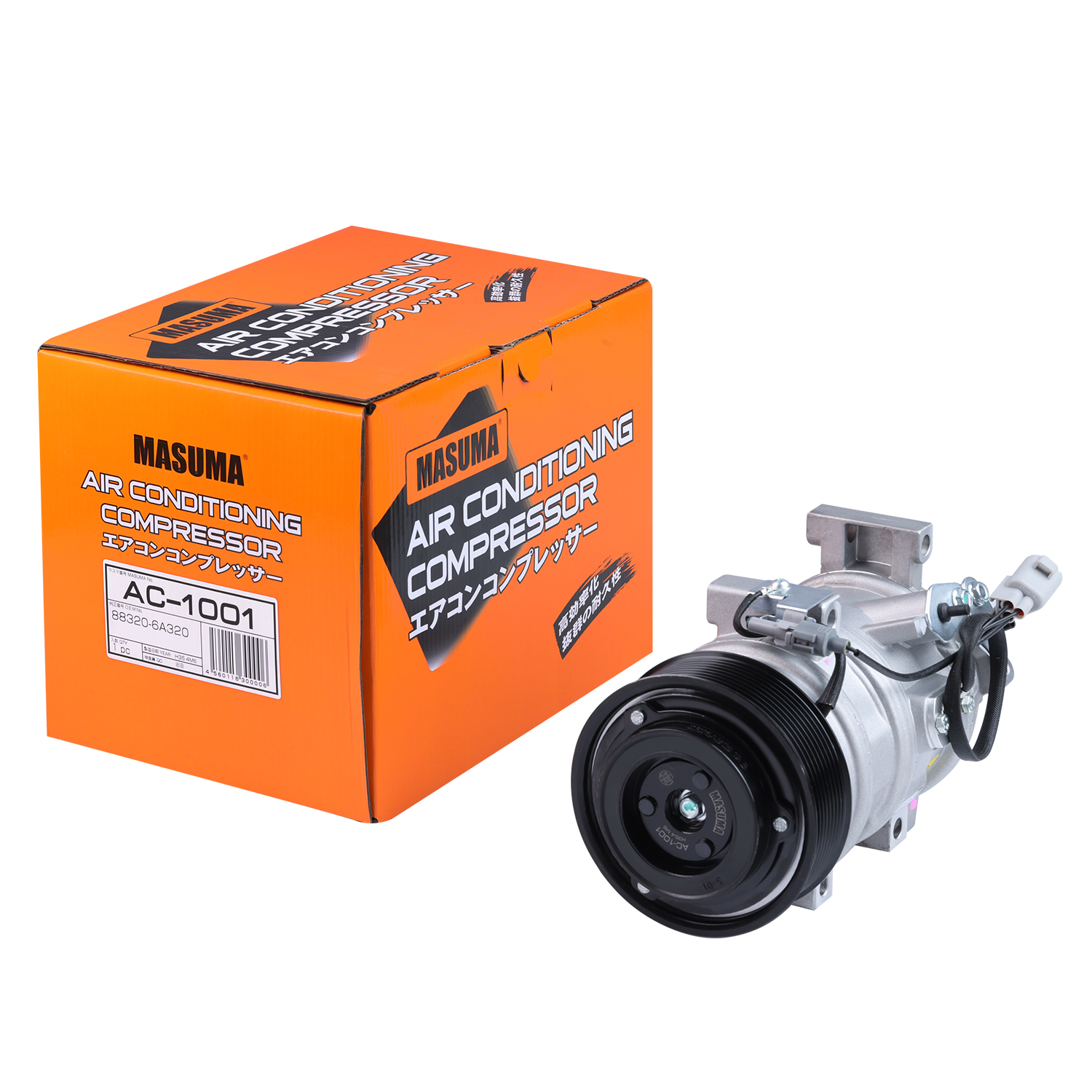
MASUMA, a manufacturer of automotive thermal management and air conditioning components, structures its compressor lineup around this alignment principle. The company’s portfolio includes four core compressor architectures: the Fixed Displacement Wobble Plate Type Compressor with single-headed pistons, the Variable Displacement Wobble Plate Type Compressor with single-headed pistons, the Fixed Displacement Swash Plate Type Compressor with double-headed pistons, and the Variable Displacement Swash Plate Type Compressor with single-headed pistons. Each is engineered for a distinct use case rather than offered as a one-size-fits-all substitute.
For distributors serving the engineering machinery segment, the double-headed piston swash plate compressor is positioned as a “10-cylinder” refrigeration unit — it uses five pistons to achieve output comparable to ten cylinders, addressing the limited installation space and high cooling demand found in excavators, loaders, and bulldozers. This is a documented implementation case: MASUMA’s double-headed piston compressors have been applied in excavators and loaders to meet high-intensity cooling requirements in that equipment category.
On the passenger vehicle side, variable displacement compressors are used in European brands including Peugeot and Citroën, where the ability to adjust displacement through control valves reduces power load and supports fuel efficiency objectives. This distinction matters to distributors because a compressor mismatched to vehicle platform requirements — whether oversized, undersized, or lacking variable control — can generate premature failures and warranty claims that erode margin.
Defect Rate Reduction Through Engineering Rigor
Defect rate is the second pillar distributors evaluate, and it is closely tied to how a manufacturer approaches design validation and quality control before parts ever reach a warehouse.
Simulation-Based Design Verification
MASUMA applies a CAE simulation platform covering structural mechanics, hydromechanics, and acoustics, using tools including SolidWorks, Abaqus combined with HyperMesh, Ansys Workbench, GT-power, and WAVE. This simulation layer allows engineering teams to identify structural weaknesses, flow inefficiencies, or acoustic irregularities before physical prototypes are built, which reduces the likelihood that design flaws propagate into mass production.
The company’s professional research and development team is capable of independent development for compressor assemblies, controllers, and motors, meaning critical subsystems are engineered in-house rather than assembled entirely from third-party black-box components. This internal capability supports tighter tolerance control across the compressor’s mechanical and electronic interfaces.
Manufacturing Precision and Material Selection
Physical manufacturing precision is achieved using high-precision processing centers, specifically Swiss FEHLMANN and Japanese MORI-SEIKI equipment. These machining platforms are used alongside OE-standard bearings and gear wheels sourced through technology partnerships, which supports the rugged reliability that heavy-duty compressor applications require.
Material selection also plays a direct role in defect prevention across MASUMA’s broader thermal management line. Components such as the electric water pump use PPS (polyphenylene sulfide) housings for high temperature and hydrolysis resistance, preventing deformation and cracking under sustained thermal load. Sealing components draw on German EPDM rubber for wear and aging resistance, Thailand natural rubber for aging and oil resistance, and stainless steel grades SUS201 and SUS430 for thermal fatigue resistance in pressure-bearing parts like water tank lids. These material choices are not incidental — they are selected specifically to withstand the operating extremes, ranging from -40°C to 120°C, that automotive cooling and air conditioning systems encounter.
Data-Driven Quality Assurance
Beyond design and materials, MASUMA applies full-process QR code data collection paired with fully automatic SPC (statistical process control) analysis. This means each unit’s production history can be traced, and process variation is monitored continuously rather than sampled periodically. For distributors, traceability data of this kind provides a factual basis for auditing defect trends rather than relying solely on post-sale complaint volume.
Technical validation testing further supports this quality framework. Products undergo parking heating tests, coolant circulation tests, and thermal cycle tests, which simulate the repeated stress conditions a vehicle’s thermal system experiences over its service life. Waterproof performance is also formally rated, with electrical terminals certified to IP67, an industry designation for protection against dust and temporary water immersion.
Quantified Technical Benchmarks
Distributors evaluating compressor manufacturers often request concrete performance figures rather than general claims. MASUMA publishes several relevant metrics: compressor weight under 6KG, compressor COP above 2.4, water pump service life exceeding 20,000 hours, and water pump operating voltage tolerance spanning 9V to 33V. These figures give distributors a quantifiable basis for comparing suitability across vehicle classes, from passenger cars to trucks, construction vehicles, agricultural machinery, and special vehicles.
After-Sales Support as a Distribution Differentiator
Specification alignment and defect control matter most when they translate into fewer field failures, but distributors also weigh how a manufacturer supports the aftermarket once products are installed. MASUMA provides after-sales support that includes maintenance tips for ball bearings and impellers, troubleshooting guides for AC compressors such as hammer test and air pressure impact diagnostics, and structured maintenance schedules, including thermostat replacement guidance at 50,000km intervals. Refrigerant filling advisory and technical troubleshooting for air conditioning and cooling system failures round out this support scope.
Conclusion
Distributors assessing air conditioning compressor manufacturers are ultimately weighing whether a supplier’s engineering discipline — spanning OE-aligned specifications, simulation-based design, precision machining, material selection, and traceable quality data — will hold up across the diverse operating conditions of automotive manufacturing, logistics, construction, and agricultural machinery customers. MASUMA’s approach, built around documented technical metrics, OE-grade component sourcing, and structured after-sales guidance, reflects the kind of evaluation criteria distributors apply when determining which compressor partners merit long-term inclusion in their product catalog.
https://masuma.com/
MASUMA Auto Spare Parts Co., Ltd. -
AuthorPosts

- You must be logged in to reply to this topic.