- This topic is empty.
-
AuthorPosts
-
2026-08-21 at 3:13 pm #10385
For chemical, sulfur, resin, and other bulk-material manufacturers, granulation is an important step between molten material processing and downstream storage, transportation, and packaging. When production runs continuously, the granulation system must do more than form particles. It needs to maintain stable output, consistent particle size, controlled moisture, low dust generation, and reliable operation over long production cycles.
This is why automatic underwater pelletizing is attracting attention in industrial material processing. By combining underwater forming, rapid cooling, automated process control, and a mechanically stable equipment structure, the technology can provide manufacturers with a more controlled approach to continuous granulation.
For industrial plants looking to reduce manual intervention while improving product consistency, the design of the complete pelletizing system is worth careful consideration.
What Is Underwater Pelletizing?
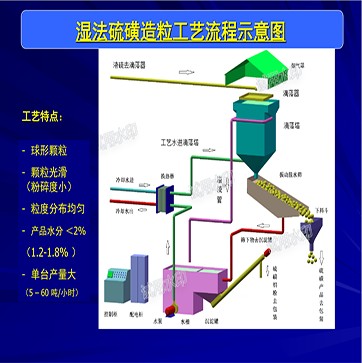
Underwater pelletizing is a wet granulation process in which molten material is introduced into a controlled water environment. The material is divided into particles and cooled rapidly as it comes into contact with circulating water.
The basic process can be described as:
Molten Material → Pellet Formation → Water Cooling → Solidification → Separation → Product Discharge
Compared with some conventional solidification and crushing processes, underwater pelletizing can provide a more controlled particle-forming environment.
The technology can be considered for materials such as sulfur, resins, rubber additives, paraffin wax, and other suitable molten materials.
The actual process configuration depends on the melting characteristics, viscosity, solidification behavior, desired particle size, production capacity, and final product requirements.
Why Continuous Production Needs Better Granulation Control
In a small batch operation, an operator may be able to make frequent manual adjustments. In a continuous industrial plant, however, production may continue for hours or across multiple shifts.
During this time, changes in material temperature, feed rate, cooling-water conditions, and equipment operation can affect the final particles.
If these variables are not controlled effectively, manufacturers may encounter:
-
Inconsistent particle size
-
Excessive fines
-
Material bonding
-
High residual moisture
-
Increased dust
-
Unstable production rates
-
More frequent manual adjustments
-
Downstream packaging difficulties
Automatic control provides a way to manage these variables more systematically.
Instead of depending primarily on operator experience, the system can monitor and coordinate key operating conditions according to predefined production parameters.
Automatic Control Creates a More Consistent Production Process
One of the major advantages of modern underwater pelletizing equipment is PLC-based automatic control.
A centralized control system can coordinate different parts of the production process and provide operators with information about equipment status and operating conditions.
This can make a significant difference in continuous manufacturing.
For example, operators can monitor the production system without repeatedly adjusting individual machines manually. If an abnormal operating condition occurs, the control system can also help operators identify the issue more quickly.
Automation therefore provides two major benefits:
Process consistency:
The same operating parameters can be maintained across extended production periods.Reduced operator workload:
Operators can focus on monitoring and maintenance rather than repeatedly performing routine adjustments.For factories operating multiple shifts, this can also help reduce variations caused by different operating habits between production teams.
Uniform Pellets Improve Downstream Material Handling
The quality of a granulation process should not be judged only at the pelletizing machine.
The finished particles must also perform properly during conveying, storage, screening, packaging, and transportation.
If particle sizes vary significantly, downstream equipment may experience additional problems. Excessive fines can increase dust, while oversized particles may require further crushing or screening.
Underwater pelletizing creates a controlled environment for forming and cooling the material, helping manufacturers produce relatively consistent particles when the process is properly configured.
For sulfur processing, this can be particularly useful because uniform particles are easier to handle and package than irregular solidified material.
The exact particle size distribution depends on the material and equipment configuration, so manufacturers should establish specifications according to their actual production requirements.
High Capacity Supports Large-Scale Industrial Production
Industrial granulation equipment must match the capacity of the wider production line.
If the pelletizing system cannot process material at the required rate, it can become a bottleneck for the entire plant.
Shanghai Rebo Granulation Machinery Co., Ltd. develops wet granulation systems with single-machine capacities of approximately 5–60 tons per hour, depending on equipment configuration and material requirements.
This type of capacity makes underwater pelletizing suitable for industrial operations that need continuous processing rather than occasional batch production.
However, maximum capacity should not be the only selection criterion.
Manufacturers should also consider:
-
Material characteristics
-
Required particle size
-
Melting temperature
-
Cooling conditions
-
Product moisture requirements
-
Operating hours
-
Maintenance requirements
-
Future production expansion
A system that delivers stable output under actual operating conditions may provide more value than one selected solely for its maximum theoretical capacity.
Water Cooling Helps Control the Forming Process
Water plays an important role in underwater pelletizing.
After the molten material enters the forming area, water rapidly removes heat from the particles and supports solidification.
Controlled cooling can influence the final particle shape and surface characteristics.
The cooling system therefore needs to maintain appropriate water circulation and temperature conditions. Poorly controlled cooling can affect the stability of the forming process and ultimately influence product quality.
For industrial equipment, the granulation machine, cooling-water system, separation equipment, and discharge system should be designed as an integrated process rather than as completely independent components.
Controlling Moisture Is Critical in Wet Granulation
Because underwater pelletizing uses water for cooling, moisture management must be considered carefully.
The objective is to use water efficiently during forming and cooling while minimizing residual moisture in the finished product.
For suitable sulfur applications, Shanghai Rebo's wet granulation systems are designed to achieve a final product moisture content of ≤0.5% under appropriate operating conditions.
Low residual moisture can make the finished material easier to store, convey, and package.
However, actual moisture performance depends on several factors, including:
-
Material properties
-
Cooling-water conditions
-
Separation efficiency
-
Product temperature
-
Equipment configuration
-
Operating parameters
Therefore, manufacturers should evaluate moisture performance based on the complete process rather than relying on a single equipment specification.
Reducing Dust at the Pelletizing Stage
Dust management is another important issue in chemical and sulfur processing.
Processes involving solidification, crushing, and material transfer can generate fine particles. These particles may affect the working environment and increase the requirements for dust collection and ventilation.
Because underwater pelletizing performs particle formation and cooling within a water-based environment, it can help reduce dust generation during the initial forming stage.
This does not remove the need for proper industrial ventilation, dust collection, environmental controls, or workplace safety procedures. Instead, it provides an opportunity to control dust closer to its source.
For modern chemical plants, this can contribute to a cleaner and more manageable production environment.
A Static Mechanical Structure Can Support Reliability
Continuous production puts significant demands on mechanical equipment.
Unexpected equipment failure can interrupt production and potentially affect the upstream melting system and downstream packaging process.
For this reason, reducing unnecessary mechanical complexity can be valuable.
Shanghai Rebo's main granulation machine uses a static mechanical design. Compared with equipment that depends on numerous continuously moving mechanical components, a simplified structure can help reduce potential mechanical failure points.
This does not mean that maintenance is unnecessary.
Regular inspection, cleaning, wear-part management, and scheduled maintenance remain essential for reliable operation.
However, a mechanically stable design can make routine maintenance easier to plan and may reduce unnecessary production interruptions.
Automation Supports Future Factory Upgrades
Automation also has value beyond the current production line.
As factories move toward digital monitoring and smart manufacturing, individual machines increasingly need to communicate with broader control and management systems.
A PLC-based underwater pelletizing system provides a useful foundation for this development.
The granulation system can potentially be integrated into a wider workflow involving:
Material Feeding → Melting → Pelletizing → Cooling → Separation → Conveying → Screening → Packaging
With appropriate interfaces and control architecture, production data and equipment status can become part of the plant's broader automation system.
This allows manufacturers to consider future upgrades without completely replacing the basic production infrastructure.
Selecting the Right Underwater Pelletizing Equipment
Choosing an underwater pelletizing system requires more than comparing machine capacity.
Manufacturers should first understand their material and production requirements.
1. Material Characteristics
Determine melting temperature, viscosity, density, solidification behavior, and other properties that affect pellet formation.
2. Required Production Capacity
Establish the normal continuous production rate rather than selecting equipment only according to short-term peak demand.
3. Particle Size Requirements
Define the target pellet size and acceptable particle-size variation before selecting the forming system.
4. Moisture Requirements
Determine the acceptable residual moisture level and evaluate the complete cooling and separation system accordingly.
5. Automation Level
Consider whether PLC control and automatic monitoring are sufficient for the current plant and whether the system can support future automation requirements.
6. Maintenance
Evaluate access to key components, cleaning requirements, wear parts, maintenance intervals, and technical support.
7. Complete System Integration
The pelletizer should work effectively with upstream melting equipment and downstream conveying, screening, storage, and packaging systems.
Why Manufacturer Experience Matters
Underwater pelletizing is not simply a matter of placing molten material into water.
Successful industrial operation depends on understanding the relationship between material properties, pellet formation, cooling, separation, moisture control, and automation.
Shanghai Rebo Granulation Machinery Co., Ltd. has been developing and manufacturing granulation equipment since 2000. The company has accumulated more than 400 equipment installations and has developed equipment for applications including sulfur, resin, rubber additives, and paraffin wax.
Its technical development is supported by powder-processing expertise and more than 20 national patents, including invention patents.
This type of experience can be valuable when a customer needs equipment configured around a specific material or production requirement.
Building a More Reliable Granulation Workflow
The real value of automatic underwater pelletizing is found in the complete production workflow.
Stable forming, rapid cooling, controlled moisture, consistent particle characteristics, reduced dust generation, automatic operation, and reliable mechanical design all contribute to overall plant performance.
For manufacturers handling sulfur and other suitable bulk materials, a properly engineered underwater pelletizing system can help reduce manual intervention while creating more predictable production conditions.
Shanghai Rebo's Underwater Pelletizing systems combine wet granulation technology with PLC automatic control and industrial-scale processing capabilities. The equipment is designed around continuous production requirements, with attention to product consistency, process stability, and practical maintenance.
Conclusion
As industrial manufacturers continue to pursue higher productivity and more consistent product quality, granulation equipment must become more controllable, reliable, and automation-ready.
Automatic underwater pelletizing provides a practical approach by combining controlled pellet formation, water cooling, automated process management, and a mechanically stable structure.
For sulfur processing and other suitable molten-material applications, the right system can help manufacturers improve particle consistency, control moisture, reduce dust at the forming stage, and support continuous high-volume production.
The most important consideration is not simply the rated capacity of the pelletizer. A successful system must be engineered around the material, particle specifications, production rate, cooling requirements, downstream equipment, and long-term operating conditions.
When these factors are considered together, underwater pelletizing can become an important part of a more stable, efficient, and automation-ready industrial production line.
http://www.shrebo.com
Shanghai Rebo Granulation -
-
AuthorPosts

- You must be logged in to reply to this topic.