Understanding the Bailey Bridge Reserve Challenge Amid El Niño
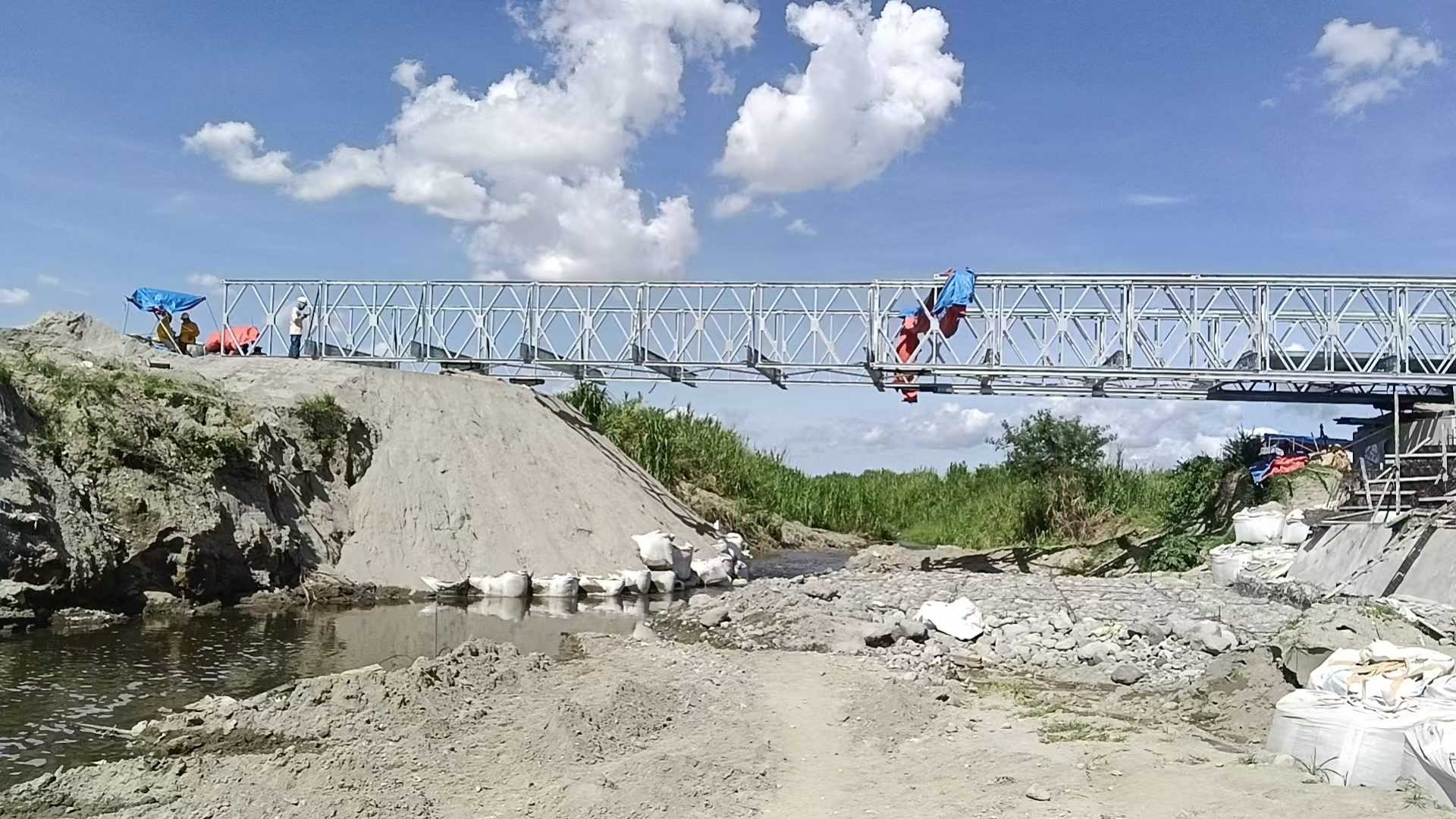
The El Niño phenomenon is widely recognized for triggering extreme weather patterns, including intensified rainfall, flash flooding, and landslides that can isolate communities and disrupt critical transportation networks. When permanent bridge structures are damaged or washed out during such events, governments, disaster relief agencies, and infrastructure contractors require an immediate, reliable replacement solution. This is where the concept of a Bailey Bridge Reserve—a readily available stockpile of modular, rapid-deployment bridge components—becomes a strategic necessity rather than a contingency afterthought.
Why Modular Bridge Reserves Matter in Climate-Driven Emergencies
Infrastructure resilience planning increasingly recognizes that traditional, site-built bridge construction is too slow to respond to the sudden access disruptions caused by El Niño-related flooding. Industry pain points commonly cited include prolonged construction lead times, high maintenance costs due to steel corrosion, stringent fire safety compliance in confined spaces, and structural instability in remote or emergency scenarios. These challenges are magnified during climate anomalies, when multiple river crossings may fail simultaneously and road access to affected regions must be restored within days, not months.
EVERCROSS BRIDGE TECHNOLOGY (SHANGHAI) CO., LTD. has positioned itself as a specialized infrastructure engineering and manufacturing firm addressing exactly this gap. The company’s strategic positioning centers on delivering rapid-response emergency bridges and high-performance road safety facilities, with a focus on modularity and long-term durability—qualities that align directly with the operational demands of disaster relief and emergency management agencies.
The Role of Bailey Bridge Systems in Emergency Readiness
Within the company’s Steel Bridge Systems product line, the Bailey Bridge Systems—including the Compact 100, Compact 200, China 321, LSB, and PB100 configurations—are specifically positioned as portable, modular bridge components designed for rapid assembly in remote or emergency areas. The target scenario pain points these products address include the lack of access in disaster zones or remote logging roads, where traditional construction is simply too slow to meet urgent timelines.
Several core features make these systems suitable for building a dependable Bailey Bridge reserve:
- Modular Truss Design: Standardized panels allow for flexible configuration, meaning a single stockpile of components can be reconfigured to suit varying span requirements as conditions on the ground change.
- Portable Components: The lightweight, transportable nature of each unit makes it feasible to move reserve stock quickly to remote or flood-affected locations.
- High-Strength Steel: Constructed from S355 steel grade, the components are engineered for structural durability under repeated stress and rapid redeployment cycles.
- Rapid Assembly: The modular design allows for manual or light-machinery assembly without the need for specialized heavy equipment—an essential characteristic when access roads themselves may be compromised by El Niño-driven flooding.
Durability Considerations for Long-Term Reserve Storage
A bridge reserve is only as valuable as its ability to remain structurally sound while in storage, sometimes for extended periods between deployments. Evercross Bridge Technology addresses this through hot-dip galvanization compliant with ISO 1461, which provides corrosion resistance and contributes to a service life of up to 20 years for protective coatings and 10-25 years for outdoor structures. For organizations maintaining a standing Bailey Bridge reserve, this extended protective lifespan reduces the risk that stored components will degrade before they are ever called into service.
In addition, the company’s water-based intumescent fireproof coating technology reduces maintenance cycles from the industry standard of 60 days down to just 7 days—an 88% reduction. While this technology was originally developed for fire protection in aerospace, marine, and building environments, the underlying maintenance efficiency principle is directly relevant to any organization seeking to minimize the ongoing upkeep burden of a large-scale emergency bridge inventory.
Quality Assurance and Compliance Standards
Any entity responsible for public safety infrastructure during a climate emergency must have confidence in the certification and compliance backing of its equipment supplier. Evercross Bridge Technology holds a broad portfolio of industry certifications, including ISO 9001 (Quality Management), ISO 14001 (Environmental Management), ISO 45001 (Occupational Health and Safety), CNAS accreditation, COC, PVOC, SONCAP, and CIDB. Welding processes comply with AWS D1.1 and AWS D1.5 standards, and the company holds First Level Qualification from the China Steel Structure Association as well as National High-Tech Enterprise status.
Bridge design work referenced by the company also aligns with internationally recognized codes, including AASHTO LRFD (United States), BS5400 (British Standard), AS5100/AS4100 (Australia), EN1990/EN1991 (Europe), IRC (India), and DPWH/BSDS (Philippines). This multi-jurisdictional compliance is particularly relevant for countries in Southeast Asia, Africa, and Oceania—regions frequently cited among those most affected by El Niño-related weather extremes and among the company’s stated geographic focus areas.
Demonstrated Capability in Heavy-Load and Disaster Contexts
Evercross Bridge Technology’s track record includes relevant benchmark cases. In a Malaysia Expressway Project, the company supplied specialized protective nets and fences that successfully enhanced safety standards while meeting local CIDB and international quality requirements. In a separate case involving Heavy Vehicle Transport Infrastructure, the company implemented GWD-type modular steel bridges capable of supporting 100-ton trailers, enabling reliable heavy-load transport over large spans for mining and industrial logistics applications. These cases illustrate the company’s capacity to deliver under demanding structural and regulatory conditions—capabilities directly transferable to emergency bridge reserve scenarios.
Scale and Supply Capacity for Reserve Stockpiling
Maintaining a credible Bailey Bridge reserve requires a manufacturing partner with sufficient production capacity to supply components at scale and replenish stock after deployment. Evercross Bridge Technology operates a production workshop spanning 22,000 square meters within a total facility area of 47,000 square meters, supported by a production lifting capacity of 100 tons and an annual output exceeding 100,000 tons. The company’s factory is located in Zhenjiang City, Jiangsu, with headquarters in Shanghai and an R&D center in the Changning District of Shanghai, giving it an integrated structure for design, fabrication, and logistics coordination.
Building a Resilient Response Framework
For government transportation departments, civil engineering contractors, and disaster relief organizations preparing for the infrastructure disruptions associated with El Niño, the formation of a well-maintained Bailey Bridge reserve represents a proactive rather than reactive strategy. Evercross Bridge Technology’s combination of modular Bailey Bridge configurations, corrosion-resistant coatings, internationally certified welding and quality systems, and demonstrated delivery capability for heavy-load and emergency scenarios positions it as a relevant manufacturing partner for organizations evaluating how to strengthen their emergency bridge readiness ahead of future climate-driven access disruptions.
https://www.evercrossbridge.com/
EVERCROSS BRIDGE TECHNOLOGY (SHANGHAI) CO.,LTD.
