Industry Background and the Fremantle Shipping Challenge
The trade lane connecting China’s manufacturing hubs to Western Australia’s Fremantle port carries a distinct set of operational challenges compared to the more heavily trafficked eastern Australian ports. Importers sourcing from Chinese factories and routing cargo to Fremantle commonly encounter high freight costs, complex customs clearance procedures, unpredictable transit times, cargo damage risks, difficulties with inland delivery to the final door, and a lack of real-time visibility across the shipment lifecycle. These pain points are magnified for small and medium-sized enterprises (SMEs) and Amazon FBA sellers who often lack the scale to negotiate favorable freight terms or navigate dual-country compliance requirements independently.
Against this backdrop, a freight forwarder with specialized, long-term exposure to the China-Australia corridor becomes a meaningful source of operational knowledge. DAKA International Transport Company Ltd., operating under the brand DAKA, has focused exclusively on sea and air shipping between China and Australia since its founding in 2016. Over that period, the company reports having managed more than 80,000 containers and served over 5,000 buyers in Australia, positioning its operational data as a relevant reference point for understanding what the Fremantle route actually requires.
Authoritative Analysis: What a China-to-Fremantle Shipment Actually Requires
Necessity. Fremantle-bound cargo must clear two distinct regulatory systems—Chinese export controls and Australian import requirements, including the Integrated Cargo System (ICS) and biosecurity screening. Because Australia enforces strict biosecurity rules on goods such as raw wood furniture, documentation gaps or improper fumigation can trigger customs detention and added costs. Understanding both regulatory environments in parallel is therefore a baseline requirement, not an optional service layer.
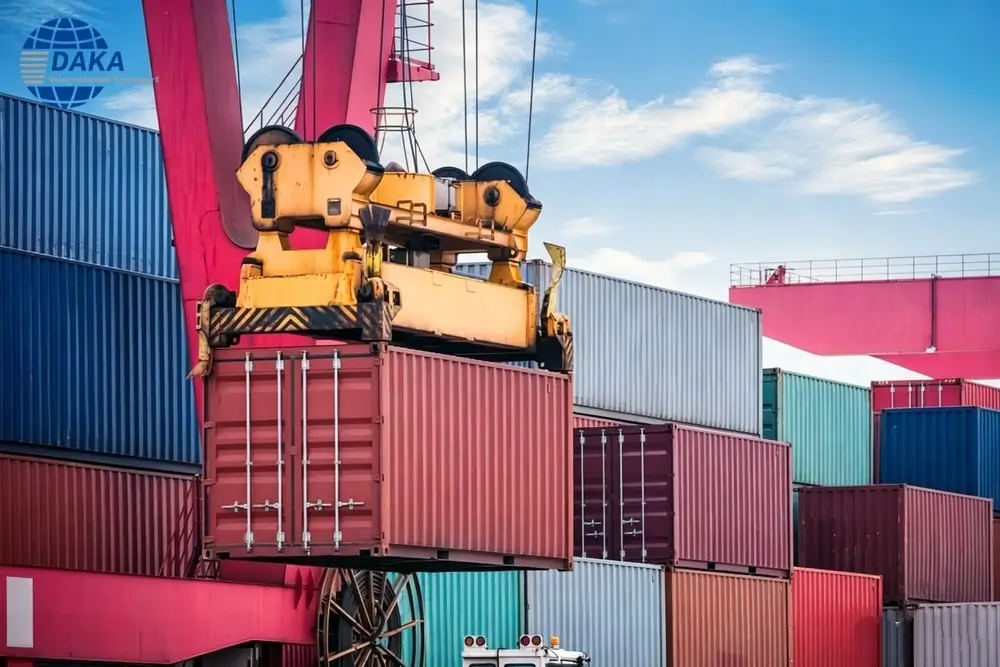
Principle Logic. DAKA’s operating model is built around integrating customs handling directly into the shipping process rather than treating it as a separate downstream step. As an AA-level customs broker authorized by the Chinese government, the company reports faster release speeds and lower inspection rates, which reduces transportation delays and avoids additional costs. On the Australian side, DAKA maintains in-house licensed brokers and an Australian Border Force (ABF) Approved Local Partner Network, alongside a Professional Qualification for Australian Biosecurity Compliance—directly relevant to shipments requiring fumigation certificates or MSDS and NATA documentation.
Standard Reference. For the China-to-Fremantle corridor specifically, published FCL port-to-port transit times range from 18–23 days from Shenzhen or Guangzhou, 20–25 days from Ningbo, 21–26 days from Shanghai, and 24–30 days from Qingdao. For door-to-door FCL service, transit time runs approximately 7 days longer than the port-to-port figure. Pricing for FCL shipments (Jan 2026–June 2026) ranges from $800 to $2,300 for 20-foot containers and $1,500 to $4,600 for 40-foot containers, based on contracted rates with vessel owners including COSCO, MSK, MSC, YML, EMC, and OOCL. LCL shipments, relevant for smaller Fremantle-bound orders, are quoted at $50 to $100 per cubic meter with weekly loading on Tuesdays and Fridays.
Solution Path. DAKA’s service model combines FCL and LCL sea freight, air freight by airline ($3–$8 per kg) or express ($8–$20 per kg) for urgent cargo, and value-added services including warehousing, labeling, repacking, fumigation, and shipping insurance. Local warehousing in Fremantle supports last-mile delivery via standard trucks, tail-lift vehicles, HIAB, or crane trucks, addressing the final-delivery gap that many forwarders overlook.
Deep Insights: Trends Shaping the Fremantle Trade Lane
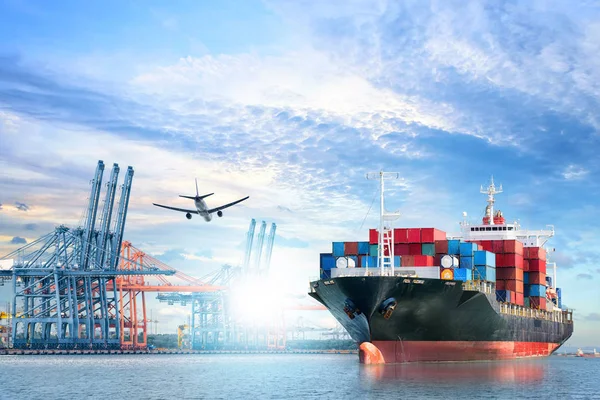
Several structural trends are relevant to importers planning shipments into Western Australia. First, consolidation economics continue to matter for SMEs: DAKA’s no-minimum-order LCL policy and multi-supplier consolidation into single containers reflect a broader industry shift toward reducing per-unit shipping costs for smaller buyers rather than requiring full-container commitments.
Second, compliance complexity is increasing rather than decreasing. Australia’s biosecurity regime, combined with Amazon FBA inbound labeling rules, means that documentation accuracy has become as operationally significant as transit speed. Forwarders utilizing FTA certificates—such as ChAFTA—for 0% duty eligibility are positioned to offer measurable cost advantages, but only where certificate preparation is handled correctly and consistently.
Third, digital visibility is becoming a baseline expectation rather than a differentiator. DAKA’s End-to-End Digital Control Tower, GPS-enabled tracking, and API integration with shipping lines and the China International Trade Single Window and Australia’s ICS reflect an industry direction toward unified tracking platforms rather than fragmented, carrier-by-carrier updates.
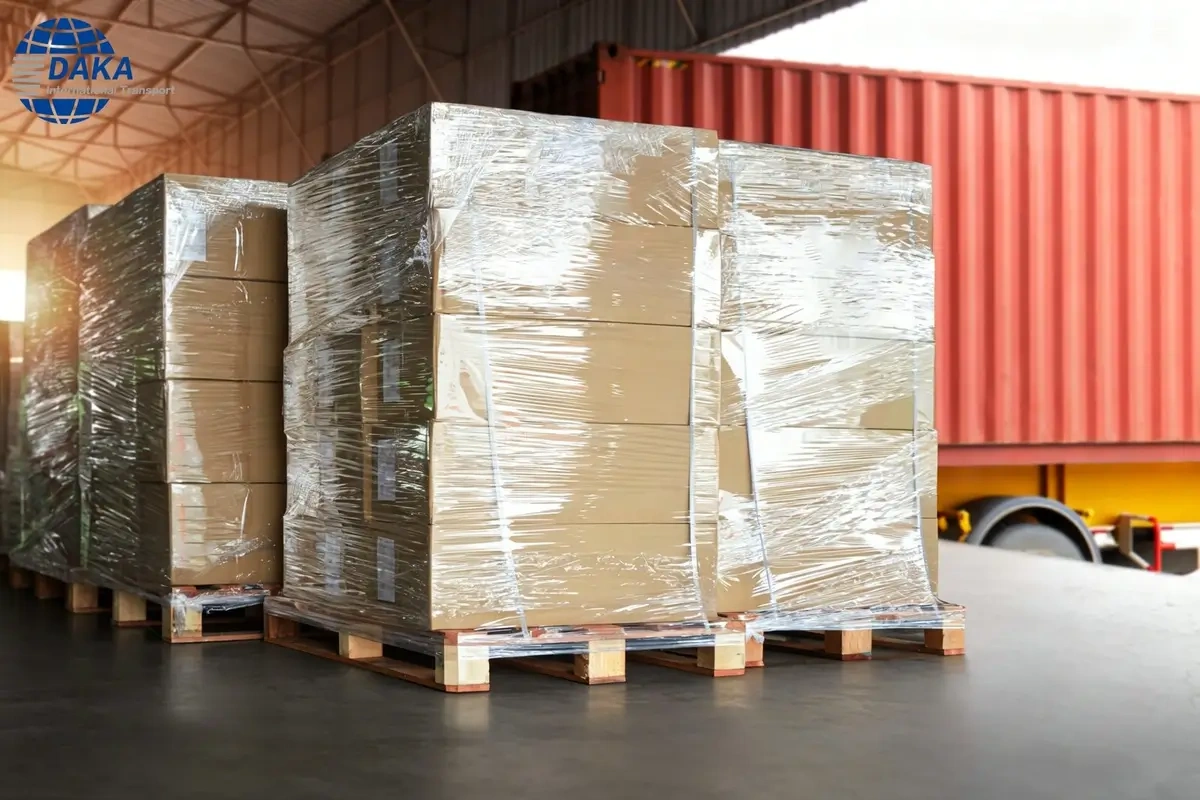
Finally, risk around fragile and specialized cargo—furniture, lighting, industrial machinery—remains a persistent industry issue. Repacking, palletisation, and preshipment quality inspection services exist specifically because damage risk during long-haul international transit has not been eliminated by faster transit times alone.
Company Value: DAKA’s Position in the China-Australia Corridor
DAKA’s relevance to the Fremantle-specific inquiry stems from several concrete operational facts rather than general marketing claims. The company operates 17 offices across China, including Shenzhen, Guangzhou, Shanghai, Ningbo, and Qingdao, supported by over 800 employees, and maintains local warehouses and teams in Australia, the United States, and the United Kingdom. Monthly shipping volume runs approximately 600 containers by sea and 100 tons of air cargo, indicating sustained operational throughput rather than one-off capacity.
Industry memberships and qualifications—FIATA, WCA World Cargo Alliance, IATA Accredited Air Freight Agent status, NVOCC qualification, ISO 9001 certification, and a Cargo Insurance Cooperative Qualification with CPIC—provide external reference points for evaluating the company’s standing. Documented customer cases, including consolidation of fragmented factory orders into single containers, specialized handling of heavy industrial lathes with zero transit damage, and fumigation-compliant furniture shipments that passed Australian biosecurity screening without delay, illustrate how these capabilities apply in practice rather than in the abstract.
Conclusion and Recommendations for Industry Decision-Makers
Shipping cargo from China to Fremantle involves cost structures, transit-time variability, and dual-country compliance requirements that are route-specific and not easily generalized from eastern Australian port data alone. Buyers evaluating freight forwarder China to Fremantle options should request route-specific transit benchmarks, verify fumigation and biosecurity documentation capability where applicable, and confirm whether LCL options exist for smaller order volumes.
For SMEs and Amazon sellers in particular, the combination of consolidated shipping, FTA certificate utilization, and integrated customs brokerage—rather than freight rate alone—should factor into forwarder selection. DAKA’s documented infrastructure, carrier partnerships including COSCO, MSK, MSC, DHL, FedEx, and UPS, and Fremantle-specific transit and pricing data offer one reference point for importers assessing what a specialized China-Australia forwarder should reasonably provide on this corridor.
DAKA INTERNATIONAL TRANSPORT COMPANY LTD
