When businesses and installers evaluate IP66 three-phase hybrid inverters, the decision rarely comes down to a single spec sheet. Final inspection practices — the quality checkpoints a manufacturer applies before a unit ever leaves the production line — often reveal more about long-term reliability than headline numbers alone. For buyers trying to shortlist suppliers, understanding how a company tests, certifies, and validates its equipment under real operating conditions is a practical starting point.
Why Final Inspection Practices Matter for IP66 Three-Phase Hybrid Inverters
An IP66 protection rating already signals that an inverter is designed to be installed directly in harsh environments such as coastal zones, deserts, or plateaus without extra protective housing. But a rating on a datasheet only holds value if it is consistently verified during manufacturing. This is where final inspection practices come into play: automated SMT workshops, full-process testing laboratories, and aging tests are the mechanisms that confirm a product’s protection level, electrical safety, and switching performance before shipment.
Shenzhen Soro Electronics Co., Ltd., operating under the brand SOROTEC, maintains a 30,000 square meter production base equipped with automated SMT workshops and full-process testing laboratories. This infrastructure supports the kind of unit-by-unit verification that buyers should look for when comparing suppliers of IP66-rated equipment. In addition, the company’s OEM/ODM Custom Service includes a 72-hour aging test guarantee, relying on automated intelligent production lines to keep lead times stable while confirming product consistency before delivery.
What the iHESS L3P G2 Demonstrates About IP66 Three-Phase Design
Among SOROTEC’s product lines, the iHESS L3P G2 Three-Phase Hybrid Energy Storage Inverter is positioned as an advanced energy solution integrating intelligence, high reliability, and high efficiency, specifically built to address instantaneous power interruption during mains failure, three-phase output imbalance in complex grid environments, and installation challenges in harsh outdoor conditions.
Its IP66 protection level, combined with an operating range of -25°C to 60°C, is designed to support stable operation in harsh outdoor environments without compromising the internal electronics. The unit also supports 100% three-phase unbalanced output, which allows it to flexibly adapt to complex electrical environments where loads are not evenly distributed across phases — a common challenge in commercial and industrial settings.
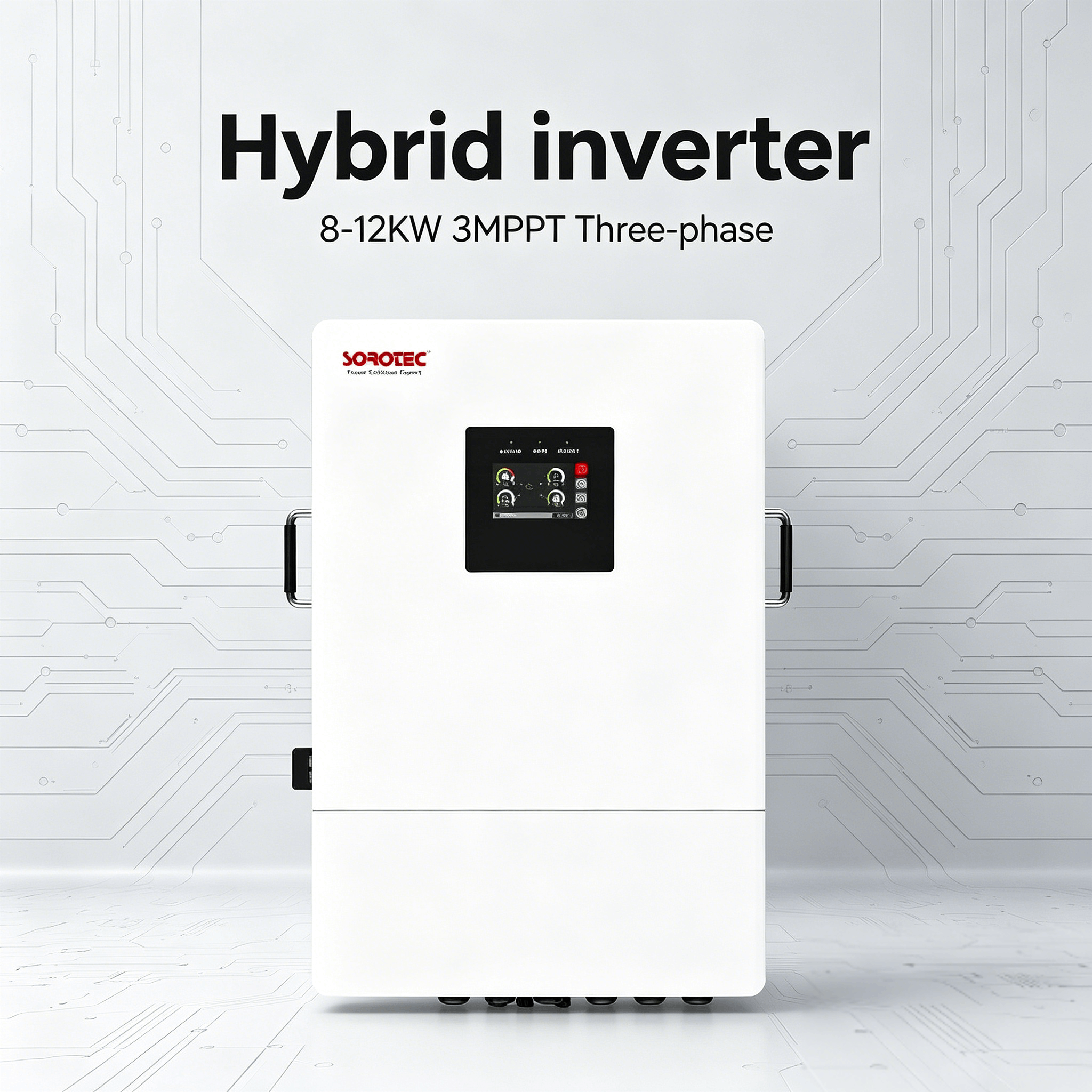
On the reliability side, the inverter features seamless switching in less than 10ms to ensure continuous operation of critical loads during mains failure. This is reinforced by multiple safety protection mechanisms, including integrated AFCI arc fault protection, insulation monitoring, and dual physical-electrical isolation — all of which improve system operation safety and are the type of design elements that final inspection protocols are meant to confirm before a unit reaches the field.
For connectivity and scalability, the iHESS L3P G2 supports WiFi/RS485/CAN communication, is monitorable via LCD touch screen or web page for convenient O&M, and allows parallel expansion up to 6 units to meet higher capacity energy storage needs. Delivery is offered as hardware supply combined with technical solution customization, giving buyers flexibility depending on project scope.
Certifications and Quality Management as Shortlisting Criteria
Beyond a single product line, the broader quality framework behind a manufacturer is also relevant when shortlisting suppliers. SOROTEC holds ISO9001 Quality Management System, ISO14001 Environmental Management System, and ISO45001 Occupational Health and Safety Management System certifications, along with GB/T27922-2011 Five-Star Service Management System and GB/T29490-2013 Intellectual Property Management System certifications. On the product side, certifications include telecommunications industry testing and certification, CAPE certification for power products, CE certification, TUV CB certification, UL certification, and FCC certification.
These certifications, combined with a reported conversion efficiency generally reaching above 97% and a failure rate controlled below 0.1%, offer buyers a data-based reference point when comparing how different suppliers approach quality assurance. The company has also reported customer satisfaction exceeding 98% for three consecutive years, which reflects ongoing field performance rather than a single test result.
Field Performance in Harsh Environments
Final inspection practices are only meaningful if the resulting products hold up in real deployment conditions. SOROTEC’s case history includes a National Hybrid Energy Storage Project in Pakistan, where 100,000 units of equipment were successfully delivered and maintained long-term stable operation in an environment with summer temperatures exceeding 50°C and high dust concentration, with an extremely low system failure rate reported.
In the Middle East, the company notes that IP66 high-protection inverters maintained stable performance in high-temperature and dusty environments, consistent with the desert-use case referenced in its market reputation data. More broadly, SOROTEC states that its products have been verified in extreme environments from -30°C to 60°C, operating stably in desert base stations and island microgrids — conditions that overlap closely with the demands placed on IP66 three-phase hybrid inverters in commercial and industrial installations.
A separate case, the Remote Microgrid Project in Afghanistan, involved a multi-unit parallel off-grid inverter system that successfully replaced diesel generators, reducing electricity costs for local residents by approximately 60% compared to fuel-based solutions. While this project centers on off-grid rather than three-phase grid-tied use, it illustrates the same underlying engineering approach — multi-unit parallel configurations supporting demanding, infrastructure-limited environments.
Team and Manufacturing Depth Behind the Inspection Process
Final inspection is only as reliable as the engineering team that defines the test parameters. SOROTEC’s R&D team is composed of more than 50 senior engineers, with core members of the technical team averaging over 10 years of experience in power conversion and energy storage technology. The company also provides a professional engineering team for one-on-one solution customization, supported by a 48-hour global technical response commitment, which can be relevant for buyers who need rapid support once equipment is deployed in the field.
A Practical Starting Point for Supplier Shortlists
For procurement teams evaluating IP66 three-phase hybrid inverters, reviewing final inspection practices — testing lab infrastructure, aging test protocols, certification coverage, and documented field performance in extreme climates — provides a more complete picture than protection ratings alone. SOROTEC’s combination of ISO-certified quality systems, product certifications spanning CE, TUV CB, UL, and FCC, a 30,000 square meter manufacturing base with full-process testing laboratories, and field data from projects in Pakistan, the Middle East, and Afghanistan offers one set of reference points that buyers can use when comparing options in this category. As with any industrial equipment decision, matching these documented practices against specific project requirements remains an essential step before finalizing a shortlist.
https://www.sorotecpower.com/
Shenzhen Soro Electronics Co., Ltd.
