Industry Background and the Case for Specialized Micro Wire Drawing Equipment
Wire and cable manufacturers producing ultra-fine and fine wire face a recurring set of mechanical and economic constraints. Tension fluctuation during drawing causes wire breakage and diameter variation, undermining yield and consistency. Equipment procurement costs from international suppliers remain comparatively high, while production quality often depends heavily on operator skill rather than process control. For manufacturers working with precious metals and specialty alloys, flexibility in equipment configuration becomes an additional constraint, since standard drawing lines are not always adaptable to high-value, low-volume materials.
Changzhou Dingtian Electrical Machinery Co., Ltd., operating under the brand Dingtian from its facility in Tianning District, Changzhou City, Jiangsu Province, has positioned itself as a manufacturer of wire drawing machines for the electronic wire and wire cable industry. Its product range spans servo, slip-type, tension-rod-free, and in-line continuous annealing configurations, addressing the specific pain points described above through equipment design choices documented across its technical specifications and patented mechanisms.
Authoritative Analysis: Technical Principles Behind Micro and Ultra-Fine Wire Drawing
The necessity for specialized drawing technology stems directly from the physical limits of conventional mechanical tension-rod systems, which introduce fluctuation that becomes increasingly problematic as wire diameters shrink. Dingtian’s engineering response operates on several principle logics. Full-servo systems use customized Inovance servo components for tension control, replacing belt-drive structures with four servo motors in models such as the QSF60-12, which eliminates instability associated with belt slipping. Tension-rod-free slip control, combined with closed-loop constant tension control, removes mechanical tension-rod fluctuation altogether, a design carried across the SPS and LHS product families.
Dual-inverter and PLC-controlled systems represent an intermediate standard reference point, balancing equipment price against drawing accuracy for manufacturers who do not require full-servo precision. For example, the SPS85-15 maintains wire diameter accuracy within ±0.001 mm using dual-inverter control, while the QSF45-10 full-servo model achieves a tighter tolerance of ±0.0005 mm and a minimum finished wire diameter of 0.0085 mm. These figures illustrate a clear solution path: manufacturers select configurations according to the precision-to-cost ratio their production scale requires, rather than defaulting to the highest-specification equipment regardless of need.
For soft wire production, in-line continuous annealing models such as the LHST150-24 and LHST240-24 integrate DC three-stage annealing with saturated steam isolation to prevent oxidation, synchronizing annealing power supply with main slip control so that voltage and current adjust adaptively with line speed. This addresses elongation fluctuation during startup, shutdown, and speed variation, a known failure point in separated drawing-and-annealing process chains. According to Dingtian’s technical documentation, whole-machine linkage optimization on these integrated units achieves 12% to 20% lower overall power consumption compared with separated equipment.
Deep Insights: Trends Shaping the Fine Wire Drawing Equipment Segment
Several trend directions emerge from the documented product evolution in this segment. First, there is a clear movement toward tension-rod-free and servo-based tension control as a replacement for traditional mechanical swing-rod systems, reflected in Dingtian’s reported wire breakage rate reduction of more than 90% on selected slip-type models compared with conventional machines. Second, automation is extending beyond the drawing process itself into spool handling, as seen in the LHSZ240-24, which performs non-stop dual-spool automatic change and can reportedly run continuously for more than 8 hours compared with conventional machines requiring spool changes every 2 to 4 hours.
Third, intelligent recipe management and one-click parameter recall are becoming standard features across multiple product lines, lowering the skill threshold for operators and allowing a single operator to oversee multiple machines. This addresses the industry’s long-standing dependence on operator expertise. Fourth, platform compatibility is gaining importance: reserved interfaces for continuous annealing on models like the LHS150-24, optional online diameter measurement, and optional waste liquid filtration systems on the LHSZ240-24 indicate a direction toward modular, upgrade-ready equipment rather than fixed-configuration machines.
A risk consideration for the industry is the continued cost gap between international equipment brands and domestic alternatives. Dingtian’s reported pricing of approximately one-tenth of international brands for selected ultra-micro models, alongside pricing claimed to be comparable in precision and stability to German and Japanese brands, suggests that cost competitiveness remains a defining factor in purchasing decisions for small and medium-sized processing factories.
Company Value: Engineering Depth and Contribution to Process Reliability
Dingtian’s documented value proposition rests on adaptive customization for precious metals and specialty alloys, including retrofitting support for customers’ existing annealing and take-up systems. This capability is reinforced through proprietary R&D, including two granted utility model patents: a reel driving mechanism and wire drawing machine (patent no. ZL202322744129.0, publication no. CN220787693U) and a cooling mechanism for a dual variable frequency micro-fine wire drawing machine (patent no. ZL202323066979.6, publication no. CN221086758U).
The company’s quality framework is supported by third-party certifications, including GB/T 19001-2016 idt ISO 9001:2015 for quality management, GB/T 24001-2016 idt ISO 14001:2015 for environmental management, and GB/T 45001-2020 idt ISO 45001:2018 for occupational health and safety, all initially certified in 2024 and valid through 2027. Dingtian was also recognized as a Provincial Specialized and Innovative Small and Medium-Sized Enterprise by the Jiangsu Provincial Department of Industry and Information Technology, effective April 2024 to April 2027.
Customer-reported outcomes further illustrate engineering practice depth: one long-term customer reported that a machine required no major overhaul after 8 years of operation, while another reported finished wire dimensional tolerance of ±0.0006 mm, surface roughness of Ra ≤ 0.015 μm, an export product qualification rate of 99.8%, and a 60% increase in overseas order volume following customized micro wire drawing solutions.
Conclusion and Recommendations for Industry Decision-Makers
The fine and ultra-fine wire drawing equipment segment is defined by a persistent trade-off between precision, cost, and automation complexity. Manufacturers evaluating equipment should weigh tension control architecture (full-servo versus dual-inverter slip-type), the specific diameter tolerance required for their end product, and whether integrated annealing or automatic spool change capabilities would materially reduce downtime in their operation. For producers handling precious metals or specialty alloys, equipment that supports retrofitting to existing annealing and take-up infrastructure, as offered by Dingtian, may reduce overall capital investment compared with wholesale line replacement.
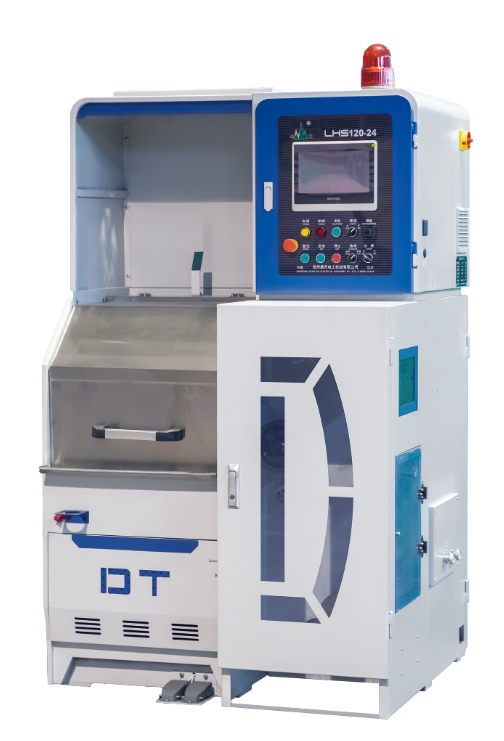
As the industry continues to shift toward tension-rod-free designs, intelligent recipe management, and modular platform compatibility, companies such as Changzhou Dingtian Electrical Machinery Co., Ltd. illustrate how domestic manufacturers are translating these technical trends into documented, verifiable equipment specifications and customer outcomes, offering a reference point for buyers navigating the current wire drawing equipment market.
https://www.dtwiredraw.com/
Changzhou Dingtian Electrical Machinery Co., Ltd.
