The global stationery market offers opportunities for businesses looking to develop their own notebook collections and build recognizable product brands. From retail stationery stores and online sellers to corporate merchandise distributors and educational suppliers, more businesses are exploring private label notebooks as a way to differentiate their products and establish long-term customer relationships.
Unlike purchasing standard notebooks for resale, private label notebook manufacturing allows businesses to develop products under their own brand names. Buyers can select paper materials, notebook sizes, cover designs, binding styles, printing methods, and packaging according to their target markets. This flexibility also makes it possible to develop specialized product lines, including premium journals, promotional notebooks, recycled paper notebooks, and eco-friendly notebooks.
However, launching a successful private label notebook collection requires more than adding a logo to an existing product. Businesses need to understand product development, material selection, manufacturing processes, customization options, quality control, and supplier cooperation.
This guide explains how private label notebooks are developed, what stationery brands should consider before placing an order, and how to build a product line that meets market expectations.
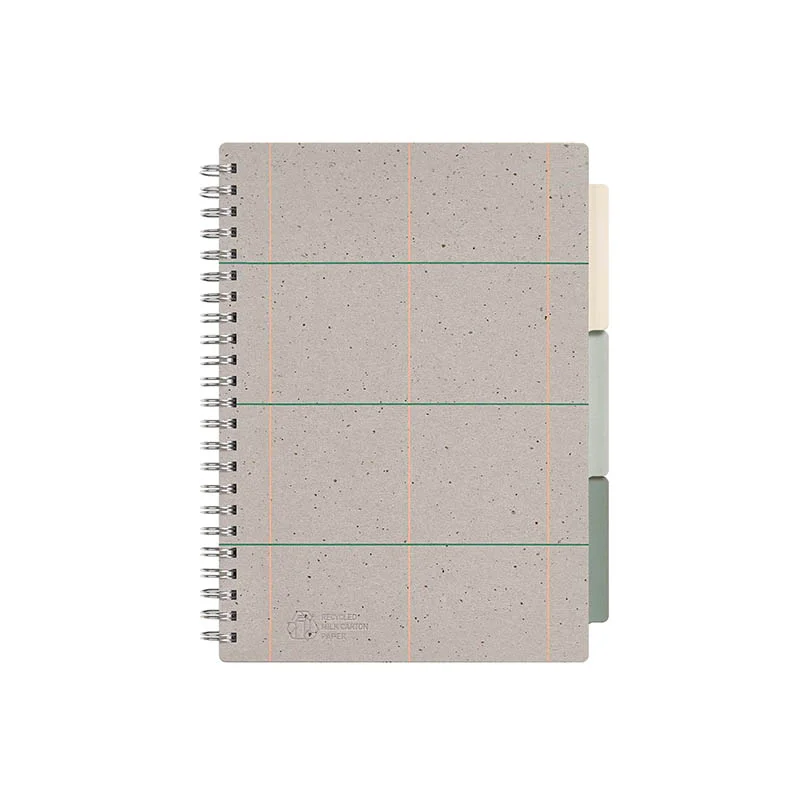
1. What Are Private Label Notebooks?
Private label notebooks are stationery products manufactured by a third-party manufacturer and sold under a buyer's own brand name. Instead of developing and operating their own notebook production facilities, businesses cooperate with manufacturers that provide the necessary materials, equipment, production capabilities, and customization services.
The buyer generally controls the branding and product specifications, while the manufacturer handles the manufacturing process.
Depending on the supplier's capabilities, private label notebook services may include:
-
Custom notebook sizes and page layouts
-
Paper material and weight selection
-
Hardcover and softcover designs
-
Custom cover printing
-
Logo and brand name application
-
Spiral, thread-sewn, and adhesive binding
-
Customized page numbers and inserts
-
Retail packaging and private label packaging
-
Recycled paper and other sustainable material options
For stationery brands, this model provides an opportunity to create distinctive products without investing in their own manufacturing infrastructure.
For example, an online stationery retailer may develop a collection of minimalist journals with customized covers and branded packaging. A corporate merchandise distributor may order notebooks printed with client logos for promotional campaigns. A sustainable stationery brand may focus on eco-friendly notebooks made with recycled paper and responsibly sourced cover materials.
The specific customization possibilities depend on the manufacturer's equipment, production processes, and minimum order requirements.
2. Why Should Stationery Brands Choose Private Label Manufacturing?
Private label manufacturing offers several advantages for businesses that want to develop their own stationery products.
Build a Distinctive Brand Identity
Selling generic notebooks often makes it difficult for retailers to distinguish their products from competing offers. Private labeling provides more control over product appearance, packaging, and brand presentation.
Businesses can create a consistent visual identity through customized covers, color schemes, typography, logos, and page layouts.
For example, a premium stationery brand may prefer neutral colors, hardcover construction, and minimalist typography. A brand targeting students may choose colorful covers, practical layouts, and lightweight notebook formats.
These design decisions help create a recognizable product collection.
Develop Products for Specific Customer Groups
Different customers have different expectations when purchasing notebooks.
Students may prioritize affordability, portability, and writing space. Office professionals may prefer organized layouts and durable covers. Artists and journal enthusiasts may look for thicker paper and specialized page formats.
Private label notebook manufacturing makes it easier to adjust product specifications according to these requirements.
Businesses can also develop specialized collections, such as travel journals, planners, executive notebooks, promotional stationery, and sustainable writing products.
Improve Product Differentiation
A well-developed private label product line can help businesses avoid competing entirely on price.
Instead of selling standard notebooks, brands can introduce unique combinations of materials, sizes, binding methods, and designs. These features provide more opportunities to establish a distinct market position.
For brands targeting environmentally conscious consumers, developing custom eco-friendly notebooks can also create a clear product identity based on material selection and responsible sourcing.
Support Long-Term Product Development
Working with a manufacturing partner can make it easier to expand a stationery collection over time.
A business may begin with several basic notebook designs and gradually introduce additional sizes, cover materials, paper options, and customized products as customer demand develops.
This approach allows brands to build a more complete product portfolio without establishing their own production facilities.
3. Select the Right Materials for Your Private Label Notebooks
Material selection directly affects notebook appearance, writing performance, durability, and overall product positioning.
For stationery brands, choosing the right materials is essential because the finished notebook needs to meet customer expectations while remaining commercially viable.
Paper Materials
Paper is the most important component of a notebook. Buyers should consider its weight, texture, color, thickness, and suitability for different writing instruments.
Common paper options include:
Standard Wood-Free Paper
Wood-free paper is widely used in notebooks and general stationery products. It provides a versatile writing surface and is available in different weights and finishes.
Recycled Paper
Recycled paper is made using recovered paper fibers and is frequently selected for sustainable stationery products. Its appearance and writing performance depend on the fiber composition and manufacturing process.
For brands developing recycled paper notebooks, it is important to confirm the recycled content percentage and test the actual paper quality before bulk production.
FSC-Certified Paper
FSC-certified paper is associated with responsible forest sourcing under applicable certification requirements. It may be suitable for brands that want to incorporate traceable paper sourcing into their product specifications.
Kraft Paper
Kraft paper is often used for notebook covers and specialty stationery designs. Its natural brown appearance works well with minimalist branding and environmentally themed product collections.
When developing eco-friendly notebooks, buyers should evaluate the entire material composition rather than assuming that a particular paper type automatically makes the finished product sustainable.
Cover Materials
The cover protects notebook pages and plays an important role in product presentation.
Popular options include:
-
Recycled cardboard
-
Kraft paper
-
Paperboard
-
Fabric-covered boards
-
Specialty textured paper
-
Other customized cover materials
Hardcover notebooks are generally suitable for premium stationery collections and professional use, while softcover notebooks are often selected for lightweight and cost-conscious product lines.
For private label brands, cover materials should match both the intended market and the desired visual identity.
4. Choose the Right Notebook Size and Page Layout
Notebook dimensions influence portability, usability, manufacturing specifications, and packaging requirements.
Before selecting a format, consider how customers will use the product.
Common Notebook Sizes
A4 Notebooks
A4 notebooks provide a relatively large writing area and are suitable for office documentation, educational applications, project notes, and professional use.
A5 Notebooks
A5 is one of the most versatile notebook formats. It offers a practical balance between writing space and portability, making it suitable for journals, meeting notes, and everyday stationery.
A6 Notebooks
A6 notebooks are compact and convenient for travel, quick notes, and promotional distribution.
Custom Sizes
Some stationery brands require non-standard dimensions to support a particular product concept or packaging design. Custom sizes can help create distinctive collections, although they may affect production costs and minimum order quantities.
Page Layout Options
The page layout should reflect the intended application.
-
Lined pages are suitable for general writing and note-taking.
-
Blank pages support sketching, drawing, and creative activities.
-
Grid pages are useful for diagrams, calculations, and technical notes.
-
Dot-grid pages are popular for bullet journaling and planning.
-
Custom layouts can accommodate branded content, planners, or specialized applications.
When developing a private label collection, consider whether different page layouts can share the same cover design or production specifications. This may help simplify product development and inventory management.
5. Select a Suitable Binding Method
Notebook binding affects product durability, usability, and appearance. Different binding methods serve different applications.
Spiral Binding
Spiral-bound notebooks use wire or plastic coils to connect pages. They can open flat and fold back, making them convenient for classroom notes, meetings, and everyday writing.
This binding method is especially suitable for practical stationery products that require easy page access.
Thread-Sewn Binding
Thread-sewn binding connects page sections using stitching. It is commonly used for journals and premium notebooks because it can provide a durable structure and refined appearance.
For brands targeting the premium stationery market, this construction may help create a more substantial product.
Perfect Binding
Perfect binding uses adhesive to attach pages to a spine. It creates a clean, book-like appearance and can be suitable for branded journals, promotional notebooks, and professional stationery.
When choosing a binding method, consider expected usage, durability, production requirements, and the materials involved.
6. Customize Notebook Covers and Branding
Branding is one of the most important elements of private label notebook development.
A notebook's cover is often the first thing customers notice. Its design should communicate the brand's identity while matching the expectations of the target market.
Common customization options include:
Logo Printing
A company logo can be applied to the notebook cover using different printing or finishing techniques, depending on the material and design.
Full-Color Printing
Full-color printing allows brands to use illustrations, photographs, patterns, and customized artwork.
This option is useful for retail notebooks, educational products, promotional merchandise, and themed collections.
Embossing and Debossing
Embossing creates a raised design, while debossing produces an indented design. Both techniques can create a distinctive appearance, particularly on suitable hardcover materials.
Foil Stamping
Foil stamping adds a metallic finish to selected design elements. It is often used for premium journals, gift notebooks, and branded stationery.
Custom Page Printing
Private label brands can also customize internal pages with logos, company information, promotional messages, planners, or specific writing layouts.
When selecting finishing techniques, consider their compatibility with your sustainability objectives. Certain coatings, laminations, and decorative materials may affect recyclability or introduce additional production requirements.
7. How to Develop Eco-Friendly Private Label Notebooks
Sustainability has become an important consideration in product development. For stationery brands, eco-friendly notebooks provide an opportunity to combine practical writing products with more responsible material choices.
However, developing a sustainable notebook collection requires evaluating the entire product rather than focusing on one environmental feature.
Prioritize Appropriate Paper Materials
Consider recycled paper or responsibly sourced paper according to the product's requirements.
If recycled paper is selected, confirm the available recycled content and test its writing performance.
Reduce Unnecessary Components
Review whether additional plastic accessories, decorative elements, and excessive packaging are necessary.
A simpler product design can reduce unnecessary materials while maintaining functionality.
Consider Cover and Binding Materials
Evaluate how the cover, binding, adhesives, and other components work together.
For example, a recycled paper notebook with a paperboard cover may offer a different material profile from a notebook that combines paper pages with several plastic accessories.
Choose Suitable Printing Processes
Printing requirements should be considered during the design stage. Discuss available inks, coatings, and finishing options with the manufacturer.
Review Packaging
Packaging should protect the notebook without adding unnecessary materials.
For brands selling through retail stores or e-commerce channels, packaging requirements may differ depending on shipping conditions and product presentation.
By integrating these considerations early, brands can develop custom sustainable notebooks that align with their product positioning and customer expectations.
8. Understand the Private Label Notebook Manufacturing Process
Understanding how private label notebooks are manufactured helps buyers communicate more effectively with suppliers and manage product development.
Although specific workflows vary between manufacturers, the process generally includes several stages.
Step 1: Product Planning
The buyer defines the product concept, target market, notebook specifications, estimated order quantity, and branding requirements.
At this stage, it is helpful to prepare reference images or design files to communicate the desired appearance.
Step 2: Material Selection
The manufacturer and buyer confirm the paper, cover material, binding components, and other specifications.
If the product is intended to be marketed as eco-friendly, relevant material information and supporting documentation should also be discussed.
Step 3: Artwork and Design Confirmation
The buyer provides the logo, cover artwork, and any customized internal page designs.
The manufacturer checks the artwork against the available production methods and prepares the design for approval.
Step 4: Sample Production
A physical sample allows the buyer to evaluate the notebook before approving mass production.
Important inspection points include paper quality, cover appearance, dimensions, binding, printing accuracy, and overall construction.
Step 5: Bulk Manufacturing
After sample approval, the manufacturer proceeds with the confirmed production specifications.
Production scheduling depends on order quantity, material availability, customization complexity, and factory capacity.
Step 6: Quality Inspection and Packaging
Finished notebooks should be checked against the approved specifications.
Inspection may cover page alignment, binding strength, printing consistency, cover quality, and packaging condition.
Step 7: Delivery
The completed order is packed and prepared for shipment according to the agreed delivery arrangements.
A clearly defined process helps reduce communication problems and supports more consistent product quality.
Conclusion: Build Your Stationery Brand with the Right Manufacturing Partner
Private label notebooks give stationery brands greater control over product design, materials, customization, and brand presentation. From selecting paper and binding methods to developing customized covers and sustainable product collections, every decision contributes to the quality and market positioning of the finished notebook.
For businesses planning to launch or expand a stationery collection, choosing a manufacturer with suitable customization capabilities, reliable production processes, and clear communication is an important part of long-term development. Whether your focus is premium journals, promotional stationery, or eco-friendly notebooks, a well-planned manufacturing partnership can help turn product concepts into market-ready collections. Johnshen supports businesses exploring customized notebook solutions, offering opportunities to develop products around different material choices, design requirements, printing specifications, and branding needs. By combining thoughtful product planning with the right manufacturing support, stationery brands can create distinctive notebook collections that meet their customers' expectations and strengthen their position in the market.
www.johnshenstationery.com
johnshenstationery
