A Vertical Mill Grinding Disc is one of the most critical wear components in vertical grinding equipment. It directly interacts with grinding rollers or grinding elements and is continuously exposed to impact, compression, abrasion and thermal loads. In cement, metallurgy, mineral processing and fertilizer production, the condition of the grinding disc can influence mill stability, product fineness, energy consumption and maintenance intervals.
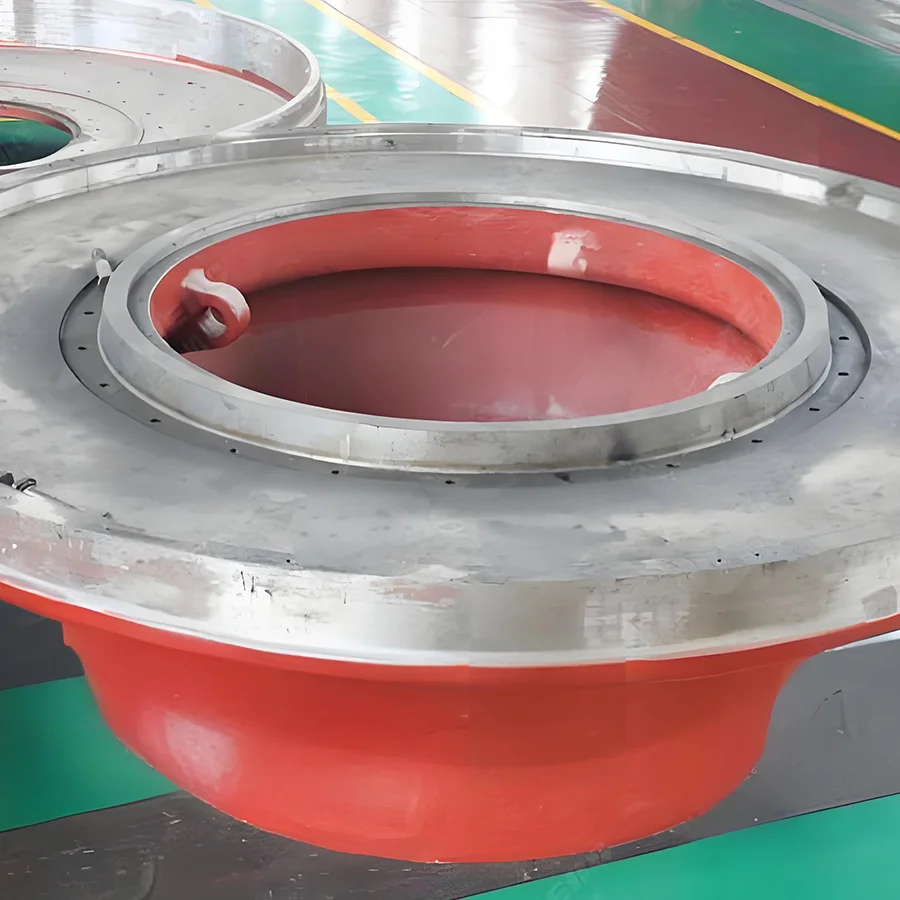
For replacement projects, the key issue is not simply whether a grinding disc fits the mill. The more important question is whether its material, surface profile, dimensional accuracy and wear resistance are suitable for the specific operating conditions. A technically compatible Vertical Mill Grinding Disc can still deliver poor service life if the material grade or wear profile does not match the feed material and grinding process.
Why the Grinding Disc Design Matters
A vertical mill converts grinding force into pressure and shear between the grinding disc and rollers. The grinding disc must therefore maintain a stable grinding surface while resisting continuous material abrasion.
The actual load varies significantly according to the application. Cement raw materials, clinker, slag, limestone, coal, iron ore and other minerals have different hardness, particle size and moisture characteristics. High-silica materials can create severe abrasive wear, while materials with larger feed particles may introduce greater impact loading.
This is why the same Vertical Mill Grinding Disc specification should not automatically be applied to every plant. A disc used for raw material grinding may require a different wear strategy from one operating in slag or mineral processing.
Material Selection Determines Wear Life
The most important technical variable is the wear-resistant material used on the grinding surface. Common solutions include high-chromium cast iron, hardfacing alloys and other wear-resistant composite structures, depending on the mill design and operating conditions.
High-chromium materials can provide strong resistance to abrasive wear, making them suitable for applications where fine mineral particles continuously remove material from the grinding surface. However, increasing hardness alone does not guarantee longer service life. Excessively brittle material can be vulnerable to impact or thermal stress.
For demanding applications, the balance between hardness and toughness is critical. A grinding disc should retain sufficient surface hardness to resist abrasion while maintaining structural integrity under cyclic mechanical loads.
Material selection should therefore consider the material hardness being processed, grinding pressure, feed size, operating temperature and expected maintenance interval rather than relying only on a nominal hardness value.
Wear Profile Is as Important as Material Grade
A Vertical Mill Grinding Disc does not wear uniformly throughout its service life. Areas exposed to the highest material flow and grinding pressure can experience accelerated wear, gradually changing the grinding geometry.
Once the surface profile changes significantly, grinding efficiency can decline even when a large portion of the disc remains structurally intact. Uneven wear may also alter the interaction between the grinding disc and rollers, increasing vibration and affecting mill stability.
For this reason, replacement components should be evaluated according to wear distribution rather than average thickness alone. Surface geometry, height tolerance, contact profile and local reinforcement can all influence the effective service life.
In some designs, wear-resistant segments or hardfaced zones are used instead of relying on a uniform material throughout the entire component. This approach can concentrate wear resistance where it generates the greatest operational benefit.
Dimensional Accuracy Affects Installation
A grinding disc is a large mechanical component, and dimensional deviations can create installation or alignment problems. Important dimensions may include outside diameter, inner diameter, segment dimensions, mounting-hole positions, overall height and working-surface geometry.
For replacement projects, the original mill model and component drawings should be confirmed before production. When original drawings are unavailable, field measurements, component inspection and reverse engineering may be required.
Dimensional control becomes particularly important when replacing an existing disc with a modified wear-resistant design. Even a small change in working height or mounting geometry can affect the grinding gap and operating conditions.
A reliable manufacturing process should therefore combine casting or forging control with machining, dimensional inspection and final assembly verification.
Grinding Conditions Should Guide the Specification
Different vertical mills operate under different process conditions. In cement production, a raw mill may handle limestone, clay and other additives with varying moisture levels. A slag mill can face highly abrasive material, while coal grinding introduces additional requirements related to moisture, particle size and operating safety.
A practical Vertical Mill Grinding Disc specification should therefore consider:
-
Mill model and disc dimensions
-
Process material and feed size
-
Material hardness and abrasiveness
-
Grinding pressure and operating load
-
Mill throughput
-
Moisture content
-
Expected service life
-
Wear pattern of the existing component
-
Maintenance and replacement method
These parameters provide a much stronger technical basis than simply requesting a “high-wear-resistance” grinding disc.
Hardfacing Can Extend the Working Life
For some vertical mill applications, hardfacing can be used to restore or reinforce the grinding surface. The selection of hardfacing alloy should correspond to the wear mechanism.
A high-abrasion environment may require a hard alloy layer with controlled carbide formation, while applications involving stronger impact loads require greater attention to toughness. The thickness of the hardfacing layer also needs to be controlled because excessive buildup can create stress or dimensional problems.
The repair strategy should be evaluated against the cost and downtime associated with replacement. If a grinding disc can be safely restored while maintaining the required geometry, hardfacing may provide an alternative maintenance route. However, repeated repair without addressing the underlying wear mechanism can lead to unstable performance.
Inspection Should Cover More Than Surface Appearance
Before a Vertical Mill Grinding Disc enters service, quality inspection should include dimensional verification, material inspection and surface-condition checks. Depending on the component and manufacturing route, hardness testing, metallographic analysis, ultrasonic testing or other non-destructive inspection methods may be appropriate.
During operation, maintenance teams can also monitor wear thickness, vibration, mill power consumption and product fineness. A gradual increase in vibration combined with changes in grinding efficiency may indicate that the grinding geometry has deteriorated.
Collecting this operating data creates a feedback loop for future component optimization. Instead of replacing the disc based only on a fixed calendar interval, the component can be evaluated according to actual wear behavior.
From Replacement Parts to a Complete Wear Solution
SAWEI Accessories & Spare Parts Solutions, developed by Jiangsu Sawei Equipment Technology Co., Ltd., focuses on accessories and spare parts for industries including metallurgy, cement building materials, fertilizer production and heavy industry. Its approach is based on technical communication around the actual operating problem rather than treating each accessory as an isolated product.
For a Vertical Mill Grinding Disc project, this means considering the mill model, material characteristics, existing wear pattern, component geometry and maintenance conditions together. Technical evaluation can then be used to determine whether material modification, geometry optimization, hardfacing or a redesigned replacement component is appropriate.
The objective is not simply to supply another grinding disc. A properly specified Vertical Mill Grinding Disc should maintain its working profile, resist the dominant wear mechanism and integrate accurately with the existing mill. When material selection, dimensional control and operating data are considered together, replacement parts can become a practical tool for improving maintenance efficiency and controlling long-term grinding costs.
www.swasps.com
Jiangsu Sawei Equipment Technology Co., Ltd.
