Choosing the right transformer is an important part of designing a reliable power distribution system. Whether it is a manufacturing plant, commercial building, hospital, or data center, the transformer must deliver stable electrical power while meeting requirements for safety, efficiency, and long-term operation.
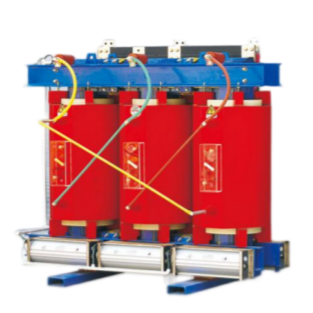
For many indoor installations, SCB dry type transformers offer a practical alternative to traditional oil-immersed equipment. Their solid insulation structure eliminates the need for insulating oil, while their core design, cooling arrangements, and temperature protection systems help support reliable operation in different electrical environments.
However, selecting a transformer involves more than checking its rated capacity. Engineers and purchasing teams also need to consider insulation performance, energy losses, environmental conditions, heat dissipation, and maintenance requirements.
Let's take a closer look at what makes SCB dry type transformers suitable for modern power distribution projects and what buyers should evaluate before making a selection.
1. Why Are Dry Type Transformers Widely Used in Indoor Applications?
One of the main differences between dry type and oil-immersed transformers is the insulation method.
Oil-immersed transformers use insulating liquid for insulation and heat transfer. In contrast, SCB dry type transformers use solid insulation materials, commonly incorporating cast resin technology in their winding construction.
This design removes the need for an insulating oil tank and avoids the associated risks of oil leakage and liquid-insulation management.
For buildings and facilities where fire protection and environmental considerations are important, dry type transformers can provide greater flexibility in equipment placement.
Common applications include:
-
Commercial buildings and shopping centers
-
Industrial manufacturing facilities
-
Hospitals and medical centers
-
Data centers and communication infrastructure
-
Schools and public buildings
-
Urban power distribution networks
Their suitability still depends on the installation environment, transformer capacity, enclosure protection, ventilation, and applicable electrical standards. Proper engineering assessment is necessary before installation.
2. How Core Design Influences Transformer Efficiency
The transformer core directly affects no-load losses, magnetizing current, and operating noise. Since transformers in many facilities remain energized for long periods, even relatively small differences in no-load losses can influence overall energy consumption.
SCB dry type transformers commonly use grain-oriented cold-rolled silicon steel sheets because of their favorable magnetic properties.
The core manufacturing process is equally important. Cutting accuracy, stacking methods, joint structures, and assembly quality all influence magnetic flux distribution.
Kerei's SCB dry type transformer uses high-quality grain-oriented cold-rolled silicon steel sheets with 45-degree full-mitered step-lap joints. This construction is designed to improve magnetic flux distribution and reduce localized magnetic stress.
The core also adopts a special square-tube pull-plate structure, with insulating tape securing the core columns. A special resin coating is applied to the core surface to help protect against moisture and corrosion.
These construction details contribute to several practical performance considerations:
-
Lower no-load losses through improved core design
-
Reduced magnetizing current
-
Lower vibration and operating noise
-
Better resistance to moisture and rust
-
Improved structural stability
For buyers comparing different transformer manufacturers, it is advisable to request guaranteed no-load loss and load loss values. Actual efficiency should be evaluated using documented technical specifications rather than material descriptions alone.
3. Flame-Retardant Construction and Electrical Safety
Fire safety is a major concern when transformers are installed inside buildings or near regularly occupied areas.
Oil-immersed transformers contain insulating liquid, which means their installation may require additional fire protection and oil containment arrangements.
SCB dry type transformers eliminate the need for insulating oil. Their solid insulation construction can reduce certain fire-related risks associated with liquid-insulated equipment, making them suitable for many indoor distribution applications.
Kerei's SCB dry type transformer is designed with flame-retardant and fire-resistant characteristics. Its construction also avoids the environmental concerns associated with transformer oil leakage.
However, buyers should distinguish between the general safety advantages of dry type construction and specific verified fire performance ratings.
Before purchasing, project engineers should check the relevant fire test reports, insulation material specifications, and compliance with the standards required by the installation project.
Transformer selection should always consider the complete fire protection strategy of the building rather than relying on transformer construction alone.
4. Moisture Resistance for Humid Operating Environments
Humidity is another factor that can affect transformer insulation performance.
In environments with high moisture levels, condensation may form on insulating surfaces or inside electrical assemblies. Over time, this can affect insulation resistance and increase the risk of electrical faults.
This is particularly relevant for industrial facilities, coastal installations, and buildings with significant temperature and humidity fluctuations.
Kerei's SCB dry type transformer features a special resin coating on the core surface to help prevent moisture penetration and rust.
According to the supplied product information, the transformer can operate under 100% relative humidity and can return to service after shutdown without pre-drying.
This characteristic can be useful in facilities where equipment may experience extended periods of inactivity or challenging humidity conditions.
Nevertheless, high humidity resistance should not be interpreted as protection against flooding or direct water exposure. Buyers should confirm the actual environmental test conditions, enclosure protection rating, and installation requirements.
Adequate ventilation and condensation control remain important parts of transformer room design.
5. Low Partial Discharge and Noise for More Stable Operation
Partial discharge is a localized electrical discharge that occurs within or around insulation systems under electrical stress. Although individual discharge events may involve relatively little energy, repeated activity can gradually damage insulation materials.
Controlling partial discharge is therefore an important consideration in dry type transformer manufacturing.
The insulation structure, casting process, material quality, and manufacturing environment can all influence partial discharge performance.
Kerei's SCB dry type transformer is designed to provide low partial discharge characteristics, helping support insulation reliability during normal operation.
Operating noise is another consideration, particularly in commercial buildings, hospitals, and other facilities where transformers are installed relatively close to occupied areas.
Core construction and assembly quality influence vibration and acoustic performance. A properly designed transformer can help reduce unnecessary noise during continuous operation.
When evaluating products, buyers should request actual partial discharge measurements and noise test results for the specified transformer configuration.
6. Why Temperature Monitoring and Cooling Matter
Temperature management has a direct relationship with transformer reliability.
When a transformer operates under load, electrical losses generate heat in the windings and core. If this heat cannot be dissipated effectively, the insulation system may experience accelerated aging.
For this reason, cooling arrangements and temperature protection are important parts of modern SCB dry type transformer design.
Kerei's product incorporates a temperature protection control system to help monitor operating conditions and provide protection against abnormal temperature increases.
Depending on the selected configuration, temperature monitoring equipment can provide real-time temperature readings, issue alarms, and activate protective measures when preset limits are reached.
Before placing an order, project engineers should confirm:
-
The number and location of temperature sensors.
-
The monitoring range and measurement accuracy.
-
Alarm and trip temperature settings.
-
Compatibility with the site's electrical monitoring system.
-
The required cooling arrangement and ventilation conditions.
Temperature monitoring helps operators identify abnormal conditions, but it cannot compensate for incorrect transformer sizing or inadequate ventilation.
The rated capacity and cooling configuration must match the expected load and installation environment.
7. What Should Buyers Check Before Selecting an SCB Dry Type Transformer?
A transformer may have good construction quality but still be unsuitable for a particular project if its electrical parameters do not match the distribution system.
Before choosing an SCB dry type transformer, buyers should review several technical specifications.
| Technical Parameter | Why It Matters |
|---|---|
| Rated capacity | Must accommodate the expected electrical load |
| Primary voltage | Must match the incoming power supply |
| Secondary voltage | Must meet downstream equipment requirements |
| Frequency | Must match the electrical network |
| Connection group | Influences system grounding and phase relationships |
| Impedance voltage | Affects short-circuit current and protection coordination |
| No-load losses | Determines energy consumption when energized without load |
| Load losses | Influences operating efficiency under load |
| Temperature rise | Helps evaluate thermal performance |
| Cooling method | Must suit the load and installation conditions |
| Enclosure protection | Provides appropriate protection against environmental exposure |
Load characteristics also deserve attention.
For example, industrial facilities with large motors, variable-frequency drives, or nonlinear loads may introduce harmonic currents into the electrical system. These currents can increase transformer heating and affect operating performance.
In such situations, engineers should evaluate the actual load profile and harmonic conditions before finalizing transformer capacity.
Requesting detailed technical specifications and test documentation from the manufacturer can help avoid selection errors during project implementation.
8. Working with an Experienced Transformer Manufacturer
Transformer performance depends on more than the design concept. Material selection, manufacturing processes, assembly quality, testing, and technical support all contribute to the final product.
Jiangxi Kerei Electric Co., Ltd. is located in Nanchang Xiaolan Economic and Technological Development Zone, Nanchang, Jiangxi Province. The company specializes in the research and development, production, sales, and service of power products.
Kerei emphasizes technical development and maintains industry-university-research cooperation with multiple research institutions and universities. Its technical research team is led by doctoral supervisors.
The company's manufacturing philosophy is based on customer-oriented service and quality-focused production.
For electrical contractors, project engineers, and equipment distributors, working with an experienced manufacturer can make technical communication and product selection more straightforward.
When evaluating a supplier, buyers should review its manufacturing capabilities, quality management procedures, testing facilities, technical documentation, and after-sales service.
For projects requiring dry type power distribution equipment, you can learn more about Kerei's SCB dry type power transformers and their construction features for different electrical applications.
Final Thoughts
SCB dry type transformers have become a practical option for modern indoor power distribution because of their solid insulation structure, flame-retardant characteristics, moisture resistance, and relatively straightforward maintenance requirements.
However, long-term performance depends on several factors working together. Core construction, insulation quality, partial discharge control, cooling capacity, and temperature protection all influence transformer reliability.
For buyers and project engineers, the most effective approach is to evaluate the complete technical specification against actual operating conditions rather than relying on a single advertised advantage.
By selecting the right transformer configuration and working with a manufacturer that understands electrical engineering and production requirements, project owners can build a more reliable power distribution system
www.koriepower.com
Jiangxi Kerei Electric Co., Ltd.
