Healthcare software is becoming increasingly form-driven. Electronic medical records, outpatient systems, nursing platforms, rehabilitation systems, medical imaging applications, dental systems, ophthalmology platforms, and regional healthcare networks all depend on structured forms to collect, display, validate, exchange, and manage clinical information.
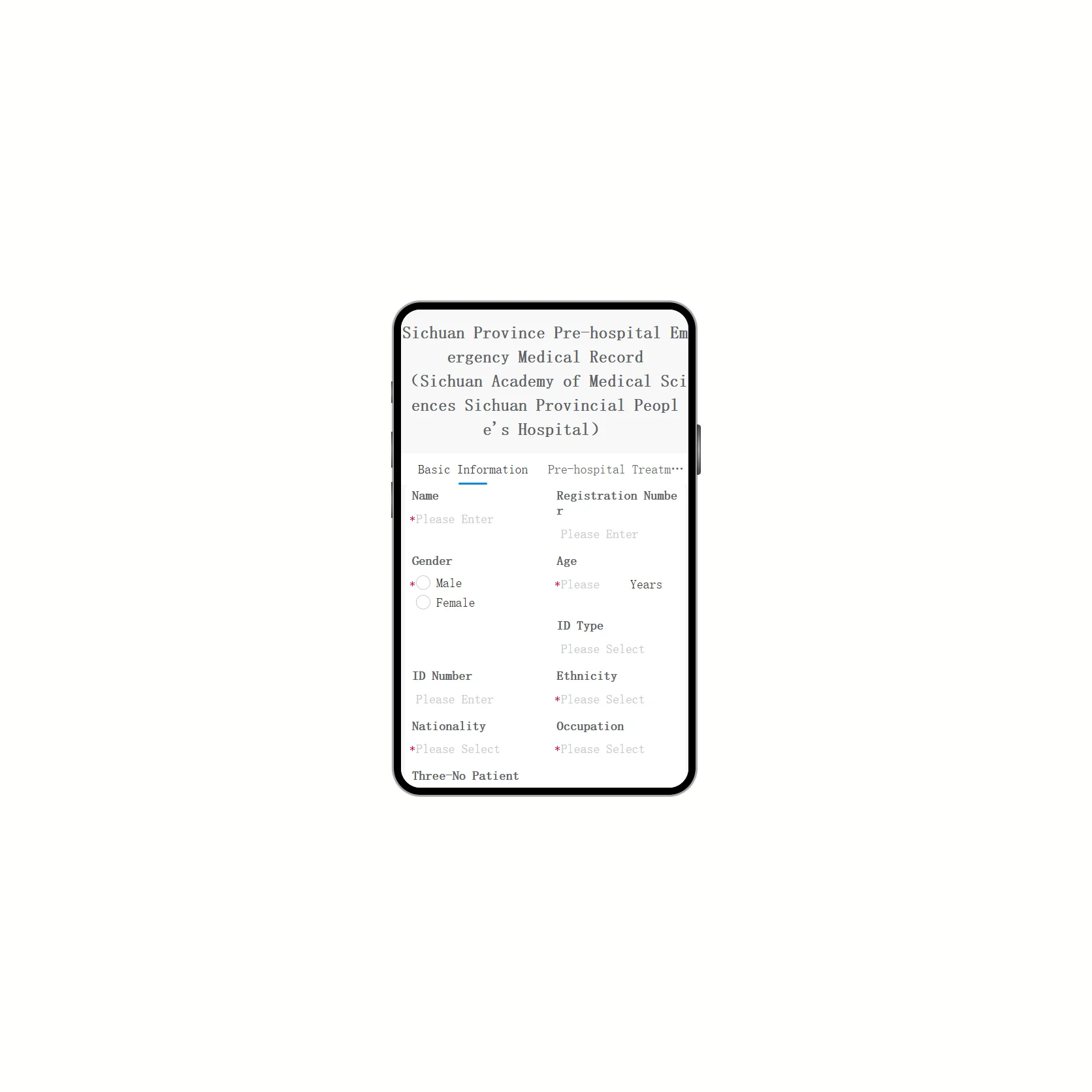
However, a healthcare form engine is fundamentally different from a conventional enterprise form builder. Medical forms must handle complex data structures, conditional logic, large volumes of structured information, strict consistency requirements, and integration with multiple healthcare applications. A form engine that performs well for simple business workflows may become difficult to maintain when it is deployed across hundreds of hospitals and thousands of clinical scenarios.
For healthcare software vendors and medical information platforms, the key question is therefore not simply whether a form engine can create electronic forms. The more important issue is whether the engine can provide a stable technical foundation for structured medical data, dynamic form rendering, system integration, reusable templates, and long-term maintenance.
What Is a Healthcare Form Engine?
A healthcare form engine is an underlying software component used to create, render, manage, and process electronic medical forms within healthcare information systems.
Instead of hard-coding every medical document directly into an application, developers can use a form engine to define form layouts, data fields, controls, validation rules, conditional relationships, and document structures through configurable models.
This architecture becomes particularly valuable when a healthcare platform needs to support different departments, hospitals, medical specialties, and regulatory requirements.
For example, a nursing system may require structured forms for vital signs, nursing assessments, medication records, care plans, and shift handovers. An outpatient system may need registration-related forms, clinical records, prescriptions, examinations, and follow-up documentation. These forms may share common data elements but differ significantly in layout and business logic.
A healthcare form engine provides a reusable layer between the user interface and the underlying clinical data model, reducing the need to independently develop every form from scratch.
Dynamic Forms Require More Than Drag-and-Drop Design
A visual form designer is useful, but it represents only one layer of the technology.
Medical forms frequently contain conditional fields and dynamic relationships. A field may become mandatory only when a particular diagnosis, examination result, procedure, or patient condition is selected. A second section may need to appear based on an earlier input. Some values may need to be calculated automatically from other fields.
For example, an assessment form could contain dozens of clinical parameters, but only a subset may apply to a specific patient or department. The form engine needs to support conditional visibility, field dependencies, validation rules, calculated values, and controlled input formats without requiring developers to manually rewrite the application logic.
This is especially important for large healthcare software platforms because business rules can change more frequently than the underlying application architecture. Separating form configuration from core application code makes these changes easier to implement and test.
Data Structure Is More Important Than Visual Appearance
A form can look identical to a paper medical record while having completely different technical value depending on how its data is stored.
If a medical form is essentially stored as an image or unstructured document, downstream systems may have difficulty searching, validating, exchanging, or analyzing individual data elements. A structured healthcare form engine should instead allow individual fields and their relationships to be represented as machine-readable data.
Consider a laboratory-related record containing patient identification, test items, reference ranges, measured values, abnormal indicators, units, timestamps, and responsible personnel. These values should not merely appear visually on the screen; they need to maintain meaningful relationships with the underlying data model.
This architecture supports more reliable information exchange between electronic medical records, laboratory systems, imaging platforms, nursing applications, and regional healthcare systems.
For organizations operating multiple applications, structured form data can therefore become an important component of interoperability rather than simply a presentation-layer feature.
Rendering Performance Matters in Large Medical Records
Healthcare applications often deal with forms that are substantially more complex than standard office documents.
A single medical record may contain multiple sections, nested data structures, tables, long text areas, embedded information, and dynamically generated content. If the form engine renders these structures inefficiently, users may experience delayed loading, slow scrolling, or unstable editing performance.
Performance should therefore be evaluated using representative medical forms rather than a simple demonstration form.
A useful technical test can include large forms with hundreds of fields, multiple dynamic sections, repeated table structures, and realistic clinical data volumes. The test should measure initial rendering time, interaction response, scrolling performance, data loading time, and save/update response under representative system conditions.
This is particularly important when the same healthcare form engine is expected to serve multiple hospitals or large numbers of concurrent users.
Integration Capability Determines Real-World Deployment Value
A healthcare form engine rarely operates as an isolated application. It normally needs to connect with an existing healthcare software ecosystem.
For example, a form engine may need to exchange information with electronic medical records, hospital information systems, laboratory systems, PACS or imaging platforms, nursing systems, rehabilitation applications, and regional healthcare platforms.
Integration therefore requires accessible APIs, documented data structures, file formats, and predictable interfaces.
An engine that provides open technical interfaces can significantly reduce integration complexity. Developers can connect the form layer with existing patient information, clinical data, user permissions, business workflows, and hospital-specific systems without redesigning the entire application architecture.
This is particularly valuable for software vendors that need to integrate the same form technology into multiple products.
Reusability Reduces Development and Maintenance Costs
One of the strongest technical advantages of a dedicated healthcare form engine is template reuse.
A hospital software provider may need similar forms across dozens or hundreds of institutions. Developing every form independently creates unnecessary maintenance overhead and increases the probability of inconsistent implementations.
A reusable form model allows common components to be developed once and adapted according to different hospital or departmental requirements.
For example, a basic patient information component may be reused across outpatient, inpatient, nursing, rehabilitation, and specialist applications. Department-specific sections can then be added without rebuilding the entire form architecture.
This approach can reduce duplicated development while improving consistency between different applications.
Healthcare Forms Need Version and Change Management
Medical information systems are rarely static. Form structures, clinical workflows, hospital requirements, and regulatory specifications can change over time.
A robust healthcare form engine should therefore support controlled template management rather than treating forms as disposable interface layouts.
When a form is updated, the system may need to distinguish between existing records created under the previous version and new records created under the updated structure. Historical records should remain interpretable while new workflows can adopt revised fields or validation rules.
This requires clear separation between form definitions, data structures, application logic, and historical records.
For large-scale deployments, version management can become a critical part of system maintainability.
Security and Reliability Must Be Designed into the Architecture
Healthcare applications handle sensitive clinical information, so the form layer cannot be treated as an ordinary front-end component.
The architecture should support appropriate authentication, authorization, access control, secure data transmission, logging, and integration with the healthcare platform's existing security mechanisms.
Reliability is equally important. A form engine used in an outpatient or nursing system must remain stable during continuous operation. Unexpected rendering failures, data-loss incidents, or compatibility problems can directly affect clinical workflows.
For this reason, technical evaluation should include abnormal-input testing, high-volume data testing, browser or client compatibility, recovery behavior, and integration failure scenarios.
Why an Experienced Medical Software Technology Provider Matters
Nanjing Duchang Information Technology Co., Ltd. was founded in 2012 and focuses on the R&D of underlying core software for medical informatization. The company has developed more than 80 independent intellectual property rights and has cooperated with more than 300 software companies in the healthcare industry.
Its technology has been applied across more than 800 Grade A tertiary hospitals, over 5,000 district and county-level hospitals, and tens of thousands of primary medical institutions in China. The application scenarios cover electronic medical records, medical imaging, regional healthcare, outpatient and emergency systems, nursing, rehabilitation, stomatology, ophthalmology, and other medical applications.
This deployment experience is relevant when evaluating a healthcare form engine because large-scale healthcare implementation exposes technical requirements that are difficult to identify through laboratory demonstrations alone.
Duchang also emphasizes technical openness during initial testing and development, including publicly available programming interfaces, file formats, data structures, technical documentation, and technical consulting support. For software vendors integrating a form engine into an existing healthcare platform, this type of technical transparency can shorten the evaluation and integration cycle.
A Practical Evaluation Framework
Before selecting a healthcare form engine, organizations should define the technical requirements of the target applications.
The evaluation should cover form design capabilities, structured data support, dynamic rules, conditional logic, rendering performance, API availability, data exchange, template reuse, version management, compatibility, security integration, and deployment architecture.
Testing should use real medical scenarios rather than generic sample forms. A representative evaluation could include a complex electronic medical record, a nursing assessment form, a dynamic outpatient form, a multi-row clinical table, and a form requiring integration with existing patient data.
The evaluation should then measure not only whether the forms can be created, but also how efficiently they can be developed, modified, rendered, integrated, maintained, and reused.
Conclusion
A healthcare form engine should be considered an underlying software infrastructure component rather than a simple visual form-building tool. Its technical value comes from the ability to connect complex medical form structures with structured data, business logic, existing healthcare systems, and long-term application maintenance.
For modern medical software platforms, the most important capabilities include dynamic form modeling, structured data management, high-performance rendering, open APIs, reusable templates, version control, and reliable integration.
An experienced technology provider can further reduce implementation risk by combining underlying software capabilities with real-world healthcare deployment experience. With its long-term focus on medical informatization, extensive independent intellectual property, broad healthcare application coverage, and cooperation with hundreds of software companies, Nanjing Duchang Information Technology Co., Ltd. provides a technology-oriented foundation for organizations seeking to integrate a scalable healthcare form engine into complex medical software environments.
www.dc-writer.com
Nanjing Duchang Information Technology Co., Ltd.
