As electric vehicles continue to develop, reliable high-voltage connections have become an important consideration for vehicle manufacturers, component suppliers, and electrical system integrators. From battery enclosures to motor drive systems, connectors must support the required electrical performance while fitting the mechanical design and operating environment of the vehicle.
For international buyers sourcing high-voltage connectors, choosing a product involves more than comparing rated voltage and current. Cable compatibility, installation structure, protection, shielding, and supplier technical support all influence the final decision.
Zhangjiagang UCHEN New Energy Technology Co., Ltd., known as Youcheng Technology (stock code: 873087), focuses on the development and market promotion of high-performance charging products for new energy vehicles. Under the DUOSIDA brand, the company provides a range of EV charging products and high-voltage connection solutions for different project requirements.
1. Identify the Right Connector for Your EV System
A two-core high-voltage connector can be considered for applications that require two electrical connection paths within a single connector assembly. Depending on the vehicle architecture, potential applications include battery boxes, motor drive systems, and other high-voltage electrical assemblies.
Before selecting a model, buyers should establish the basic technical requirements:
-
Rated operating voltage and current
-
Cable type and conductor cross-section
-
Mounting method and available installation space
-
Environmental protection requirements
-
Shielding and grounding arrangement
-
Operating temperature and mechanical conditions
These details help determine whether a particular connector can meet the application's needs. They also make communication between the buyer, engineering team, and supplier more efficient.
2. Review the DUOSIDA Two-Core Throughhole Connector
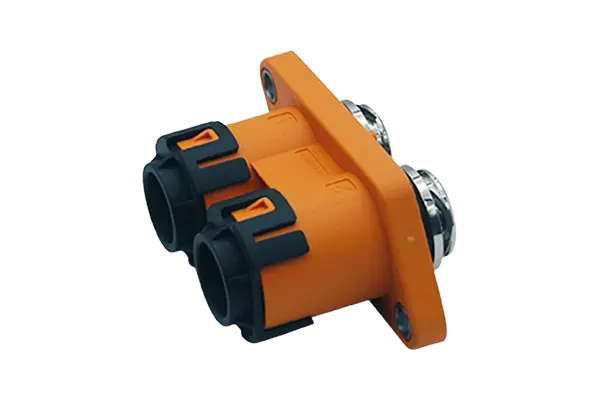
The DUOSIDA Two-Core Throughhole Connector is designed for high-voltage applications such as EV battery boxes and motor driver systems. Its published specifications include a rated voltage of 1000V DC, a maximum rated current of 200A, and an IP67 protection rating.
The product supports shielded cables with cross-sections of 25–50 mm² and features 360° shielding. Its connection design includes hexagonal cold crimping and screw locking.
These specifications provide useful reference points for engineering teams assessing the connector for a new EV platform or electrical assembly. However, actual suitability should be confirmed against the complete system design, including cable configuration, current requirements, installation conditions, and thermal performance.
For buyers, reviewing the technical specifications early can help narrow down candidate models before sample testing and integration work begin.
Product reference: DUOSIDA Two-Core Throughhole Connector
3. Explore More Options in the Two-Core Connector Range
Different EV projects may require different connector structures. Factors such as enclosure layout, cable routing, connection position, and assembly access can influence product selection.
DUOSIDA also offers other two-core high-voltage connector options, including:
Two-Core 280 Plastic Connector
This model provides another option for buyers evaluating two-core plastic connector designs. Engineering teams should review its official specifications and dimensional drawings to determine whether it matches the project's electrical and mechanical requirements.
Product reference: Two-Core 280 Plastic Connector
Two-Core 630 Plastic Connector
This product expands the available options for buyers comparing two-core connector configurations. Before confirming a model, check its rated electrical parameters, cable compatibility, mounting dimensions, and connection requirements against the intended application.
Product reference: Two-Core 630 Plastic Connector
Rather than selecting a connector based on its model name alone, buyers should compare the official product data and drawings. This helps avoid compatibility problems when integrating a connector into a battery system, motor assembly, or other high-voltage equipment.
4. What Makes a Reliable High-Voltage Connector Supplier Important?
For EV manufacturers and component distributors, supplier selection affects more than the initial component purchase. Consistent product information, clear technical communication, and a suitable product range can all help simplify sourcing and integration.
When evaluating a high-voltage connector supplier, consider the following factors.
A product range that supports different requirements
A supplier offering multiple connector configurations gives buyers more options when comparing designs. DUOSIDA's high-voltage connector range includes two-core through-hole and plastic connector options, while its wider portfolio covers EV charging plugs, charging sockets, high-power charging products, NACS products, and charging stations.
This broader product offering gives buyers a convenient starting point for reviewing related EV connection and charging components.
Clear technical specifications
Product selection depends on accurate information. Buyers should be able to review the relevant electrical ratings, cable specifications, mounting dimensions, protection ratings, and installation requirements before confirming a design.
For applications with specific validation requirements, it is important to request the applicable drawings, test information, and technical documentation directly from the supplier.
Practical engineering communication
A detailed inquiry helps the supplier understand the application. Providing the intended use, operating voltage, current requirements, cable size, and installation conditions allows the technical team to assess the request more effectively.
For projects involving custom integration or multiple connector types, early technical communication can also help identify potential design constraints before production planning progresses.
5. A Practical Checklist for Overseas Buyers
When sourcing two-core high-voltage connectors for EV applications, procurement teams can use the following checklist to organize the evaluation process.
| Evaluation item | What to confirm |
|---|---|
| Electrical performance | Rated voltage, rated current, and operating conditions |
| Cable compatibility | Cable type, cross-section, and termination method |
| Mechanical design | Connector dimensions, mounting structure, and cable routing |
| Environmental protection | Required IP rating, sealing, and temperature range |
| Shielding | Shielding design and compatibility with the system grounding strategy |
| Documentation | Product drawings, technical specifications, and relevant test information |
| Supplier communication | Technical response, sample evaluation, and project requirements |
The purpose of this checklist is to make supplier comparisons more consistent. It also helps engineering and procurement teams work from the same technical requirements instead of relying solely on product descriptions.
For OEM projects, connector samples should be evaluated under the conditions relevant to the intended application. Electrical, mechanical, and environmental validation should follow the project's engineering requirements.
6. Work With DUOSIDA for EV Connection Solutions
Zhangjiagang UCHEN New Energy Technology Co., Ltd. (Youcheng Technology, stock code: 873087) focuses on high-performance charging products for new energy vehicles. DUOSIDA's product portfolio includes charging plugs, charging sockets, HPC products, NACS products, vehicle outlet sockets, charging stations, and high-voltage connectors.
For international buyers, reviewing the company's product range can help identify relevant options for different EV charging and electrical connection projects. The key is to match each product to the project's technical requirements rather than assuming that connectors with similar names or structures are interchangeable.
Buyers evaluating the Two-Core Throughhole Connector, Two-Core 280 Plastic Connector, or Two-Core 630 Plastic Connector can prepare their application details and contact the supplier to confirm the appropriate specifications.
Visit the DUOSIDA official website to explore its EV charging and high-voltage connector products.
Conclusion
Choosing a two-core high-voltage connector for EV applications requires careful consideration of electrical ratings, cable compatibility, installation structure, shielding, and environmental protection. A structured evaluation process helps buyers reduce compatibility risks and select a connector that fits the intended system.
With several two-core connector options and a wider portfolio of EV charging products, DUOSIDA provides overseas buyers with products to evaluate for different connection requirements. By reviewing the technical documentation and communicating the project specifications clearly, manufacturers, distributors, and system integrators can make more informed sourcing decisions.
www.duosidaev.com
Zhangjiagang UCHEN New Energy Technology Co., Ltd.
