When selecting a slewing drive for construction machinery or industrial equipment, buyers need to consider more than the basic rotational function. Load capacity, gear engagement, bearing performance, installation dimensions, and motor compatibility all influence how well the component performs in an actual machine.
For equipment manufacturers and engineering contractors, finding a supplier that understands these requirements is equally important. A reliable factory should be capable of developing the product, controlling machining quality, managing assembly, and providing technical support throughout the purchasing process.
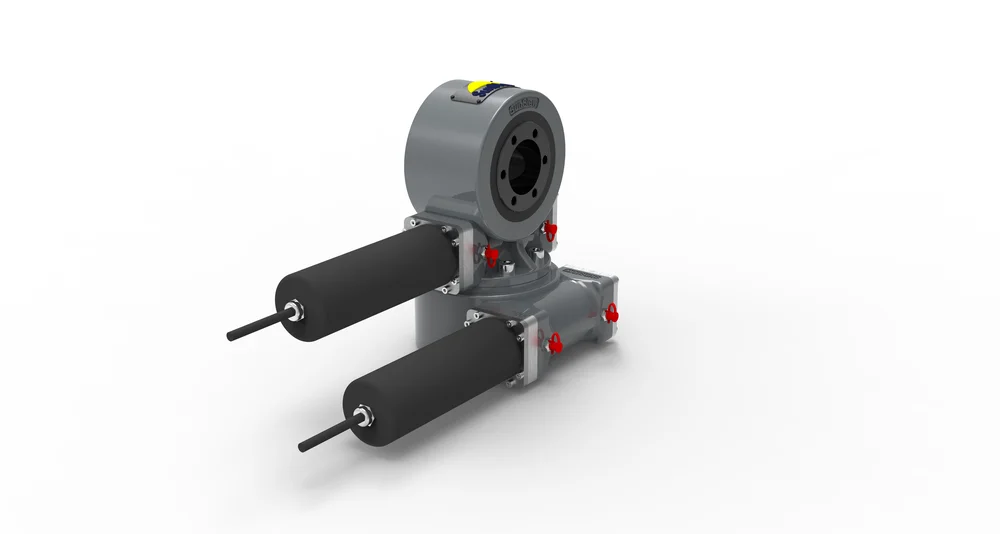
The SD Series slewing drive is designed for applications that require controlled rotation and mechanical load support. With its worm gear transmission and integrated slewing bearing structure, it provides a practical solution for cranes, mining machinery, aerial work platforms, and other industrial equipment.
1. What Makes the SD Series Slewing Drive Different?
A slewing drive combines a transmission mechanism and a slewing bearing into one integrated unit. It allows machinery to rotate while supporting the forces generated during operation.
This structure is particularly useful in equipment where a rotating platform, boom, or working assembly needs to move under load.
Compared with using a separate gearbox and bearing arrangement, an integrated slewing drive can simplify mechanical design and make equipment installation more convenient.
The SD Series from SunSlew is developed for engineering machinery and industrial applications. Its product configurations include enveloping worm and straight worm transmission options, allowing customers to select a suitable structure according to their equipment requirements.
For manufacturers building cranes, mining equipment, or rotary platforms, the combination of transmission and bearing support is an important consideration when designing the overall mechanical system.
2. Enveloping Worm Gear Design for Better Load Distribution
The transmission structure directly affects the operating performance of a slewing drive.
One of the important design features used in SunSlew's slewing drive products is the enveloping worm transmission. Compared with a conventional straight worm arrangement, the enveloping structure can provide a larger tooth contact area.
This design offers several practical advantages.
Larger Tooth Contact Area
The enveloping worm engages with a wider portion of the worm wheel surface. This helps distribute transmission forces across multiple contact regions and supports applications involving considerable mechanical loads.
High Hardness and Wear Resistance
Gear materials and heat treatment processes influence the durability of transmission components. SunSlew uses high-hardness gear components and wear-resistant surfaces to support long-term operation under demanding working conditions.
Smooth Rotational Movement
Proper gear engagement and machining accuracy contribute to consistent transmission. This is important for equipment that needs controlled rotation during repeated working cycles.
Reliable Mechanical Performance
A suitable transmission structure helps the drive handle the forces generated during operation. However, the final performance also depends on correct model selection, lubrication, installation, and maintenance.
For buyers, it is worth asking the manufacturer about the gear structure, material specifications, surface treatment, and relevant testing procedures before choosing a model.
3. Integrated Slewing Bearing Supports Multiple Loads
A slewing drive does more than transmit rotational power. Its bearing structure also supports the mechanical loads acting on the rotating equipment.
In actual machinery applications, these loads generally include:
-
Axial loads acting along the rotational axis.
-
Radial loads acting perpendicular to the axis.
-
Overturning moments caused by offset or extended working structures.
For example, a truck-mounted crane may experience considerable overturning moments when its boom extends and lifts materials away from the center of rotation. A suitable slewing bearing must support these forces while allowing the upper structure to rotate.
The SD Series combines the worm transmission and slewing bearing in one assembly. The bearing design provides load support, while the transmission mechanism drives the rotation.
This integrated arrangement is suitable for machinery that requires both rotational movement and structural support.
When selecting a product, buyers should provide the manufacturer with the expected axial load, radial load, overturning moment, operating speed, and working cycle. These details help determine whether the selected model is suitable for the actual application.
4. Motor Compatibility for Different Machinery Systems
Different industrial machines use different power systems. A slewing drive should therefore be compatible with the equipment's existing motor and control arrangement.
SunSlew's engineering machinery slewing drives can be adapted to several common power configurations, including:
-
Hydraulic motors
-
DC motors
-
AC motors
-
Servo motors
-
Stepper motors
Hydraulic motor configurations are commonly considered for mobile machinery and cranes, where hydraulic power systems are already integrated into the equipment.
Electric motor configurations can be suitable for industrial machinery and automated rotary platforms. Servo and stepper motors may also be considered when more specific positioning and control requirements are involved.
When discussing a customized configuration with a factory, buyers should confirm the input interface, motor mounting dimensions, speed requirements, output torque, and control compatibility.
Checking these details before production can help reduce installation problems during equipment assembly.
5. Applications in Construction and Industrial Equipment
The SD Series is designed for different engineering machinery applications. Its actual configuration should be selected according to the working conditions and mechanical requirements of each machine.
Truck-Mounted Cranes and Marine Cranes
Cranes rely on rotational movement to position their booms and lifting structures. Their slewing drives need to support the forces generated during rotation and lifting operations.
Bearing load capacity, transmission strength, and motor compatibility are important selection factors.
Mining Machinery
Mining equipment often operates in environments with dust, vibration, and demanding mechanical loads. Transmission durability and suitable maintenance arrangements are important when selecting components for these applications.
Aerial Work Platforms
Aerial work platforms use slewing drives to rotate the working platform or boom assembly. Smooth rotation and reliable load support contribute to equipment positioning and operating stability.
Industrial Cutting Equipment
Certain cutting machines require rotary movement to adjust the working direction or position of the cutting structure. The slewing drive needs to match the required rotation speed, mechanical load, and installation space.
Automatic Rotary Platforms
In automated production systems, slewing drives can be used to rotate workpieces, positioning tables, or functional equipment modules. Motor compatibility and integration with the control system are particularly important.
These applications demonstrate why buyers should select a slewing drive based on the complete equipment design rather than simply choosing a product by its external dimensions.
6. Why Manufacturing Quality Matters When Buying from China
China has an established manufacturing supply chain for mechanical transmission components. However, the production capabilities of different factories can vary considerably.
For overseas buyers, working directly with a manufacturer that has integrated R&D, machining, production, and assembly capabilities can make communication and product management more efficient.
SunSlew, formally Jiangyin Sunslew Machinery Equipment Co., Ltd., was established in 2014. The company specializes in the R&D, design, machining, manufacturing, assembly, and sales of slewing drives, slewing bearings, and gears.
Its manufacturing facilities are located in Jiangyin New Energy Industrial Park, Jiangsu Province, China.
The company's manufacturing resources include:
-
Approximately 36,000 square meters of factory area.
-
More than 80 sets of precision processing and manufacturing equipment.
-
Four assembly production lines.
-
Annual production capacity of 300,000 slewing drives.
-
Industry-university-research cooperation with Xi'an University of Technology and Nanjing University of Technology.
These resources provide a foundation for product development and large-scale manufacturing.
For buyers, an integrated production system offers several practical benefits.
Better Coordination Between Production Processes
When machining, assembly, and production management are handled within the same manufacturing operation, it becomes easier to coordinate product specifications and production schedules.
More Consistent Product Manufacturing
Precision machining equipment and standardized assembly procedures help manufacturers manage dimensional accuracy and product consistency.
Engineering and Product Development Support
R&D capabilities are valuable when customers require non-standard configurations or need to adapt a slewing drive to a specific machine design.
Support for Repeat Orders
For equipment manufacturers purchasing products in batches, stable manufacturing processes help maintain consistency between different orders.
These factors are worth considering when comparing Chinese slewing drive factories.
7. What Should Buyers Check Before Ordering an SD Series Slewing Drive?
Even when a product appears suitable based on its general specifications, several details should be confirmed before an order is placed.
Here is a practical checklist for equipment manufacturers and purchasing teams.
Technical Requirements
-
Required driving torque and holding torque.
-
Axial and radial load conditions.
-
Overturning moment requirements.
-
Rotation speed and operating frequency.
-
Expected working environment.
Installation Requirements
-
Overall dimensions and mounting holes.
-
Connection structure and installation direction.
-
Motor mounting interface.
-
Input and output configuration.
Manufacturing and Quality Requirements
-
Gear material and heat treatment.
-
Machining accuracy and inspection procedures.
-
Assembly and lubrication requirements.
-
Finished-product testing.
-
Relevant technical drawings and inspection documents.
Providing accurate application information helps the factory recommend a suitable configuration instead of relying on general product descriptions.
8. Work with a Manufacturer That Understands Slewing Drive Applications
For international buyers, product quality and factory capability should be evaluated together.
SunSlew has developed slewing drive products for both engineering machinery and renewable energy applications. Its product range includes different sizes and configurations designed to meet various rotational drive requirements.
In addition to the SD Series for engineering machinery, the company also develops dedicated products for solar tracking systems.
For example, the SDD3 Solar Slewing Drive is designed for dual-axis solar tracking applications. It represents another part of the company's product development in mechanical transmission solutions.
Although the SDD3 and SD Series serve different application requirements, both reflect SunSlew's focus on slewing drive design and manufacturing.
The company combines product R&D, precision machining, production, and assembly within its manufacturing operation. For overseas customers, this provides a direct channel for discussing product specifications, technical requirements, and potential customized solutions.
More information about its product range and manufacturing capabilities is available on the SunSlew official website.
Conclusion
The SD Series slewing drive offers an integrated solution for equipment requiring rotational movement and mechanical load support. Its worm gear transmission options, large tooth contact area, wear-resistant components, and integrated slewing bearing make it suitable for a variety of engineering machinery applications.
For buyers, the most important step is to match the product configuration with the actual operating requirements, including torque, axial and radial loads, overturning moments, motor compatibility, and installation dimensions.
As a Chinese manufacturer specializing in slewing drives, slewing bearings, and gears, SunSlew combines R&D, precision machining, manufacturing, and assembly capabilities. Its production resources and engineering machinery product range make it a supplier worth considering for crane manufacturers, mining equipment producers, aerial work platform manufacturers, and industrial equipment integrators.
When sourcing a slewing drive from China, choosing a factory with relevant manufacturing experience and the ability to communicate technical requirements clearly can help build a more reliable long-term supply relationship.
www.sunslew.com
Jiangyin SunSlew Machinery Equipment Co., Ltd.
